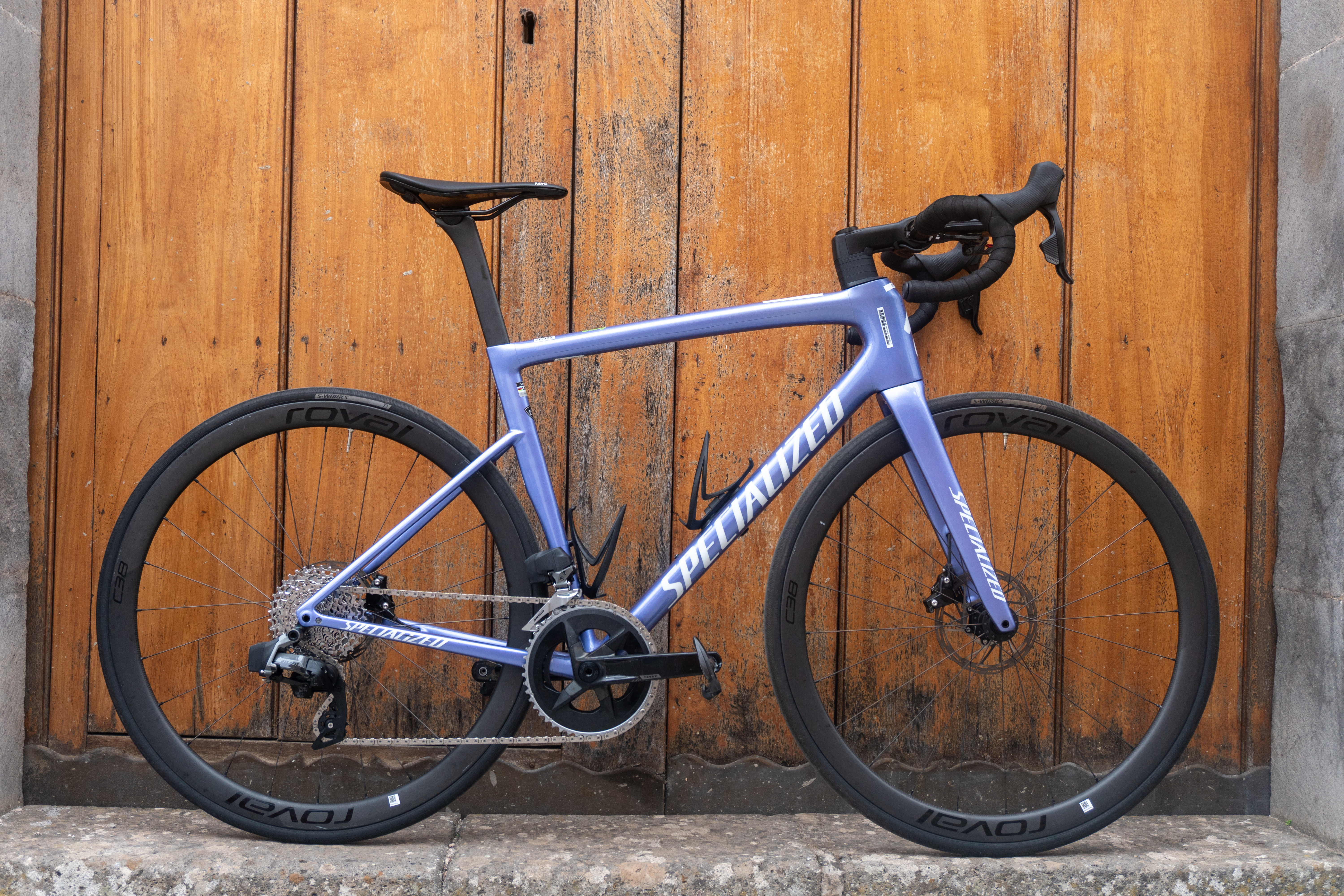

Verdict: The Tarmac SL8 impresses in all respects and sets the standard for all-round race bikes
Pros
+ Competitively lightweight frame
+ Excellent climber
+ Superb descending performance
+ Exciting handling
Cons
– Speed Sniffer aesthetics
– Price
- £5,500 / $6,499.99 / €6,500
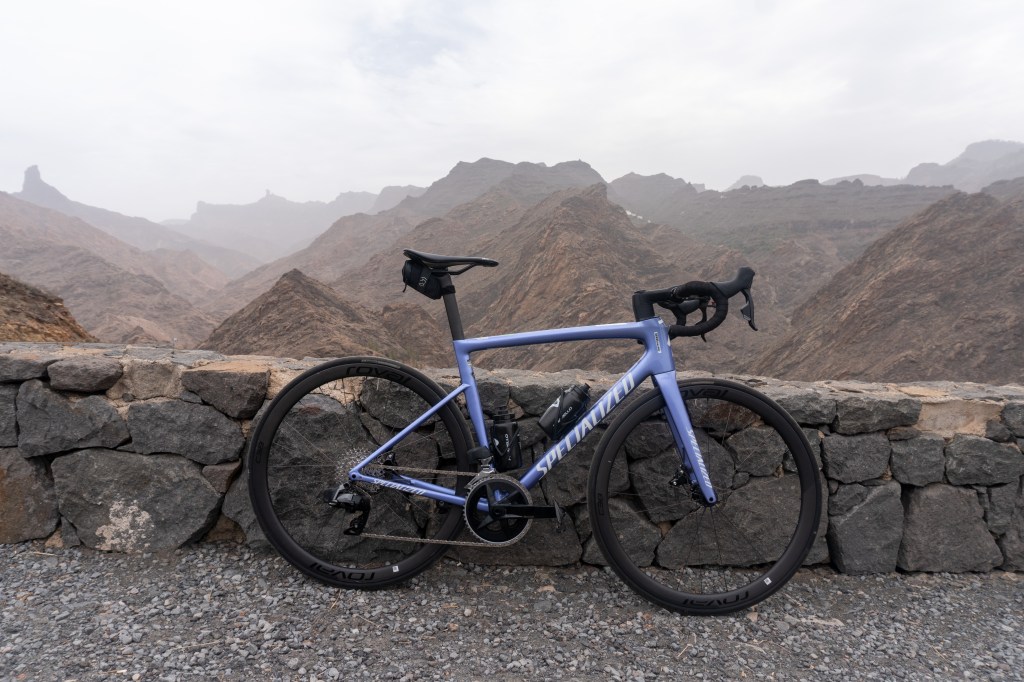
Specialized’s hotly anticipated Tarmac SL8 all-rounder race bike largely sticks with the winning ingredients of the Tarmac SL7 while increasing compliance, decreasing weight and improving aerodynamics.
Any fat that was on the already lightweight Tarmac SL7 has been trimmed, with the new bike claimed to weigh a feathery 685g in a size 56cm in its S-Works trim. That the second-tier frame on test here is claimed to weigh 780g in an equivalent size is particularly impressive, undercutting the S-Works Tarmac SL7 by 20g.
My initial impressions, based on a smidge under 200km’s of riding, is that Specialized has achieved its goal of subtly improving its race bike.
Specialized Tarmac SL8 Expert frame details

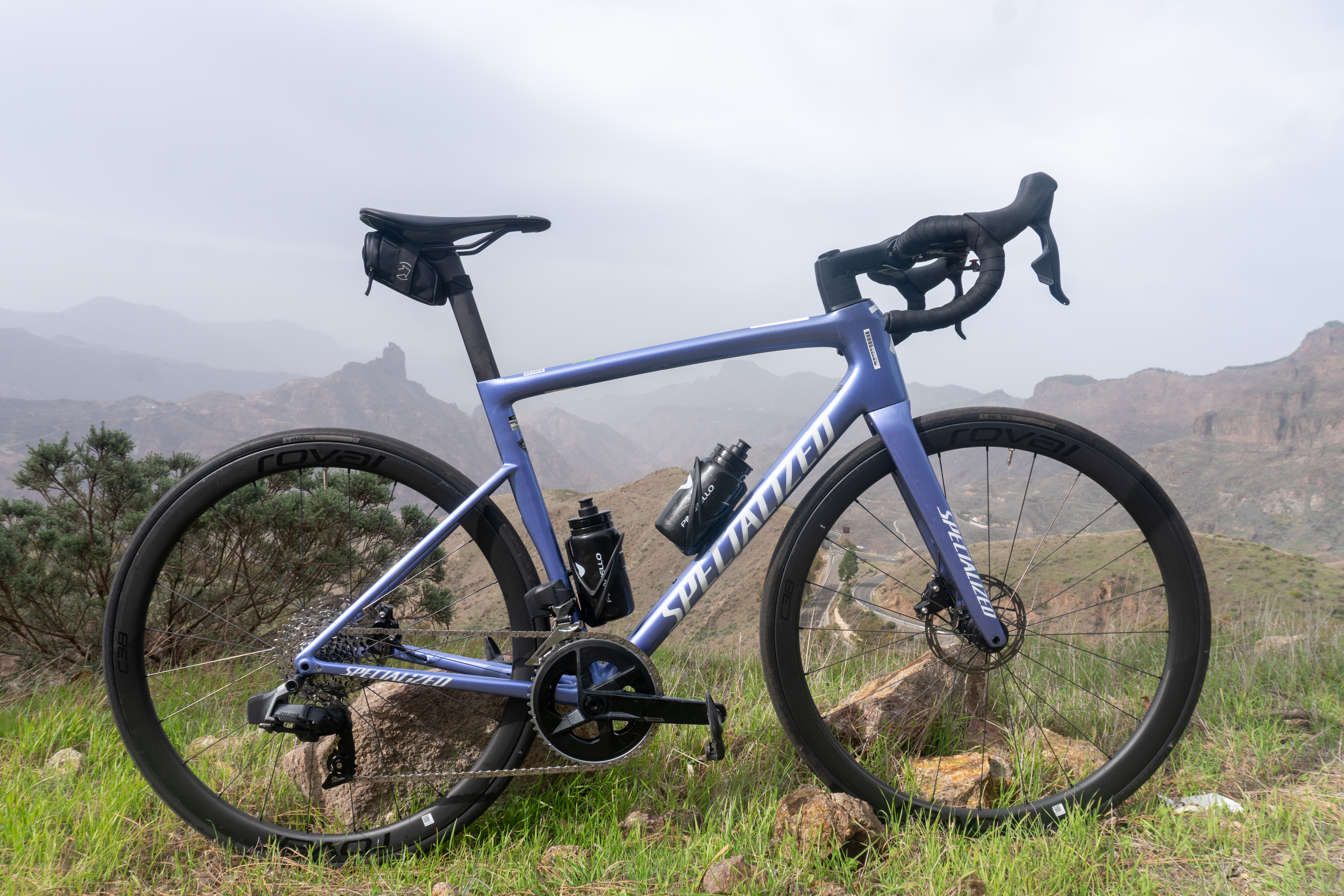
The Tarmac SL8 Expert is constructed from what Specialized calls its FACT 10r carbon fibre, two steps down from the FACT 12r reserved for the S-Works.
The brand says it has overhauled the bike’s ‘leading edges’, claiming the Tarmac SL8 is 16.6 seconds faster than the now-discontinued third-generation Venge at 45kmph. But the tube profiles are notably rounder and more svelte than the Tarmac SL7’s, with more than a little influence from the brand’s Aethos climbing bike.
These tube shapes are claimed to improve compliance, with Specialized claiming a 6% increase in comfort through the saddle over the SL7. The narrower seat tube also helps, and Specialized claims an improvement in aerodynamics too. The bottom bracket, head tube and fork are also said to have a 33% stiffness-to-weight ratio gain.
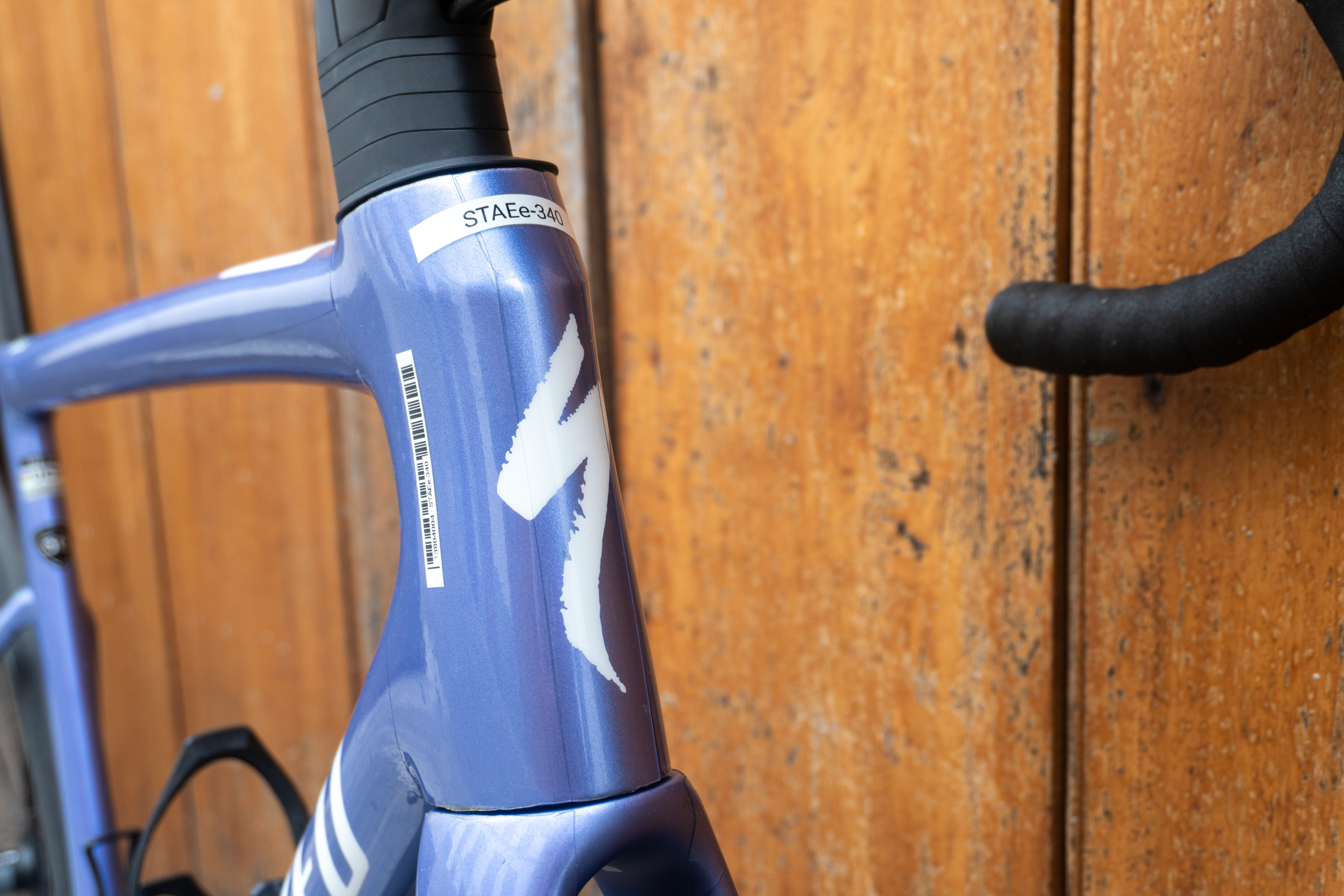
The head tube, dubbed the ‘Speed Sniffer’, is said to improve aerodynamics thanks to its pronounced leading edge that almost hangs over the fork.
All in, I like the Tarmac SL8’s elegant frame shape, reminiscent of classic climbing bikes of yesteryear. The only element disrupting this is that head tube though – while I’d be inclined to take Specialized’s word that it improves aerodynamics, it’s not the most aesthetically pleasing, especially with the two-piece cockpit that’s on this Expert model.

Tyre clearance is 32mm, which is on par with the latest Trek Madone but not quite as generous as the 34mm clearance found on the Cervélo S5. But 32mm is still plenty for a thoroughbred race bike.
Specialized says it wanted to preserve the geometry and handling characteristics of the Tarmac SL7 for the new bike but with the stack increased by 10mm to account for the new Roval Rapide cockpit found on the top-end models.
While that cockpit is said to save 4w, this Expert model eschews it with a separate bar and stem system.
| 44cm | 49cm | 52cm | 54cm | 56cm | 58cm | 61cm | |
| Reach | 366mm | 375mm | 380mm | 384mm | 395mm | 402mm | 408mm |
| Stack | 501mm | 514mm | 527mm | 544mm | 565mm | 591mm | 612mm |
| Head tube angle | 70.5º | 71.75º | 72.5º | 73º | 73.5º | 73.5º | 74º |
| Head tube length | 99mm | 109mm | 120mm | 137mm | 157mm | 184mm | 204mm |
| Bottom bracket height | 266mm | 266mm | 266mm | 268mm | 268mm | 268mm | 268mm |
| Bottom bracket drop | 74mm | 74mm | 74mm | 72mm | 72mm | 72mm | 72mm |
| Top tube length, horizontal | 496mm | 509mm | 531mm | 541mm | 563mm | 577mm | 595mm |
| Seat tube angle | 75.5º | 75.5º | 74º | 74º | 73.5º | 73.5º | 73º |
| Seat tube length | 433mm | 445mm | 456mm | 473mm | 494mm | 515mm | 545mm |
| Front centre | 572mm | 574mm | 577mm | 579mm | 592mm | 606mm | 613mm |
| Chainstay length | 410mm | 410mm | 410mm | 410mm | 410mm | 410mm | 410mm |
| Wheelbase | 970mm | 973mm | 975mm | 978mm | 991mm | 1,006mm | 1,013mm |
| Crank length | 165mm | 165mm | 170mm | 172.5mm | 172.5mm | 175mm | 175mm |
| Handlebar width | 360mm | 380mm | 400mm | 420mm | 420mm | 440mm | 440mm |
| Stem length | 70mm | 80mm | 90mm | 100mm | 100mm | 110mm | 110mm |
Specialized Tarmac SL8 Expert build
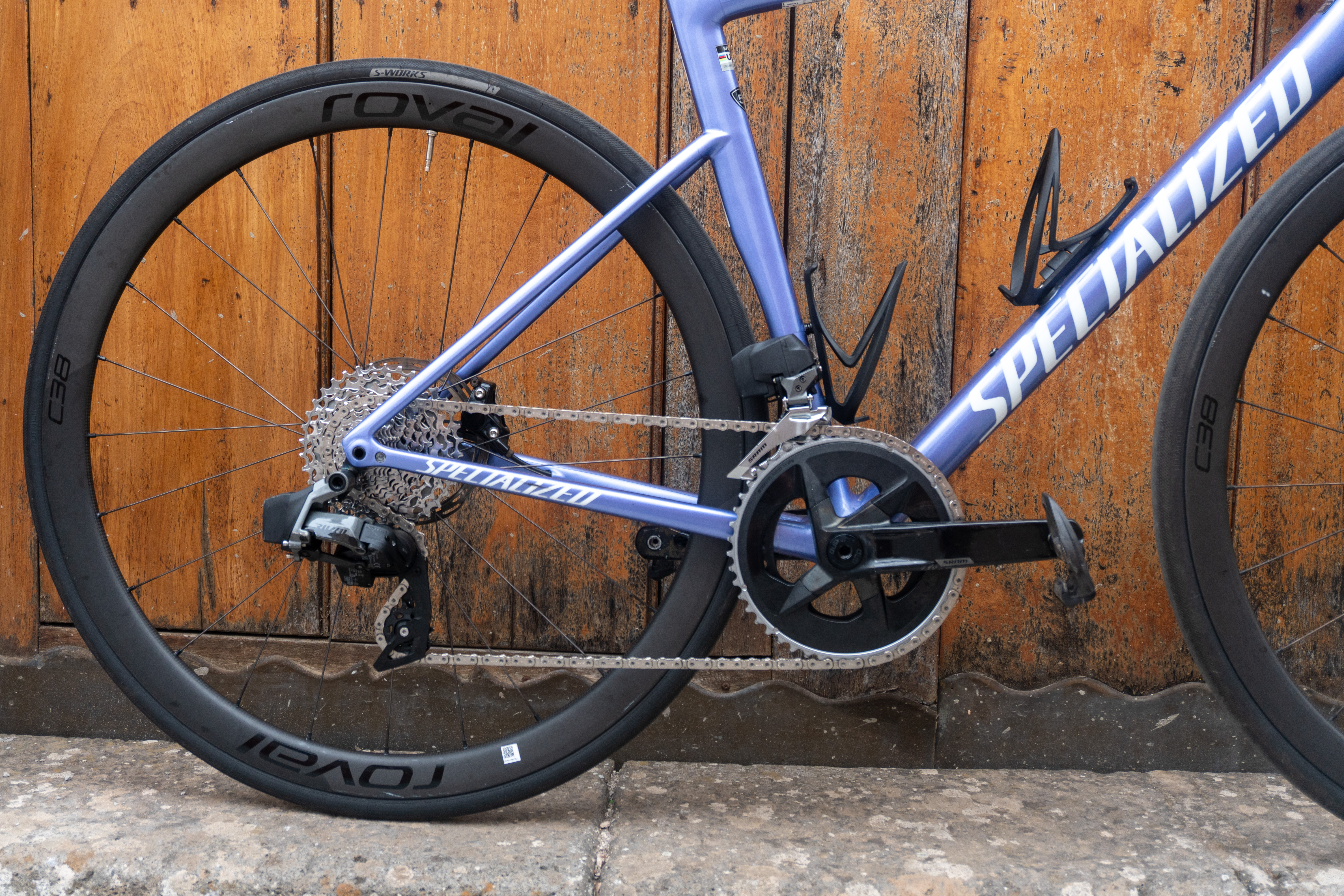
The Expert is the third-tier in the Tarmac SL8 range, below the range-topping S-Works and Pro models. Note there are two Expert options – this SRAM Rival eTap AXS build for £5,500 / $6,499.99 / €6,500 or a Shimano Ultegra Di2 build for £6,000 / $6,999.99 / €7,000.
SRAM Rival eTap AXS is the third-tier electronic groupset in the brand’s range, sitting below Force and Red. Compared to Force, Rival components have a weight penalty (with the biggest differences to be found at the crankset) and the rear derailleur steps down to a spring clutch rather than the Orbit Fluid Damper.
Specialized specs a power meter crankset for the price with 48/35t chainrings, paired with a 10-36t cassette – sensible gear ratios for climbing but also for when you’re putting the hammer down.
You also get a set of Roval C38 carbon wheels. At £1,150, these undercut the in-house brand’s other offerings without, according to Specialized, sacrificing component quality or aerodynamics. The 38mm rim depth is paired with a 21mm internal rim width – par for the course, these days, but road-focussed and they’re specced with DT Swiss 370 hubs.
They’re shod with S-Works Turbo tyres in a 26mm width – very narrow considering the generous tyre clearance.
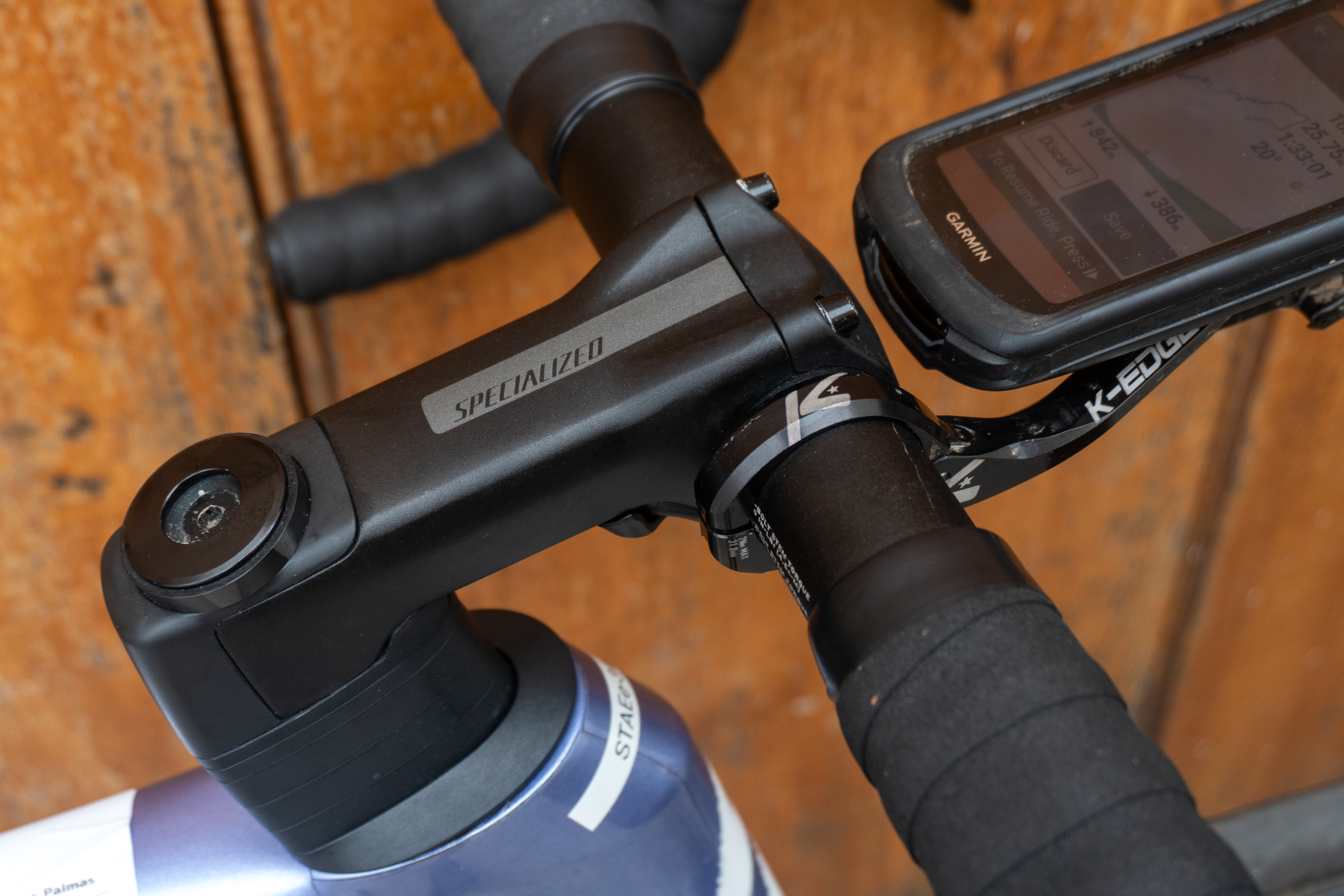
Moving to the cockpit, an aluminium Specialized Expert Shallow Drop handlebar is paired with a Tarmac stem. Although the two-piece cockpit looks a bit out of place with the Speed Sniffer head tube, there’s no denying the benefits of adjustment offered and being able to run whatever handlebar you’d like.
This build would typically be specced with a Specialized Power saddle (a favourite of my own) but my test bike came with a Fabric Line.
Specialized Tarmac SL8 Expert first ride impressions
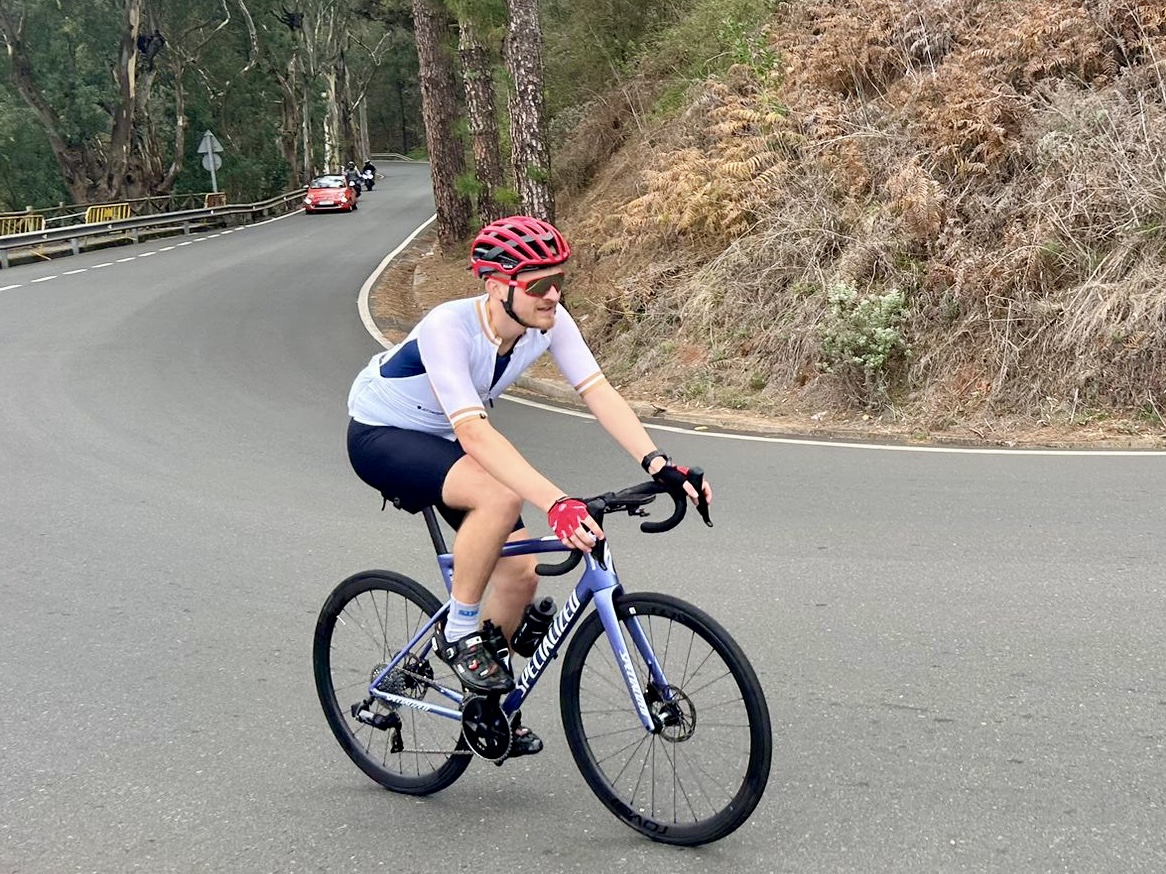
I rode the bike for two days in Gran Canaria encompassing just under 200km with a not-insubstantial 4,500m of climbing.
Both of my rides featured significant mountain climbs, and on the second day I rode up the feared Valley of the Tears (often touted as one of Europe’s hardest climbs), all the way up to the summit of the Pico de las Nievas at 2,000m, Gran Canaria’s tallest volcano.
From the off, the Tarmac SL8 felt like it was cut from the same cloth as its predecessors with a rapid ride quality with dainty handling. I particularly appreciated the exciting handling on Gran Canaria’s many hairpins, where the bike had a palpable poise.
Although this Expert build wears some heavy components (more on that later), the frameset’s low weight made itself instantly apparent, especially on the many prolonged climbs. The stiffness at the bottom bracket was also noticeable, giving the bike plenty of grunt when putting the power down – impressive given its rather minimalist appearance.

Tip the bike down the other side and the Tarmac SL8 has impeccable descending manners. The lively handling and aggressive position meant I was really able to lean in on corners and even at speeds up to 50mph / 80kmph, the Tarmac SL8 was unflinched.
It took me a while to get used to the 26mm tyres – these felt decidedly narrow and the spec choice is at odds with the generous 32mm clearance. While the S-Works Turbo tyres were fast-rolling and grippy, I’d swap them for 30 or 32mm rubber from the off – Continental’s Grand Prix 5000 S TRs are my current pick of the bunch.
But even with the narrow stock rubber, the Tarmac SL8 is more comfortable than I’d expect for a bike of this ilk, even on my longest nine hour ride with plenty of questionable road surfaces.
Although the spec list doesn’t set the world alight, it’s all functional fare. I’m not the biggest fan of SRAM’s Rival eTap AXS groupset – I don’t particularly get on with the blocky lever ergonomics, the front derailleur shifting isn’t on a par with Shimano and the increased weight is noticeable over Force AXS.
But there’s no denying its appeal to those that want electronic shifting at a budget and the brakes are a high point.
It’s also a positive that Specialized specs a power meter crankset to slightly sweeten the deal.
The Roval C38 wheels are a mixed bag – although the carbon rim isn’t as progressive as the higher models in the range in terms of external width (26.6mm compared to the 30mm and 30.7mm measurements of the Roval Rapide CL II and CLX II), the overall ride quality is very good.
I also like that Specialized have specced brass nipples, which are more resistant to corrosion – the higher-end Rapide wheelsets instead use aluminium nipples. While aluminium nipples are lighter, I’d rather take the weight penalty and know they won’t corrode at the first sign of salty water.
It’s a shame Specialized specs a bottom-rung DT Swiss 370 hub though, especially on a bike costing £5,500 / $6,499.99 / €6,500, but I suppose that’s the concession for the wheels to make their £999 / $1,099.99 / €1,200 price point.
While the 370 should prove a reliable option, I wish Specialized had specced a DT Swiss 350 hub instead and upped the price slightly.
The 350 hub steps up to a 36t ratchet (over the 370 Ratchet LN’s 16t), resulting in more points of engagement. But in my view, given the 350’s prolificity, a big advantage will also be in procuring spares.
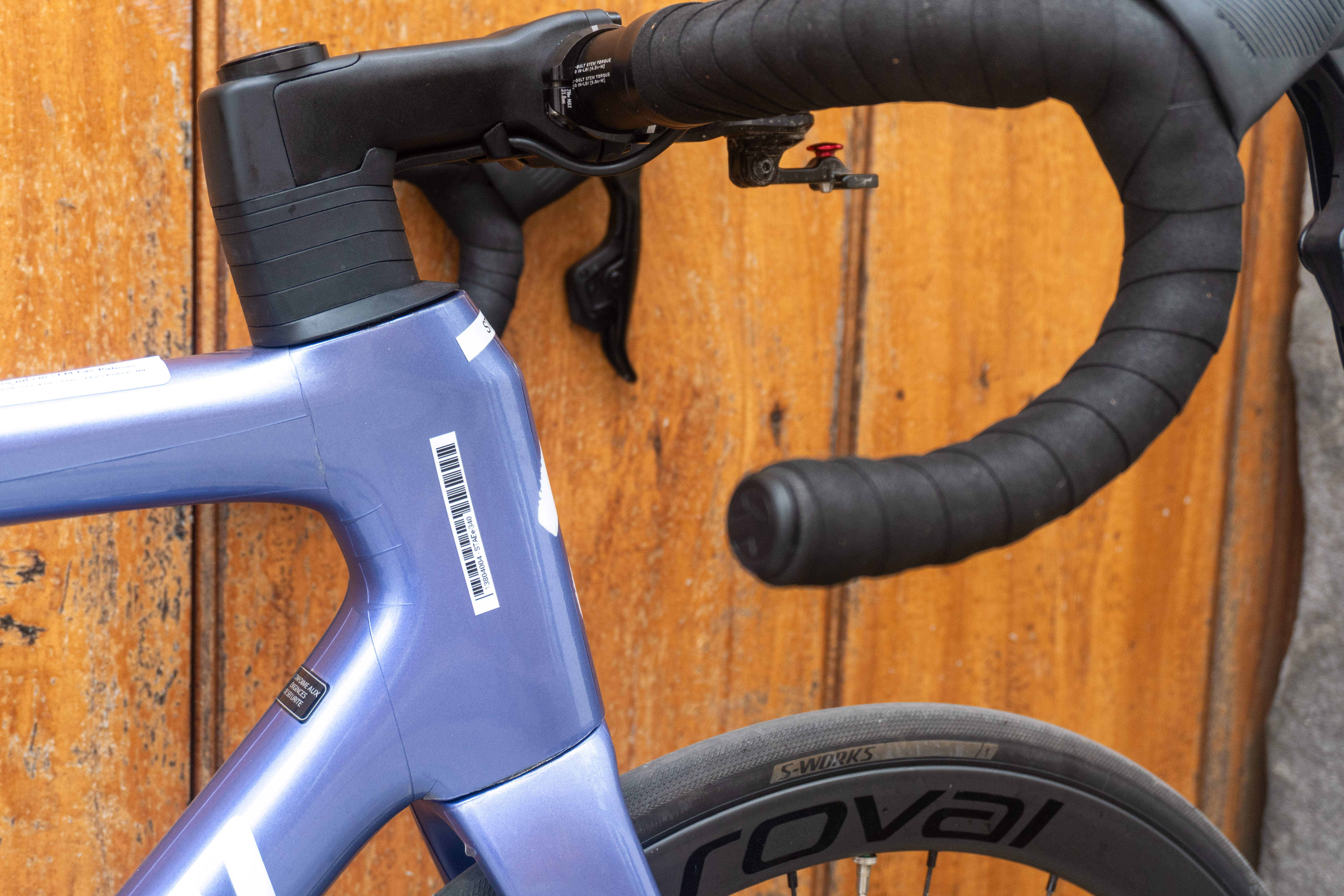
The only other change I’d make to the bike would be the handlebar – I’d swap to a carbon option for more compliance. However, I’m glad Specialized specs a relatively cheap-and-cheerful stock handlebar because there’s an element of personal preference when it comes to upgrading.
I’m not sure the 4w claimed aerodynamic saving is enough to convince me to step up to the Roval Rapide one-piece cockpit but it’s a positive that you can upgrade to it if you’d like to.
It’s important to note if you upgrade to this cockpit, you’ll need an extra 10mm of steerer tube.
In terms of value, Specialized is never going to be the most competitive being as mainstream as you get. Sticking with the big brands, you can get a similarly specced Trek Madone SL 6 AXS for £4,125 / $5,999.99 / €3,999 or a Cannondale SuperSix Evo 3 (albeit with Shimano 105 Di2) for £4,000 / $4,200 / €3,999.
Although both of these options also use a second-tier frame, it’s important to note the Tarmac SL8’s 780g claimed frame weight significantly undercuts both on frame weight (1,054g for the Madone SL and 930g for the SuperSix Evo in a size 56cm).
In my view, that’s enough of a justification for the price increase.
Specialized Tarmac SL8 Expert initial verdict
The updates over the Tarmac SL7 may seem incremental but my initial rides suggest they have dramatically improved the Tarmac platform.
In fact, I think the Tarmac SL8 may well be the best race bike on the market at the moment – it just ticks all the boxes and has a fantastically balanced ride quality.
Further testing will reveal if that proves the case.
 The Cycling Meister