– Arms needed to be fitted under helmet straps to be secure – Lens replacement process a little finicky
from £168 / $214 / €188
Annabel Huckle / The Cycling Meister
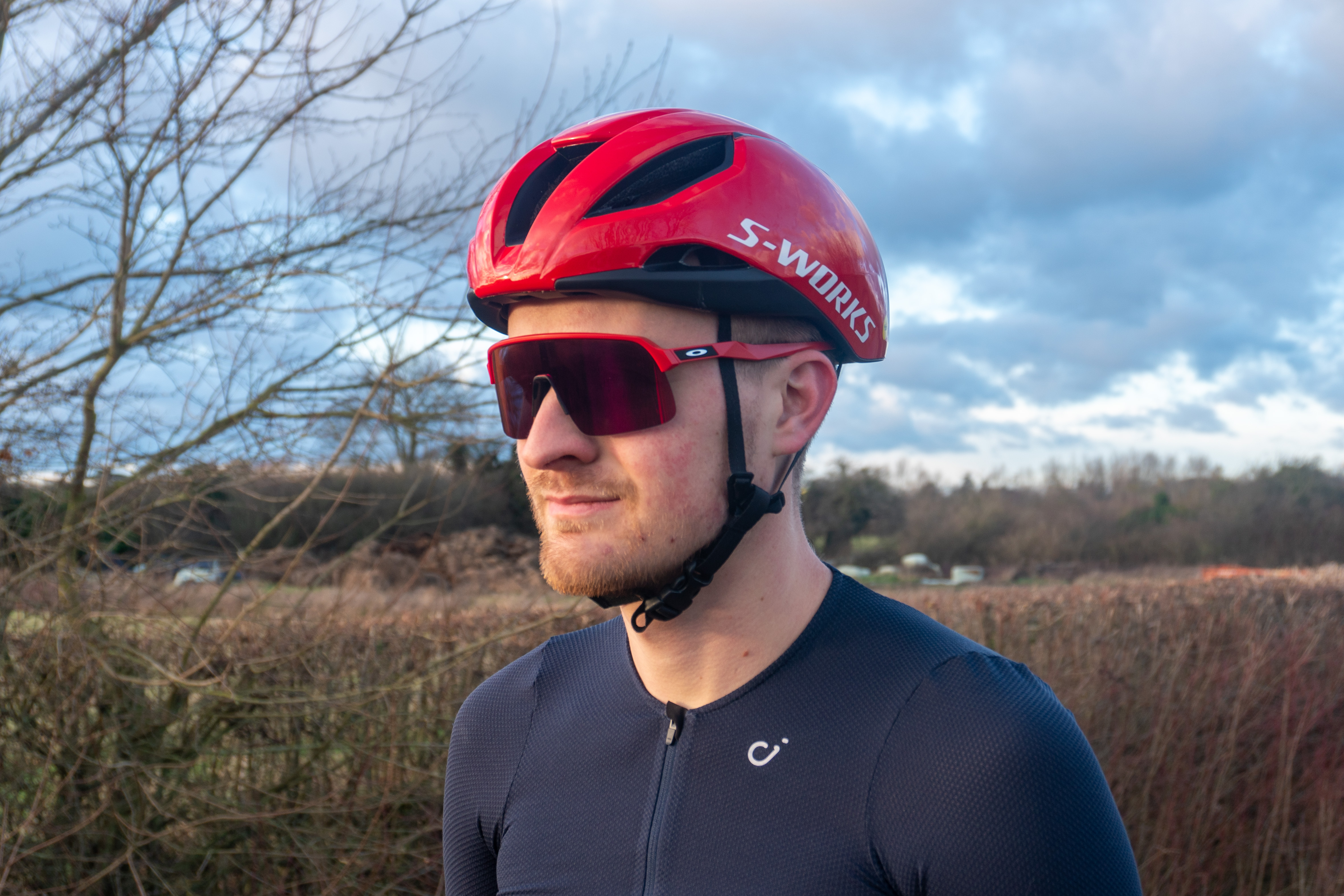
Oakley’s Sutro Lite glasses share the same retro-inspired look as the Sutro but with a semi-rimless design, which the brand claims allows for a greater field of view and improved ventilation.
I’ve found the Sutro Lite to be impressive performers in testing, with the standout Prizm lens continuing to be leaps-and-bounds above the competition. There’s one annoying flaw you’ll need to learn to live with, though.
Oakley Sutro Lite specifications and details
Oscar Huckle / The Cycling Meister
The Sutro Lite is one of eight designs in the Sutro range – there’s the Sutro, Sutro S (a scaled-down Sutro) and Sutro Ti, with each model then having a ‘Sweep’ version, which uses the brand’s famous sweep lens shape. Rounding out the range are a vented lens option for the Sutro Lite Sweep and Sutro Ti Sweep.
Oakley says the Sutro Lite’s design is inspired by the daily life of urban cyclists, with the high-wrap shield lens creating a bold look.
Big glasses are the trend in cycling, with models such as the 100% S3, POC Devour and the Koo Hype’s to name a few, but the Sutro Lite’s are slightly more subdued than those examples.
Oscar Huckle / The Cycling Meister
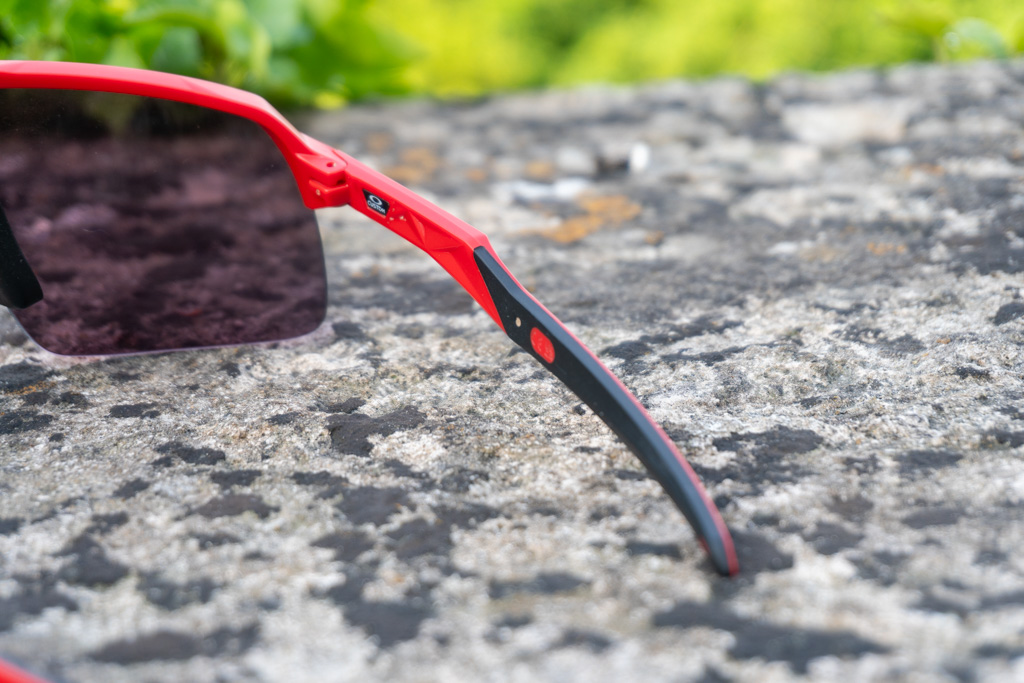
Oakley’s signature O-Matter frame material is claimed to be durable and provide all-day comfort, and the brand uses its Unobtanium rubber on the inside of the temple and the nose pad for optimal grip.
The Sutro Lite’s are offered in 21 options, so there’ll likely be a frame colour and lens to suit you.
I’ve got a custom set of Sutro Lite’s in for test, blending a ‘Matte Redline’ frame with a Prizm Road Iridium lens, which retail for £192.
These glasses come with the Prizm Road Iridium lens, which have a 20 per cent light transmission and are optimised to accentuate the blacks and greys on the road.
The lenses are interchangeable, so you could buy multiple lenses if you also want to use them for mountain biking or more casual use, for example, with a replacement Prizm lens setting you back £73 / $85 / €80 apiece.
Oscar Huckle / The Cycling Meister
Be aware the lens replacement method differs from the Sutro and Sutro S. You first need to push the nosepiece back and disengage it from the frame, before pulling the frame away from the lens hooks and then working the lens out from the rest of the frame.
This is reasonably straightforward, although it can be a little disconcerting pulling the frame away from the lens. You’ll also want to make sure the nose pad is kept in position, otherwise it can fall off the frame’s metal hook and the last thing you want to do is scratch your lens.
There’s just one-size-fits-all for the Sutro Lite’s and my glasses tipped the scales at 32g – 1g lighter than the Sutro S’s.
Oakley Sutro Lite performance
Annabel Huckle / The Cycling Meister
I tested the glasses for three months from wintry conditions to warm and sunny days on road and gravel rides, and I’ve also used them casually.
Starting with their appearance, I prefer the Sutro Lite’s look over the regular Sutro’s because the semi-rimless design doesn’t make their base stand out – although I appreciate that’s a subjective opinion.
While they look a little odd for casual use, the retro-inspired aesthetic is certainly softer on the eye than the brand’s Encoder or Kato glasses, which are purely performance-oriented.
You get an impressively wide field of view when the Sutro Lite’s are on your face, although you can just see where the arms meet the frame if you really look to the side. That said, the full frame of the Sutro’s doesn’t negatively intrude into your eyeline either, so it’s horses for courses.
As is always the case with Oakley glasses, the Prizm lens is the star of the show. The visual clarity is superb, with zero distortion and the glasses have never fogged up outside of rain, even in humid conditions. You can easily pick out road imperfections and the lens gives you ample sun protection.
While the Prizm Road lens is perfectly adequate for gravel riding, I prefer Oakley’s Prizm Trail option which accentuates greens and browns and would rather have this benefit on technical trails and take a slight hit on tarmac sections.
Annabel Huckle / The Cycling Meister
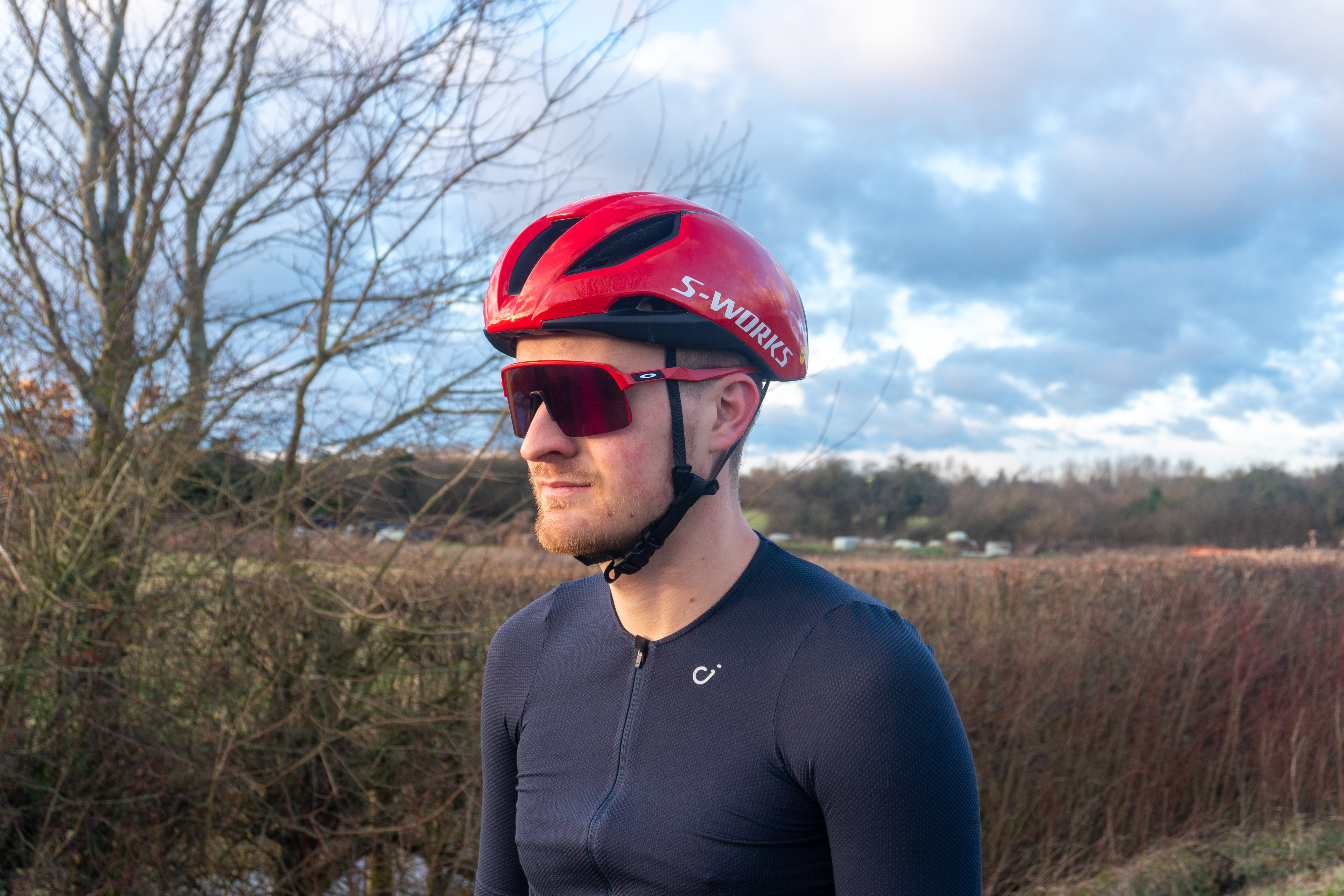
My only real qualm with the Sutro Lite’s are that when worn outside of the helmet straps (as fashion dictates), they’d slip downward ever so slightly and require occasional adjustment.
I think this happens because the arms are a little on the long side, rather than it being a fault of the Unobtanium rubber (which I’ve always found to perform as claimed).
I found I needed to position the arms under my helmet straps to keep them secure and they never slipped.
In terms of value, the Sutro Lite’s command a premium but as with any Oakley glasses, they’re an investment. I have no reason to suspect the frame won’t be durable and the Prizm lenses are worth stumping up for alone.
100%’s S3 glasses are marginally cheaper at £150 / $139 / €159 and while I really like their shape, the HiPER lens is a step-down from Oakley’s Prizm range.
Oakley Sutro Lite bottom line
Oscar Huckle / The Cycling Meister
Oakley’s Sutro Lite is an excellent addition to its popular Sutro line, with a superb Prizm lens and a cool aesthetic.
The fact that I have to wear the glasses under my helmet straps for optimal security is a niggle, which prevents the Sutro Lite’s from scoring higher.
That said, I’m sure I’ll still be reaching for the Sutro Lite’s for years to come.
“Badlands is the only ride where 1km is like riding 2km,” fellow rider Josep Santoyo emphatically exclaims, as we slowly struggle our way to the top of a 1,000m col in the aggressive 32ºC heat.
Tales of the brutality of Badlands, perhaps Europe’s highest-profile gravel ultra-endurance race, have not been exaggerated. I can confirm this 790km epic through Southern Spain with an upsetting 16,500m of elevation was one hot and arduous but very memorable undertaking.
I somewhat knew what to expect going into this after completing the Seven Serpents earlier in the year, but Badlands proved quite a different flavour.
While the terrain was challenging, the blazing temperatures significantly complicated proceedings and after suffering the beginnings of heatstoke twice, the only way I could realistically finish the race was to become a vampire, with the sleep deprivation eventually taking its toll.
That said, despite my suffering, I felt incredibly honoured to arrive at the finish line. Badlands has provided me with lifelong memories and (save for that outrageous final 120km), I think I’d like to do it again.
From tactics to coping with the heat to experiencing major sleep deprivation, here are the lessons I learned from racing Badlands.
The calm before the storm… (Oscar Huckle / The Cycling Meister)
What is Badlands?
The route for 2024 (Badlands.cc)
Badlands starts in Granada, Spain and traverses through the Gorafe Desert and the Cabo de Gata coastline, before heading back inland through the Tabernas Desert and finishing in Capileira, a small town in the Sierra Nevada mountains.
The route is the brainchild of David Rodríguez, who previously co-ran Transibérica Ultracycling with Carlos Mazón, behind races such as Transibérica and Transpyrenees.
It’s worth noting that the route varies each year, but you can expect the stats to be around the 800km mark with 16,000m elevation.
I finished Badlands in 121 hours and 12 minutes, placing 132nd out of 213 solo riders. To put into context how tough the race is, the 2024 edition saw 69.7 per cent of riders arrive at the finish line.
In addition, 88 riders rode as pairs in a separate category. While my result is nothing to write home about, I was simply glad to finish this epic adventure.
This year’s race was won by Alejandro Martínez, who finished in a barnstorming 42 hours and 18 minutes, closely followed by Team Amani’s Kenneth Karaya in 43 hours and 58 minutes. Cara Dixon was this year’s winner in the women’s category.
Horse for the course
Oscar Huckle / The Cycling Meister
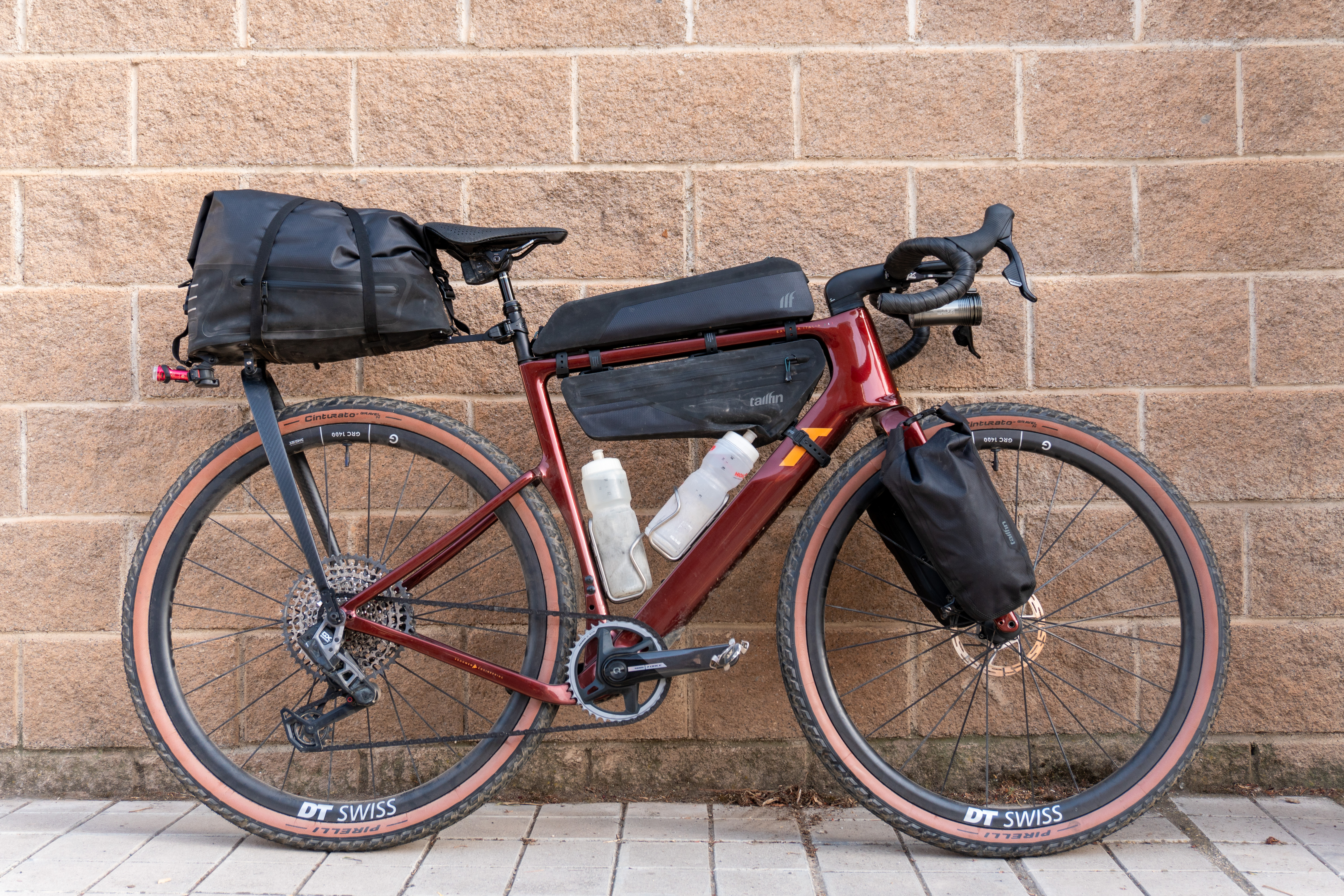
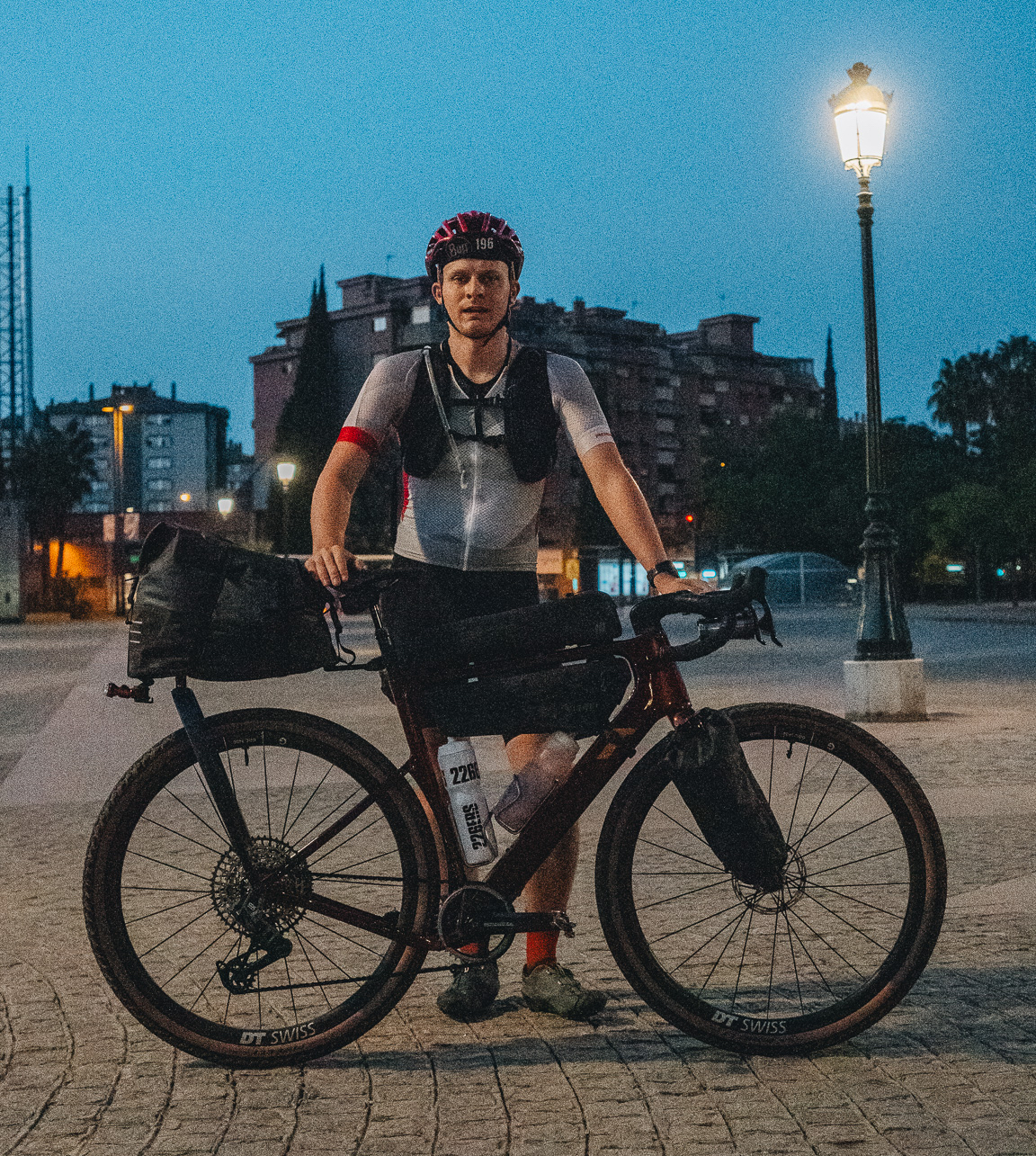
I rode a 3T Extrema Italia – a bike I reviewed for BikeRadar which I’d specifically cherrypicked thinking it would be the ideal tool for the job. I was right.
The Extrema Italia stands out from the crowd with its colossal 57mm tyre clearance – it’s essentially a monster aero gravel bike. I love the way it bulldozes its way down descents – it simply rips its way through terrain you’d typically exercise caution on the vast majority of gravel bikes.
Oscar Huckle / The Cycling Meister
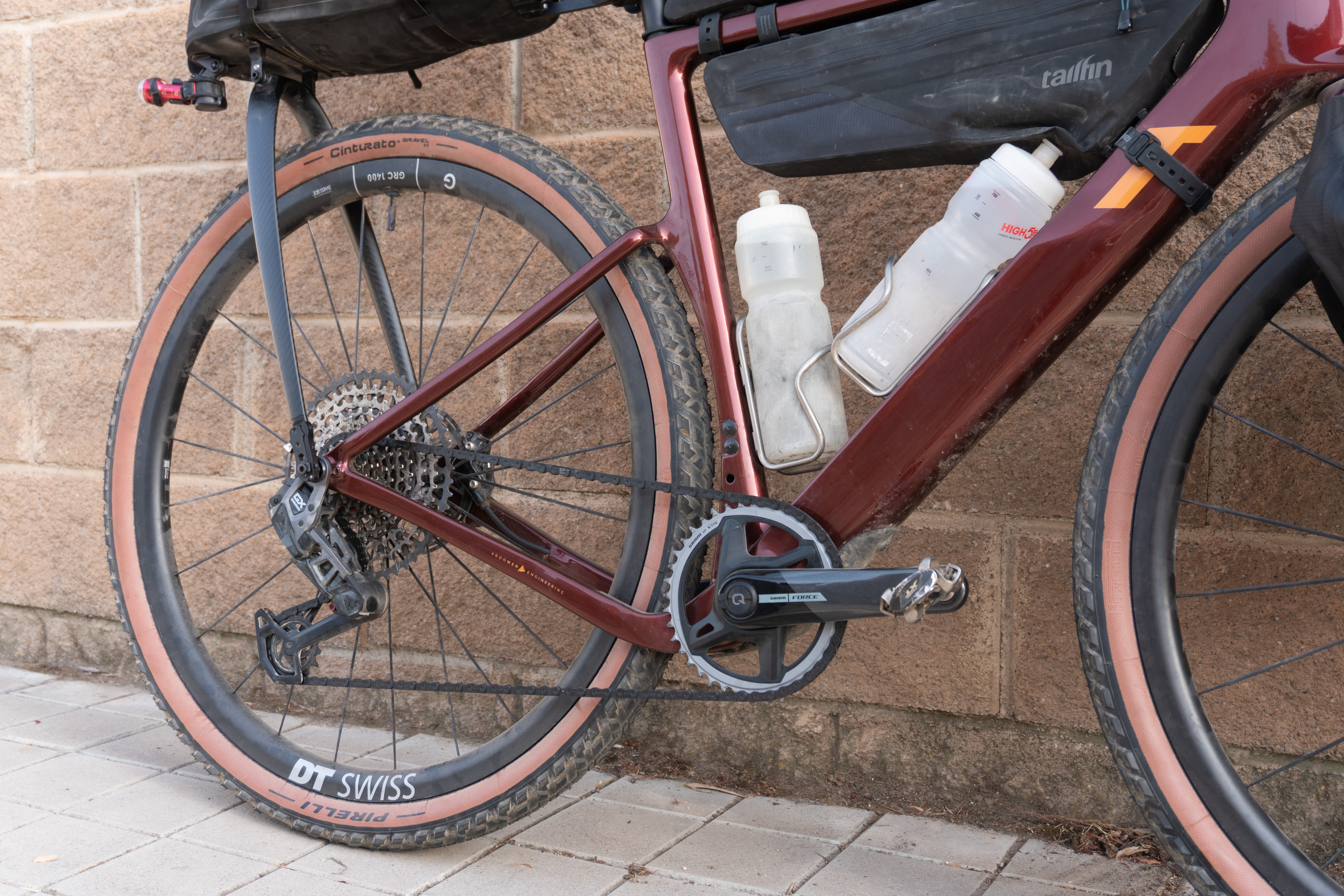
Further sealing the deal was the mullet drivetrain – SRAM Rival shifters paired with a Force power meter crankset and GX AXS Transmission out back, with a whopping 10-52t cassette. The derailleur does away with a conventional hanger, so in theory, there is no derailleur hanger to worry about bending.
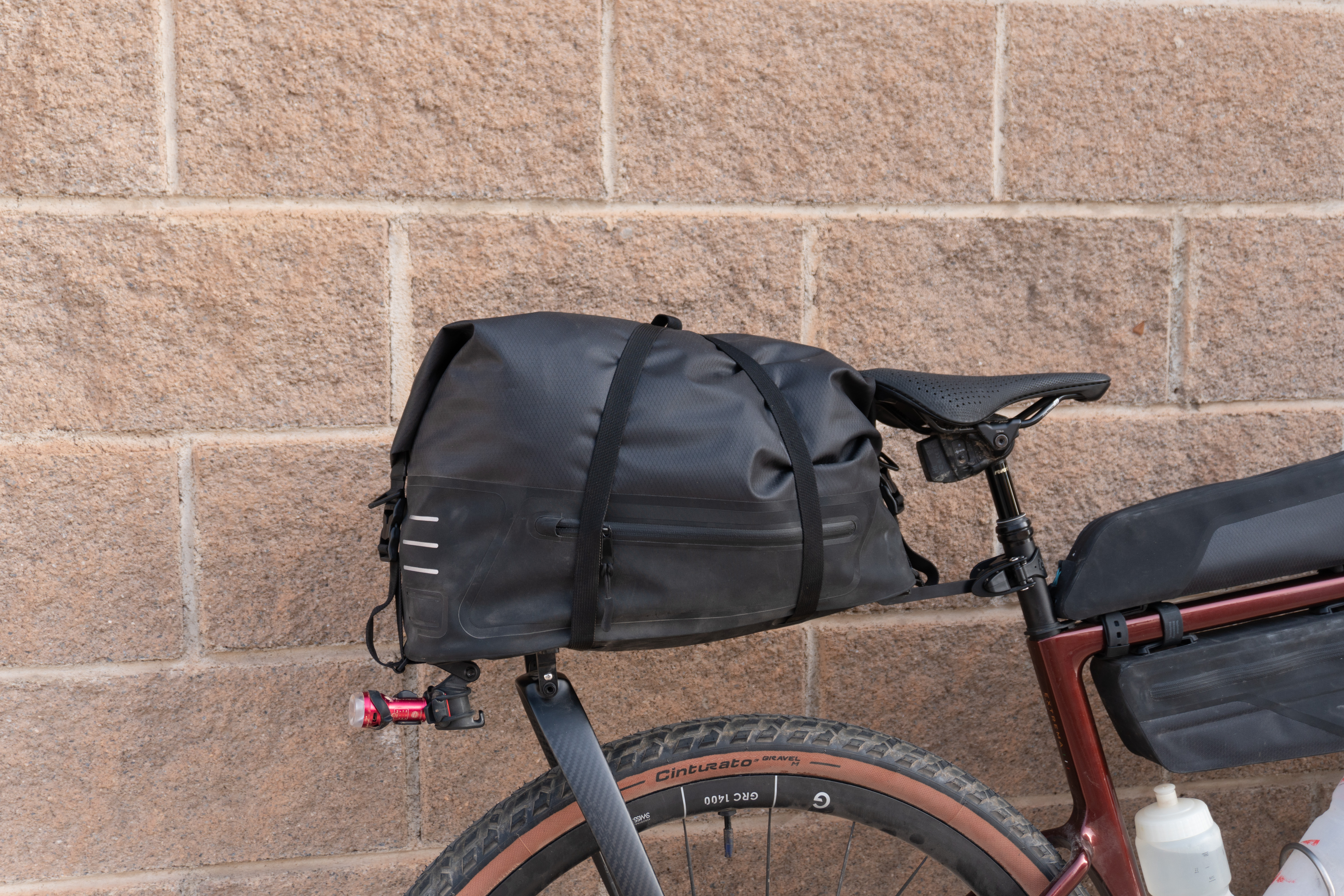
Tailfin very kindly decked me out with a full suite of bikepacking bags, which I’d heavily tested prior to the ride.
Oscar Huckle / The Cycling Meister
The only real chink in the 3T’s armour was the fact I couldn’t run a Tailfin, or any modular handlebar bag.
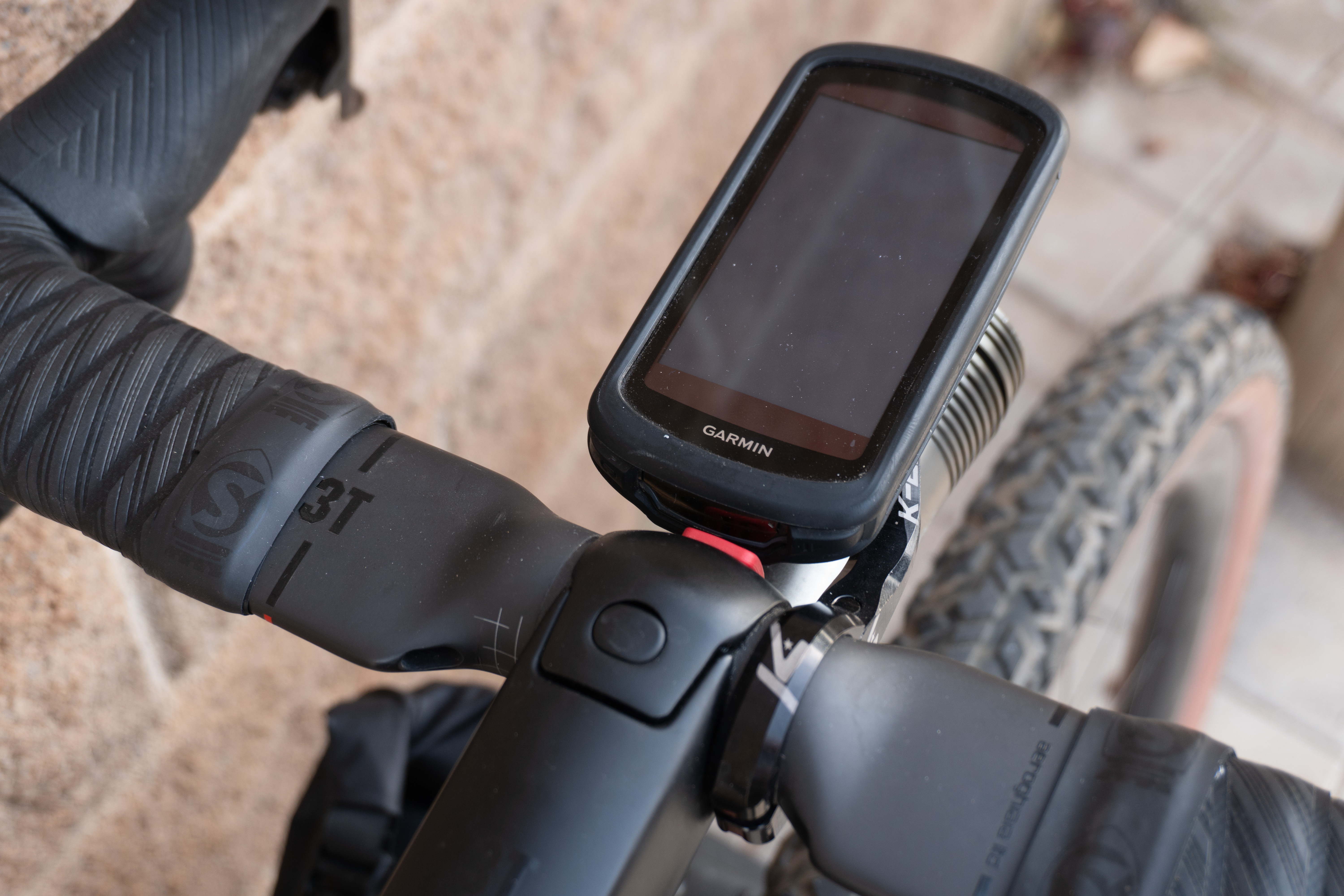
3T specs its Aeroghiaia Integrale handlebars and because the tops have an aero profiling, there isn’t enough of a rounded section to fit a mount. This meant I used fork bags instead which were more than fine, but I had to pack more intelligently to avoid a weight imbalance.
Because of the lack of handlebar real estate, it also meant I had to mount my Exposure Maxx-D light under my Garmin Edge 1040 Solar, so I’d have been scuppered with a strap-on handlebar bag, too.
Oscar Huckle / The Cycling Meister
But the set-up ultimately worked, even if I made some compromises.
I started the ride on new 50mm-wide Pirelli Cinturato Gravel M tyres, as well as a new chain to eliminate any potential issues.
One thing I learned in the Seven Serpents was to stick with familiar equipment, so I made sure I got used to the bike over many months and I had it fitted, to reduce any chances of injury.
I’d suffered with a knee injury for more than half of the Seven Serpents, and there was no way I was going to put myself through that turmoil again.
You can’t prepare for the heat
You know things are serious when you’re wearing a summer-specific jersey at 7am in the morning (Athletic Affair)
Badlands is famed for its fierce temperatures and it’s very easy to come a cropper from dehydration.
This was an element of the race I was particularly worried about – I don’t do well with heat, especially since I’m accustomed to the UK’s rather temperate climate.
Many riders had trained specifically for racing in the hot weather – I even heard stories of people sitting in saunas.
It’s rare for temperatures to exceed 30ºC back home, so I made a point of getting out when it was hot and wearing less breathable clothing to try and simulate the race – for example, wearing a midweight jersey rather than a lightweight summer-specific option.
But despite my training and eating, drinking and religiously applying suncream, none of this really helped. The scratch rate was high this year and I was even aware of many native Spanish competitors struggling with the heat.
Heaven! (Oscar Huckle / The Cycling Meister)
Going up a climb about 100km into the first day, my body started to feel tingly as I crested the top in the blazing heat. I decided to take shade under a tree with four other riders, and a German chap (I didn’t get his name) looked in a terrible state.
This was the right decision and having half an hour to recompose myself made a big difference. I felt rather shaky for the next 30km until I stopped at a restaurant in Gorafe – this was no doubt the beginning of heatstroke.
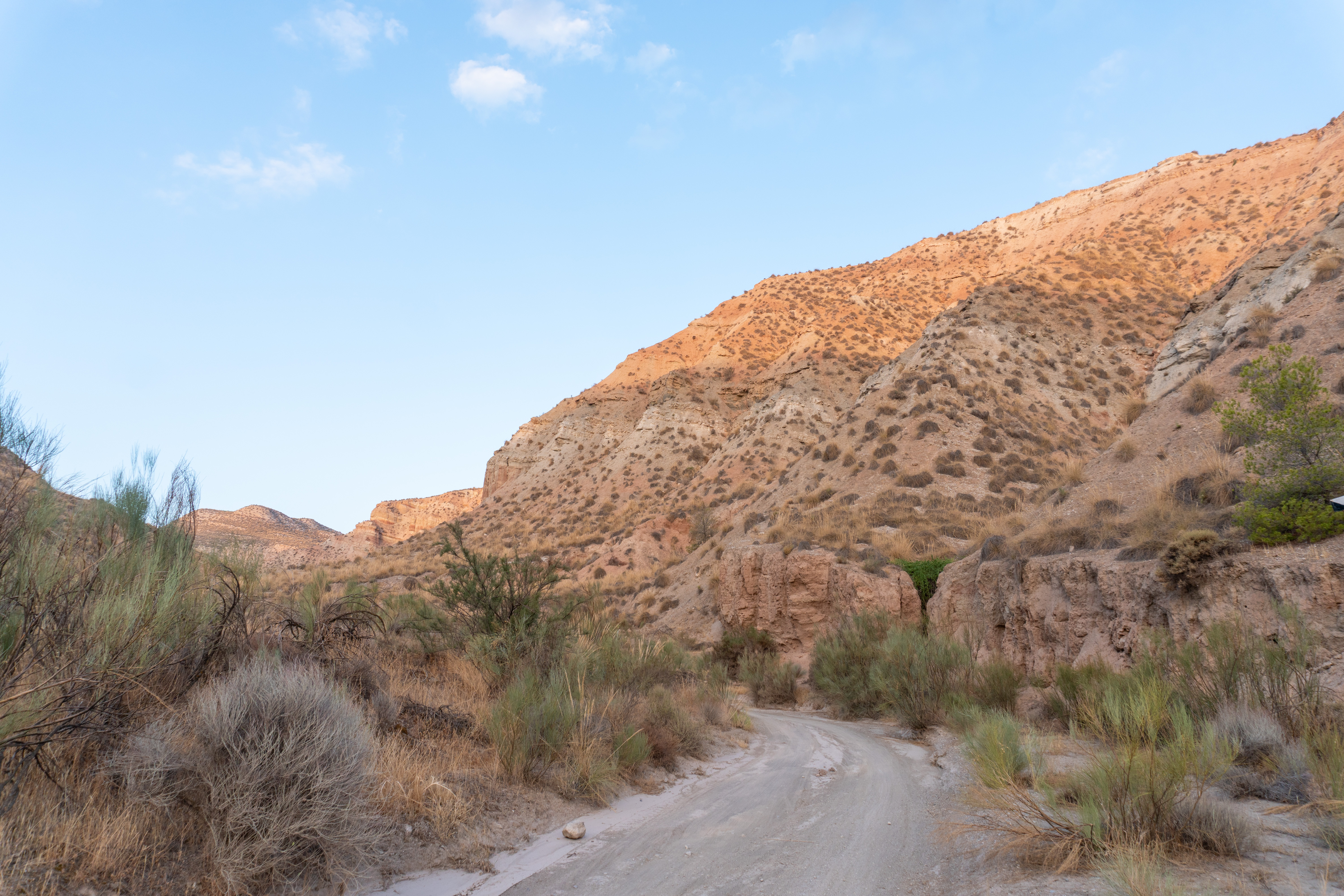
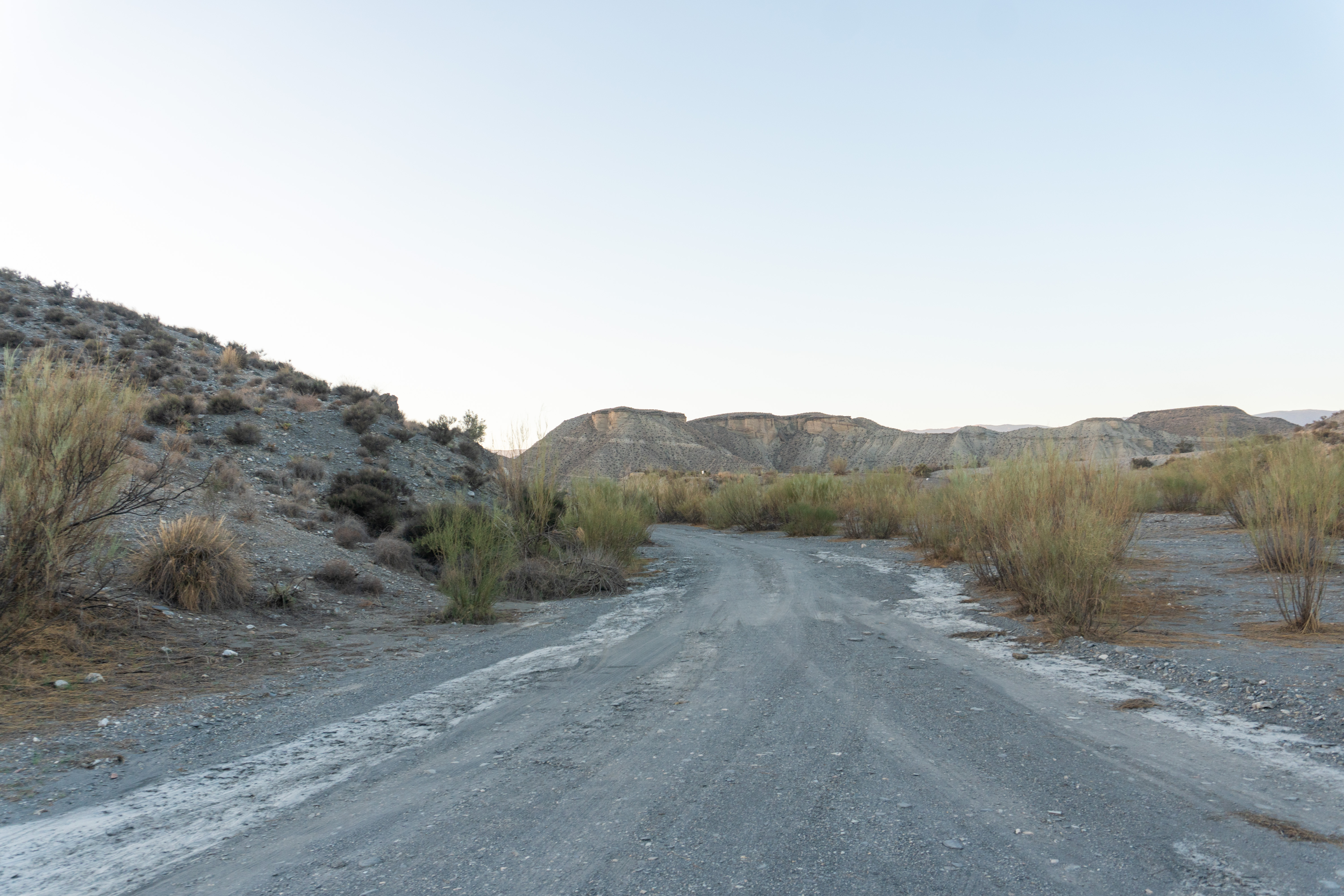
Andalusia is rather arid… (Oscar Huckle / The Cycling Meister)
The next day, I made a point of sitting in a bar in the lively town of Gor during the hottest hours – I didn’t want to experience this sensation again, especially because the section following this town was completely remote for 110km.
Unfortunately, this tactic didn’t work on the third day, where I’d been targeting a village to stop at lunchtime.
Little did I know when I foolishly told fellow rider Steve Midgley (who was in a worse state than me at this point ) that it looked like the town was just coming up only for a brutal unrideable climb to stand in our way.
It was roasting hot by the coast (Oscar Huckle / The Cycling Meister)
When I eventually got to the village, nothing was open and the thought of another 16km in the blazing early afternoon heat was not well-received. It’s safe to say I ransacked the supermarket in the next village and if I’d have had to have ridden for another ten minutes, I reckon I’d have been sick.
This experience came back to bite me later in the day – I suddenly felt terrible a few hours later and had to stand by the side of the trail in the shade to compose myself.
Become a vampire
The shade was appreciated on many occasions (Oscar Huckle / The Cycling Meister)
It was at this point it became evident I couldn’t handle the heat – if I was going to finish and I didn’t have the benefit of daylight, I’d have to go longer into the night (I’d already been finishing after 1am the previous two nights).
After my first (and as it would later transpire, only) hotel stop of the race, I strategised by taking regular ‘shade breaks’ up climbs so I could make some progress during the day but then get the bulk of my riding done at night.
This was the tactic I used on Collado Colativí, a long and steep climb that rises up to 1,387m from the coast, and I hit it in the late morning. While the town of Nijar was a serene place to watch the world go by, it felt a waste of time to wait all day so I thought I’d scale the climb in sections.
The Tabernas desert delivered on its name (Oscar Huckle / The Cycling Meister)
As I descended into the Tabernas desert (the backdrop to films such as Indiana Jones and the Last Crusade), it was my first time I’d ever been roasting while descending.
I would go on to ride through the ramblas (Spanish for dry river beds) until gone 3am that night, before I bivvied half-way up yet another monotonous climb, where I hallucinated there was a vicious dog in the distance.
I’d like to thank a Spanish family who invited me onto their patio for refreshments at 11pm, where I joined two fellow Malaysian riders (Rozaimi Suladin and Hajjaj Mustaffa) I’d been yo-yoing throughout the race – a very kind and selfless gesture.
Sleep is everything
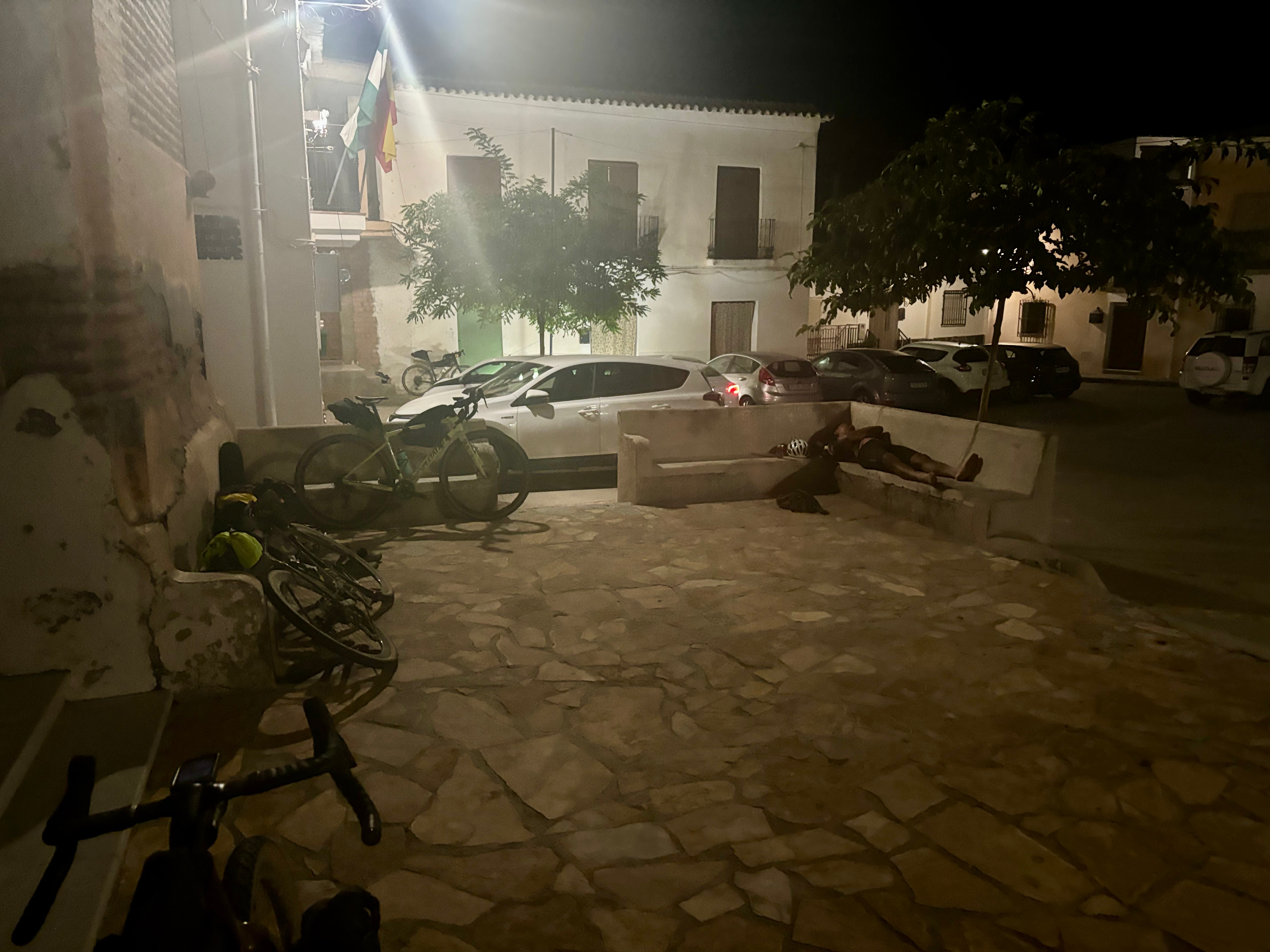
On the final night, I slept on a bench by a church (Oscar Huckle / The Cycling Meister)
It was eye-opening to see just how much faster my competitors could ride when they’d properly slept.
Rozaimi and Hajjaj had had a bad day on that fourth day and told me they got eight hours of sleep at the Spanish family’s house.
The duo caught me up the next day when I’d been running on less than three hours of shut-eye. They slept wherever they could – in Tabernas, one of them even had a lie down at the back of the restaurant we ate at.
Next time, I will sleep for longer. I got myself into a proper state during the final 24 hours and I’ve learnt it’s better to stop and rest because then you’ll go much faster if you choose to soldier on.
The Malaysians proved that point by finishing a couple of hours ahead of me on far more sleep.
Don’t expect the finest Spanish cuisine
Tostada was a breakfast staple (Oscar Huckle / The Cycling Meister)
Sadly, Spanish tapas were nowhere to be found on the menu on the Badlands route.
Instead, riders had to settle for bocadillos (ham sandwiches) and tostada at breakfast (toasted bread drizzled with tomato sauce and olive oil). While I was happy enough with tostada, bocadillos just didn’t cut it, especially when you carried a spare sandwich for later in the day and the contents had been in a salty, sweaty pack, or when you wanted a hot meal at lunch or dinner. I quickly got sick of them.
My largest gap between a hot meal was from the afternoon of the first day to the night of the third day, where I had a gluttonous seafood feast at the coast. Boy, was I thankful for that meal.
Fortunately, the food from that point in improved considerably, with more bars and restaurants along the way. Regularly stocking up at supermarkets also proved a godsend.
The last 120km is outrageous
A rare bit of downhill (Oscar Huckle / The Cycling Meister)
After most of the pack are finished off by the heat and ferocity of the course, the last 120km packs in a cruel 4,200m of climbing to kill off any remaining survivors.
Aggressively steep 1,000m cols, near-vertical roads between mountain towns, hike-a-bike and endless nadgery off-road climbs – this section had it all.
To put into context how tough this section was, I rode a measly 100km on the fifth day, having started at around 6:30am and finished at almost midnight.
I was so tired that I had to stop for three hours of sleep on a bench outside a church 36km from the finish because my body had completely shut down and I just couldn’t carry on.
Some say that the 110km remote section after Gor is the hardest part of the race – I’d argue it’s definitely this final stretch by a long shot.
I think I’d ride Badlands again
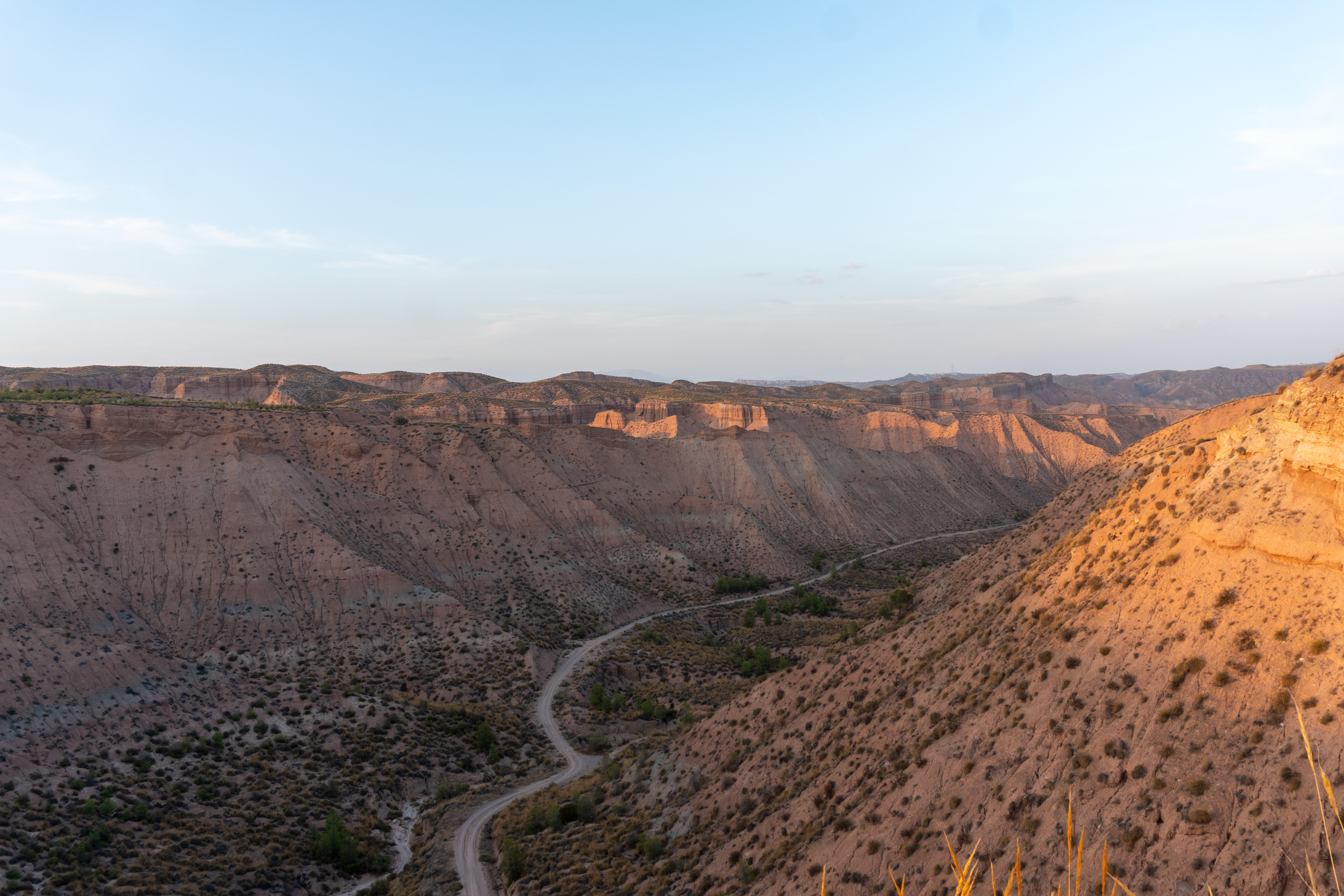
I think about riding in the Gorafe desert again every day (Oscar Huckle / The Cycling Meister)
I didn’t go into Badlands in the best frame of mind for various reasons and although I was determined to finish, I didn’t have anything to prove after my Seven Serpents victory.
But Badlands really proved to be one hell of a character-building experience, despite my suffering.
Certain images, in particular the Gorafe desert section, have been burned into my mind and I’m still thinking about the race fondly six months on – I haven’t reflected back on the Seven Serpents anywhere near as positively.
This medal’s one for the mantelpiece (Oscar Huckle / The Cycling Meister)
Badlands taught me a lot not only about my strengths as a cyclist but my character as a person. It’s since inspired me to carry on pursuing ultra-racing and I’ve signed up for two events this year – Mother North and Across Andes.
I’m itching to go back and soak up the rugged Spanish scenery again. Whether that be in the form of racing Badlands again, or revisiting the course in my own time when the sun is less fierce, I’m not sure but Andalusia has really captured my heart.












 The Cycling Meister