Review: Specialized S-Works Prevail 3 helmet 

Reviews
Oscar Huckle modelling Specialized S-Works Prevail 3 helmet

Rating: 4 out of 5.

Verdict: A great all-round helmet with excellent ventilation and a reassuringly high safety rating   

Pros

+ Good fit
+ Light weight
+ Very comfortable
+ Excellent safety rating
+ Striking appearance
+ Wide range of colour options

Cons

Cranial support could use more up-down adjustment
MIPS Air Node liner gets sweaty at the brow in warmer temperatures 

  • £250 / $299.99 / €290 / AU$425 
Oscar Huckle modelling Specialized S-Works Prevail 3 helmet
Annabel Huckle / The Cycling Meister

The S-Works Prevail 3 helmet is Specialized’s flagship lightweight road helmet, with the brand claiming it’s “the ultimate all-round helmet that excels in hot conditions, strenuous climbs and mountainous stages”.  

The helmet has received quite the overhaul in its third generation, with the various updates culminating in a claimed 24.5 per cent improvement in surface area ventilation over the outgoing Specialized S-Works Prevail Vent II helmet. 

Specialized, in fact, goes even further to claim that the S-Works Prevail 3 is the most ventilated helmet it’s ever made. 

In testing, the S-Works Prevail 3 has proven a top performer, impressing with its smart design and the ventilation improvements are instantly noticeable on the road or trail. 

It’s a shame the brow pad of the MIPS Air Node liner is the only real weak link of the package. 

Specialized S-Works Prevail 3 helmet details and specification 

Specialized S-Works Prevail 3 next to Specialized S-Works Evade 3 helmet
The S-Works Prevail 3 (left) next to the S-Works Evade 3 (right) – Oscar Huckle / The Cycling Meister

The S-Works Prevail 3 sits alongside the S-Works Evade 3 at the top of Specialized’s helmet pecking order, with the Evade prioritising aerodynamics over all-out ventilation. 

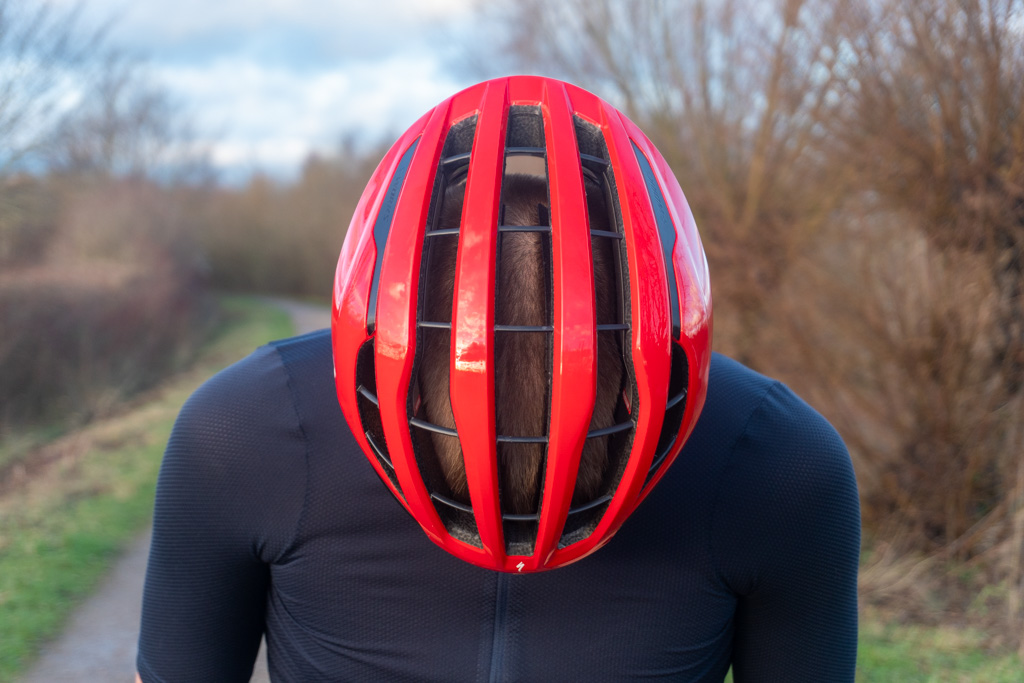
The key way in how the Prevail 3 is more ventilated than its predecessor is that Specialized has removed the foam bridges from the helmet’s centre, effectively creating through-air channels.

There’s also no shortage of vents – by my count, there are 30. 
Oscar Huckle modelling Specialized S-Works Prevail 3 helmet
The vents are sizeable – Annabel Huckle / The Cycling Meister

The S-Works Prevail 3 incorporates MIPS’ Air Node technology, which Specialized says is integrated directly into the helmet padding, with a “sleek, low-friction layer designed to dissipate rotational forces”. 

Specialized has also used a new system called ‘Air Cage’, which sees woven aramid cables (five of them) traverse the helmet that are anchored to carbon fibre side panels – most brands will typically use more EPS foam instead. 

Should these be impacted, Specialized says these cables effectively work as a suspension bridge, and are designed to distribute the forces throughout the helmet. 

The S-Works Prevail 3 has earned a 5-star rating in independent tests conducted by Virginia Tech’s Helmet Lab. 

Oscar Huckle modelling Specialized S-Works Prevail 3 helmet
The ANGi sensor fits next to the thumbwheel – Annabel Huckle / The Cycling Meister

The helmet is also compatible with the ANGi Mindset fit system, a small node that fits to the back of the helmet and sends an alert to a pre-designated contact should you experience an impact. It’s a £45 add-on that doesn’t come with the helmet. 

The S-Works Prevail 3 features in-built storage for cycling sunglasses and Specialized continues to use its Adjustable Tri-Fix web strap systems for claims of boosted comfort. 

Oscar Huckle modelling Specialized S-Works Prevail 3 helmet
Some gaping vents at the rear – Annabel Huckle / The Cycling Meister

The helmet is available in three size options, from small to large. 

As well as the Vivid Red helmet on test, you can also pick between eight other colours, including Black, White Sage Metallic, White Mountains, White, White / Black, Black / Chrome and Hyper Dove Grey. 

On the scales, my size-large S-Works Prevail 3 CE helmet weighs 305g , 5g heavier than claimed.  

Specialized S-Works Prevail 3 helmet performance

Oscar Huckle modelling Specialized S-Works Prevail 3 helmet
The S-Works Prevail 3 even saw use on a bikepacking trip – Jeremy Woodward / The Cycling Meister

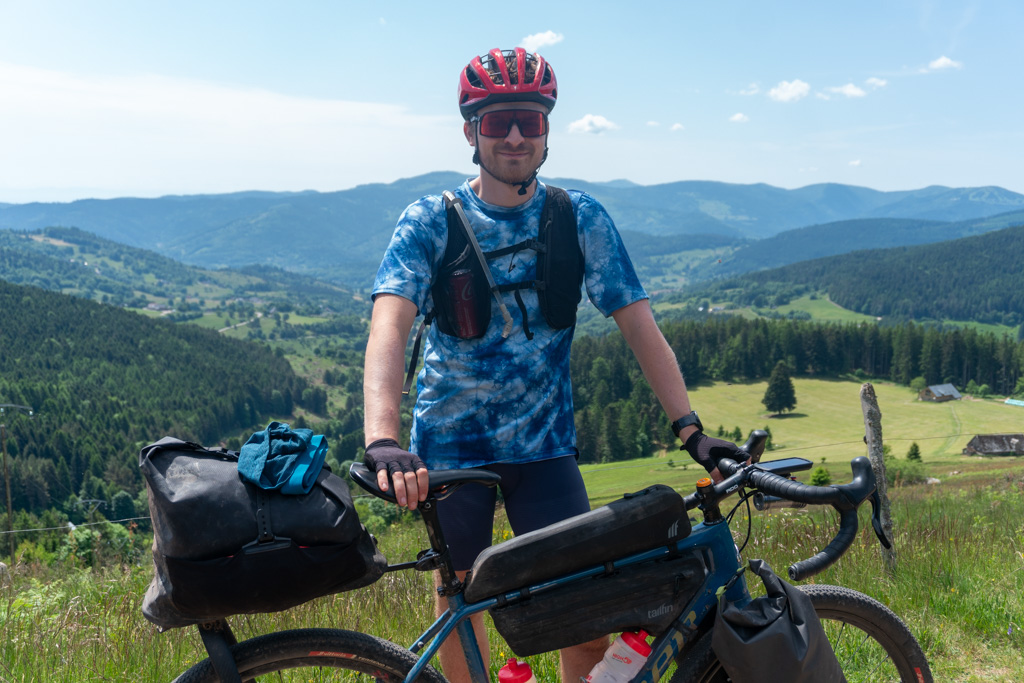
I’ve been testing the S-Works Prevail 3 over the past three months from the middle of spring and into the summer, predominantly in the UK but also on a 400km French bikepacking trip in the Vosges mountains. Conditions have ranged from mid single-digit temperatures to 30ºC heat. 

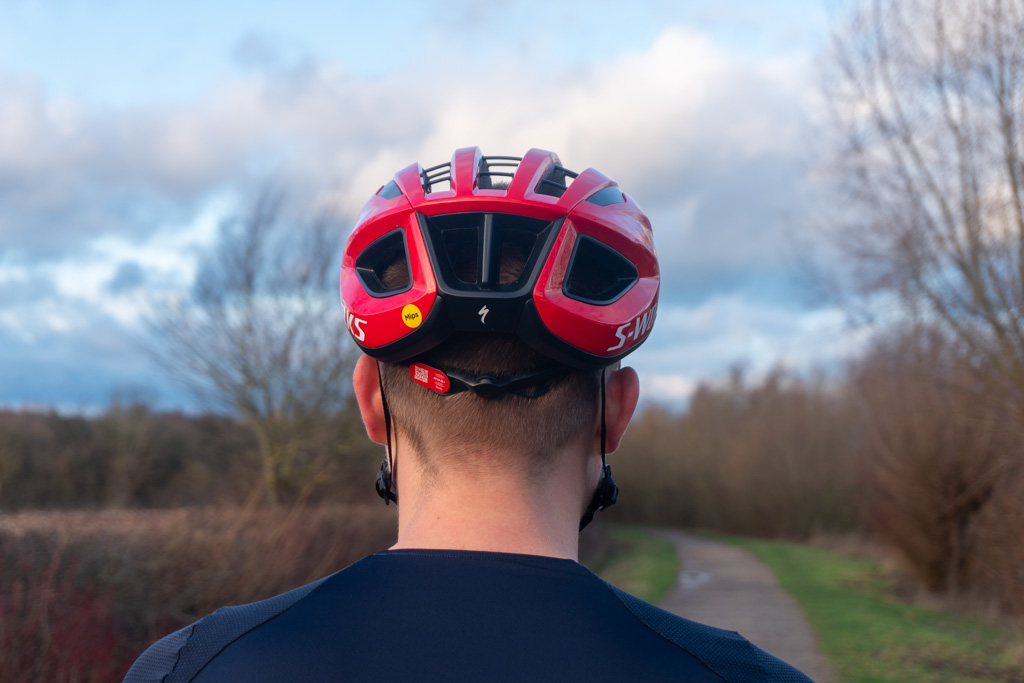
Starting with its appearance, the S-Works Prevail 3 is a smart-looking helmet, with those gaping vents particularly at the front of the helmet, making it stand out from the crowd. 

It’s much sleeker looking than the S-Works Prevail II Vent it replaces, with its awkwardly high and pointy rear.
Oscar Huckle modelling Specialized S-Works Prevail 3 helmet
The helmet looks much sleeker at the rear than its predecessor – Annabel Huckle / The Cycling Meister

The Prevail 3’s finish is very premium, and I love the Vivid Red colourway – but if that’s not your cup of tea, there’s plenty of other colour options you can choose from. 

Like Specialized’s other helmets, the S-Works Prevail 3 is better suited to fairly wide oval-shaped heads (like mine). 

It sits a little higher on my head than the Kask Valegro, my benchmark lightweight helmet, but not as high as Specialized’s second-tier Propero 4 helmet

Oscar Huckle modelling Specialized S-Works Prevail 3 helmet
It’s easy to adjust the fit – Annabel Huckle / The Cycling Meister

The tried-and-tested Adjustable TriFix webbing system proved easy to adjust in tailoring the fit of the helmet, but a common complaint I have with Specialized helmets is that I wish the cranial support had more up-down adjustment for greater coverage.  

While the thumbwheel on the S-Works Prevail 3 is easy to adjust, the Kask Valegro continues to be my gold standard when it comes to fit because it has in-built up-down adjustment. 

The S-Works Prevail 3 proved a top performer when riding and not just on sweltering days – my head never felt cold riding in mid single-digit temperatures, even without a cap or buff.
Oscar Huckle modelling Specialized S-Works Prevail 3 helmet
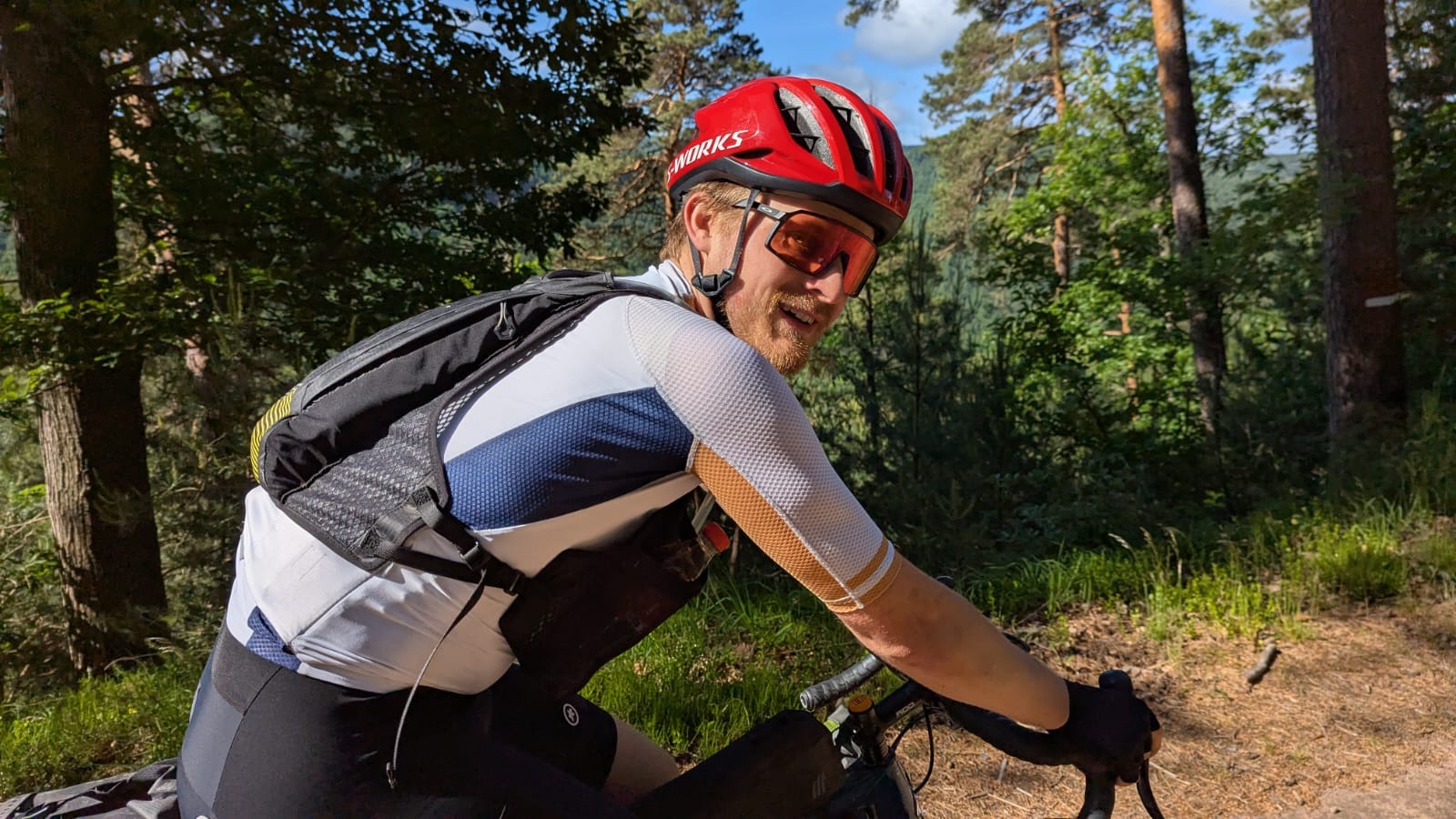
The helmet is a great performer on warm escapades – Robert O’Keefe / The Cycling Meister

On warmer days, the sizeable vents do a great job of guiding the wind through the helmet, which was something I appreciated particularly on the long days of my bikepacking trip, as well as on extended training rides.   

On rides over 27ºC heat, I noticed the brow pad of the MIPS Air Node padding would get more saturated than the rest of the helmet. 

It never got to the point where sweat dripped into my eyes, but it’s certainly something I was conscious of, and this isn’t something I’ve experienced wearing the Kask Valegro. 

It’s worth noting that I’m not a heavy sweater and that I tend to feel warmer temperatures more than most, so your threshold may vary. 
Oscar Huckle modelling Specialized S-Works Prevail 3 helmet
The helmet played nicely with my sunglasses – Jeremy Woodward / The Cycling Meister

The sunglasses storage worked as described, with the S-Works Prevail 3 ably holding my Oakley Sutro S and Sutro Lite glasses, as well as my 100% S3’s. 

However, I found I had to concentrate when fitting my sunglasses into the dock, and it wasn’t something I could do while riding. 

At £250 / $299.99 / €290 / AU$425, the S-Works Prevail 3 is far from a cheap helmet. Kask’s Valegro pips the helmet in terms of performance and is cheaper, retailing for £185 / $250 / €209 / AU$330. 

Specialized S-Works Prevail 3 helmet bottom line 

Oscar Huckle modelling Specialized S-Works Prevail 3 helmet
It’s mostly a big thumbs up – Annabel Huckle / The Cycling Meister

The S-Works Prevail 3 is an excellent helmet in the American brand’s line-up and isn’t just well-suited to warm conditions – it’s a top performer in milder temperatures too. 

It also offers a very comfortable fit (even if it sits a little high and I wish the cranial support were better) and it’s a great-looking helmet to boot. 

The fact it comes with a 5-star safety rating from the Virginia Helmet Tech Lab is very reassuring, too.

If you regularly ride in hot conditions, the S-Works Prevail 3 will be a trusty companion but the brow pad of the MIPS Air Node liner is a limiting factor – although your mileage and heat tolerance will vary. 

Kask’s Valegro remains my top pick if you’re after a ventilated, lightweight road helmet.
Review: Oakley Sutro Lite glasses

Reviews
Oscar Huckle wearing Oakley Sutro Lite glasses

Rating: 4 out of 5.

Verdict: Top quality glasses with a standout lens 

Pros

+ Prizm lens quality
+ Excellent lens coverage
+ Cool aesthetics
+ No fogging
+ Replaceable lenses 

Cons

– Arms needed to be fitted under helmet straps to be secure
– Lens replacement process a little finicky

  • from £168 / $214 / €188 
Oscar Huckle wearing Oakley Sutro Lite glasses
Annabel Huckle / The Cycling Meister

Oakley’s Sutro Lite glasses share the same retro-inspired look as the Sutro but with a semi-rimless design, which the brand claims allows for a greater field of view and improved ventilation. 

I’ve found the Sutro Lite to be impressive performers in testing, with the standout Prizm lens continuing to be leaps-and-bounds above the competition. There’s one annoying flaw you’ll need to learn to live with, though. 

Oakley Sutro Lite specifications and details 

Oakley Sutro Lite glasses
Oscar Huckle / The Cycling Meister

The Sutro Lite is one of eight designs in the Sutro range – there’s the Sutro, Sutro S (a scaled-down Sutro) and Sutro Ti, with each model then having a ‘Sweep’ version, which uses the brand’s famous sweep lens shape. Rounding out the range are a vented lens option for the Sutro Lite Sweep and Sutro Ti Sweep. 

Oakley says the Sutro Lite’s design is inspired by the daily life of urban cyclists, with the high-wrap shield lens creating a bold look. 

Big glasses are the trend in cycling, with models such as the 100% S3, POC Devour and the Koo Hype’s to name a few, but the Sutro Lite’s are slightly more subdued than those examples. 

Oakley Sutro Lite glasses detail
Oscar Huckle / The Cycling Meister

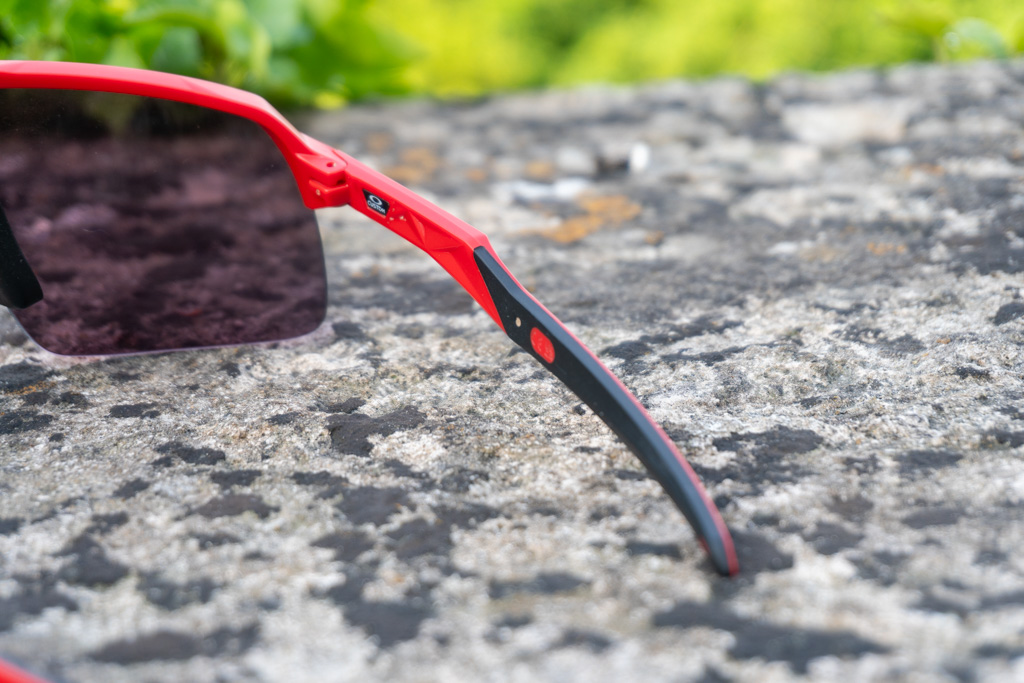
Oakley’s signature O-Matter frame material is claimed to be durable and provide all-day comfort, and the brand uses its Unobtanium rubber on the inside of the temple and the nose pad for optimal grip. 

The Sutro Lite’s are offered in 21 options, so there’ll likely be a frame colour and lens to suit you. 

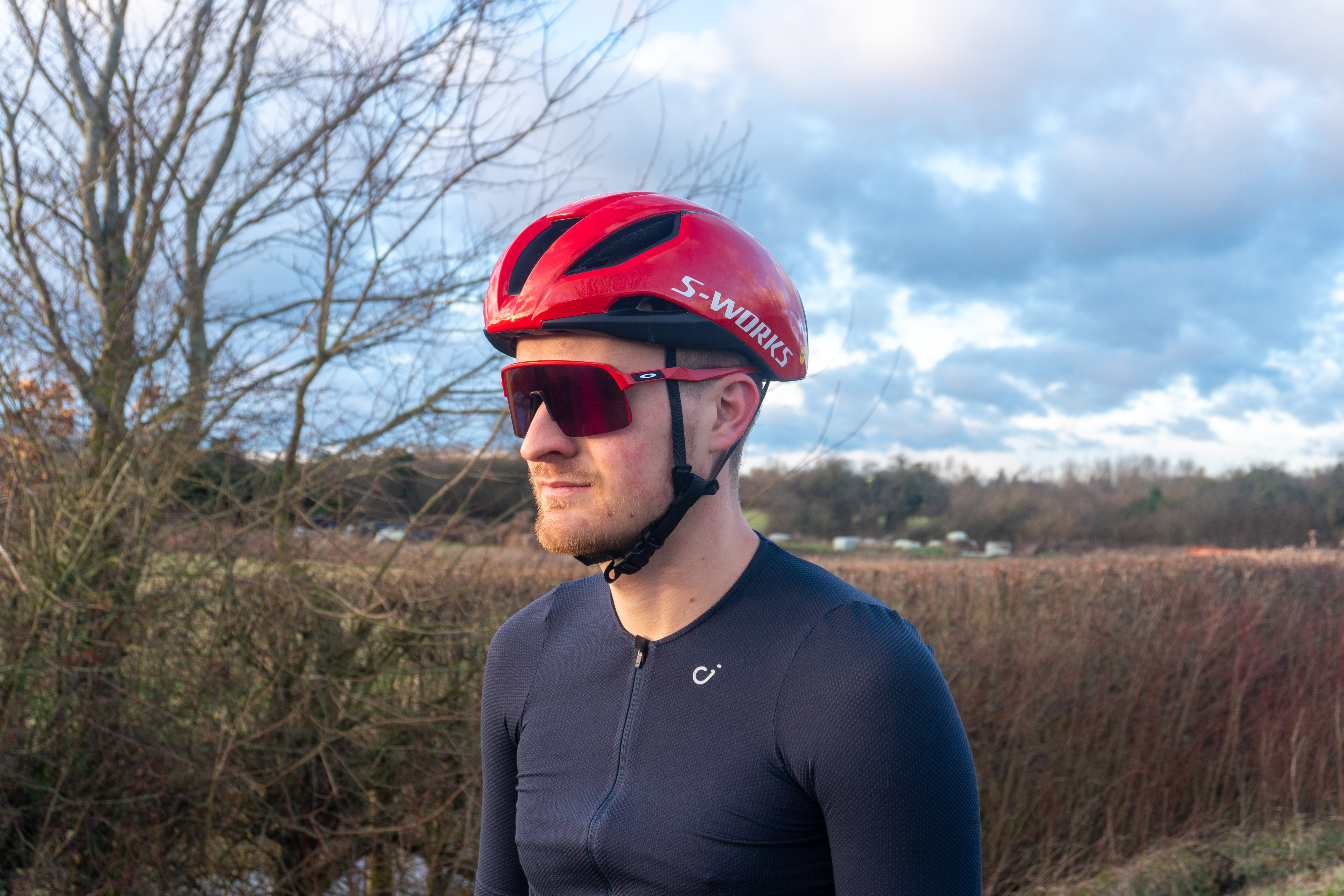
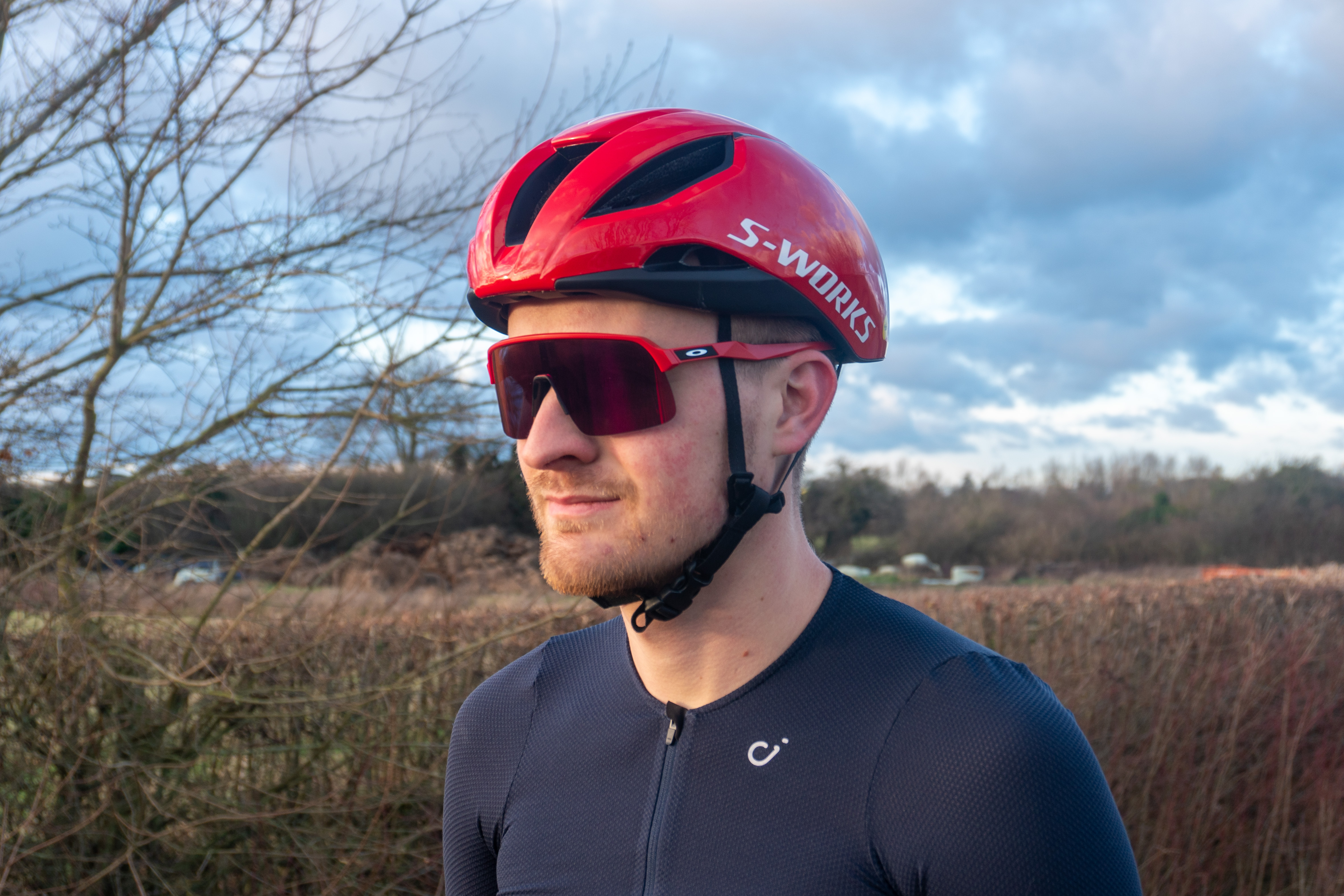
I’ve got a custom set of Sutro Lite’s in for test, blending a ‘Matte Redline’ frame with a Prizm Road Iridium lens, which retail for £192. 

These glasses come with the Prizm Road Iridium lens, which have a 20 per cent light transmission and are optimised to accentuate the blacks and greys on the road. 

The lenses are interchangeable, so you could buy multiple lenses if you also want to use them for mountain biking or more casual use, for example, with a replacement Prizm lens setting you back £73 / $85 / €80 apiece. 

Oakley Sutro Lite glasses detail
Oscar Huckle / The Cycling Meister

Be aware the lens replacement method differs from the Sutro and Sutro S. You first need to push the nosepiece back and disengage it from the frame, before pulling the frame away from the lens hooks and then working the lens out from the rest of the frame. 

This is reasonably straightforward, although it can be a little disconcerting pulling the frame away from the lens. You’ll also want to make sure the nose pad is kept in position, otherwise it can fall off the frame’s metal hook and the last thing you want to do is scratch your lens. 

There’s just one-size-fits-all for the Sutro Lite’s and my glasses tipped the scales at 32g – 1g lighter than the Sutro S’s. 

Oakley Sutro Lite performance 

Oscar Huckle wearing Oakley Sutro Lite glasses
Annabel Huckle / The Cycling Meister

I tested the glasses for three months from wintry conditions to warm and sunny days on road and gravel rides, and I’ve also used them casually. 

Starting with their appearance, I prefer the Sutro Lite’s look over the regular Sutro’s because the semi-rimless design doesn’t make their base stand out – although I appreciate that’s a subjective opinion. 

While they look a little odd for casual use, the retro-inspired aesthetic is certainly softer on the eye than the brand’s Encoder or Kato glasses, which are purely performance-oriented. 

You get an impressively wide field of view when the Sutro Lite’s are on your face, although you can just see where the arms meet the frame if you really look to the side. That said, the full frame of the Sutro’s doesn’t negatively intrude into your eyeline either, so it’s horses for courses. 

As is always the case with Oakley glasses, the Prizm lens is the star of the show. The visual clarity is superb, with zero distortion and the glasses have never fogged up outside of rain, even in humid conditions. You can easily pick out road imperfections and the lens gives you ample sun protection. 

While the Prizm Road lens is perfectly adequate for gravel riding, I prefer Oakley’s Prizm Trail option which accentuates greens and browns and would rather have this benefit on technical trails and take a slight hit on tarmac sections. 

Oscar Huckle wearing Oakley Sutro Lite glasses
Annabel Huckle / The Cycling Meister

My only real qualm with the Sutro Lite’s are that when worn outside of the helmet straps (as fashion dictates), they’d slip downward ever so slightly and require occasional adjustment. 

I think this happens because the arms are a little on the long side, rather than it being a fault of the Unobtanium rubber (which I’ve always found to perform as claimed). 

I found I needed to position the arms under my helmet straps to keep them secure and they never slipped. 

In terms of value, the Sutro Lite’s command a premium but as with any Oakley glasses, they’re an investment. I have no reason to suspect the frame won’t be durable and the Prizm lenses are worth stumping up for alone. 

100%’s S3 glasses are marginally cheaper at £150 / $139 /  €159 and while I really like their shape, the HiPER lens is a step-down from Oakley’s Prizm range. 

Oakley Sutro Lite bottom line 

Oakley Sutro Lite glasses
Oscar Huckle / The Cycling Meister

Oakley’s Sutro Lite is an excellent addition to its popular Sutro line, with a superb Prizm lens and a cool aesthetic. 

The fact that I have to wear the glasses under my helmet straps for optimal security is a niggle, which prevents the Sutro Lite’s from scoring higher. 

That said, I’m sure I’ll still be reaching for the Sutro Lite’s for years to come. 

First ride review: Specialized Tarmac SL8 Expert

Reviews
Specialized Tarmac SL8 Expert against a wall

Rating: 4.5 out of 5.

Verdict: The Tarmac SL8 impresses in all respects and sets the standard for all-round race bikes 

Pros

+ Competitively lightweight frame
+ Excellent climber
+ Superb descending performance
+ Exciting handling 

Cons

– Speed Sniffer aesthetics
– Price  

  • £5,500 / $6,499.99 / €6,500
Specialized Tarmac SL8 Expert against a wall
Oscar Huckle / The Cycling Meister

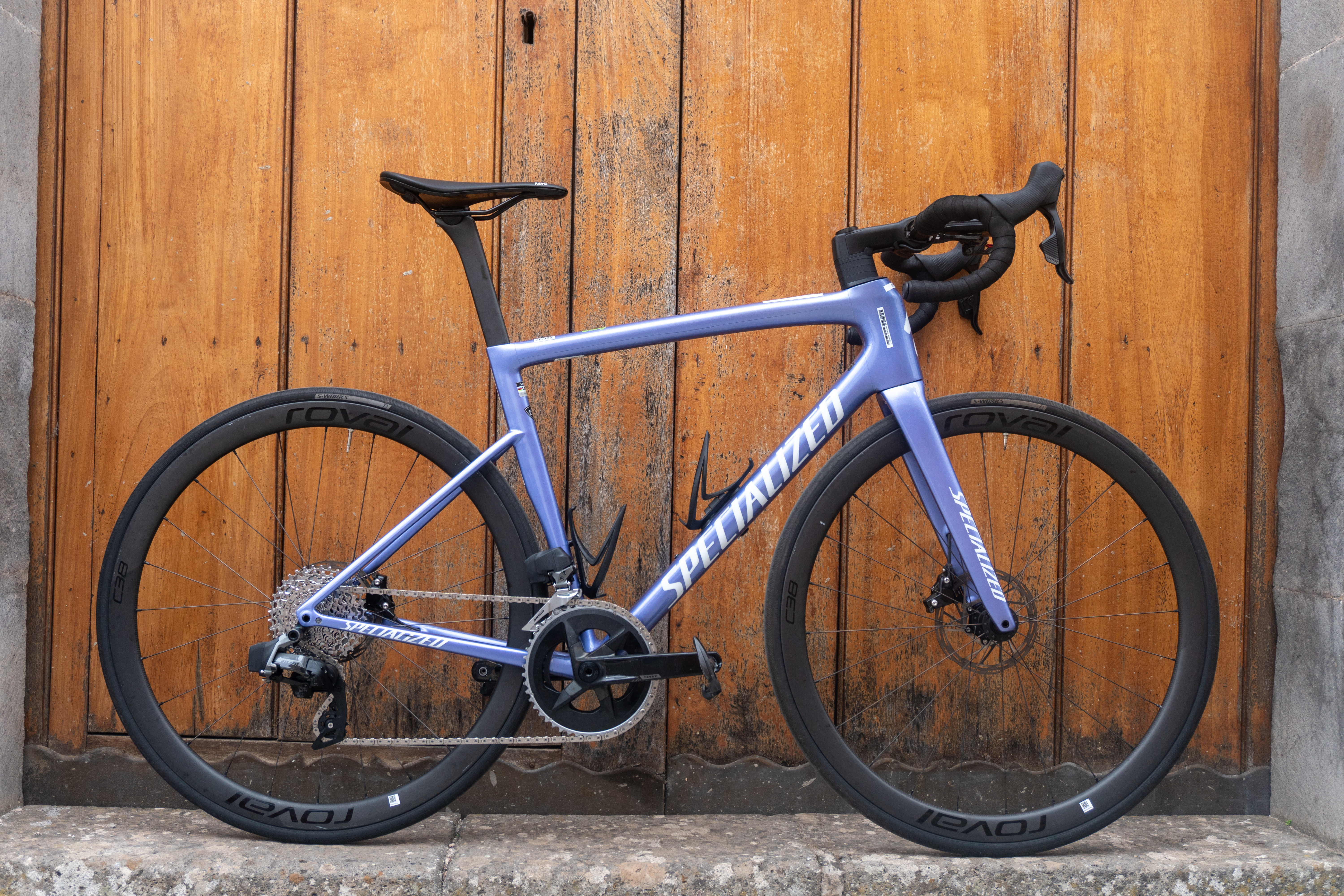
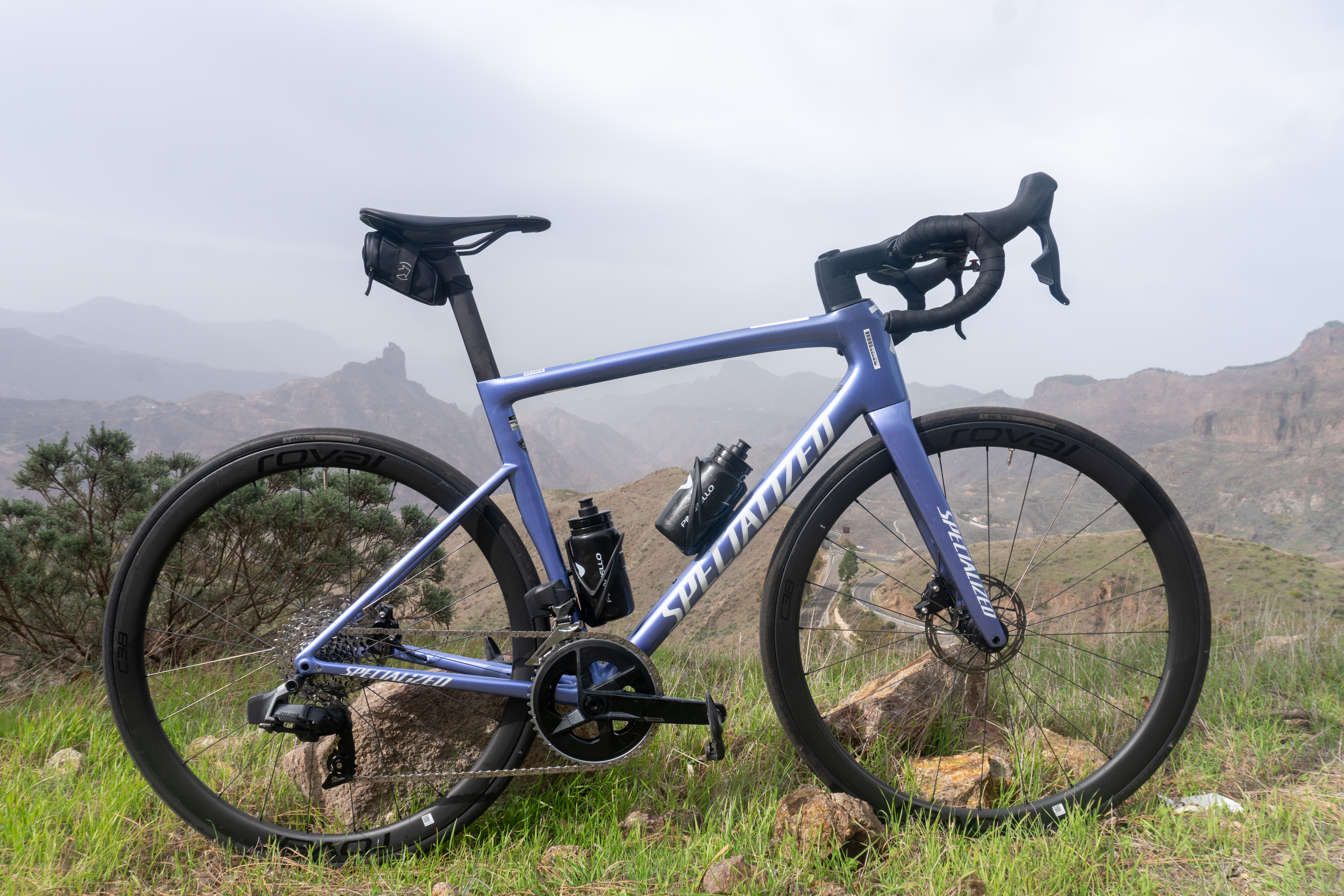
Specialized’s hotly anticipated Tarmac SL8 all-rounder race bike largely sticks with the winning ingredients of the Tarmac SL7 while increasing compliance, decreasing weight and improving aerodynamics. 

Any fat that was on the already lightweight Tarmac SL7 has been trimmed, with the new bike claimed to weigh a feathery 685g in a size 56cm in its S-Works trim. That the second-tier frame on test here is claimed to weigh 780g in an equivalent size is particularly impressive, undercutting the S-Works Tarmac SL7 by 20g. 

My initial impressions, based on a smidge under 200km’s of riding, is that Specialized has achieved its goal of subtly improving its race bike. 

Specialized Tarmac SL8 Expert frame details 

Specialized Tarmac SL8 Expert against a wall
Oscar Huckle / The Cycling Meister

The Tarmac SL8 Expert is constructed from what Specialized calls its FACT 10r carbon fibre, two steps down from the FACT 12r reserved for the S-Works. 

The brand says it has overhauled the bike’s ‘leading edges’, claiming the Tarmac SL8 is 16.6 seconds faster than the now-discontinued third-generation Venge at 45kmph. But the tube profiles are notably rounder and more svelte than the Tarmac SL7’s, with more than a little influence from the brand’s Aethos climbing bike. 

These tube shapes are claimed to improve compliance, with Specialized claiming a 6% increase in comfort through the saddle over the SL7. The narrower seat tube also helps, and Specialized claims an improvement in aerodynamics too. The bottom bracket, head tube and fork are also said to have a 33% stiffness-to-weight ratio gain. 

Oscar Huckle / The Cycling Meister

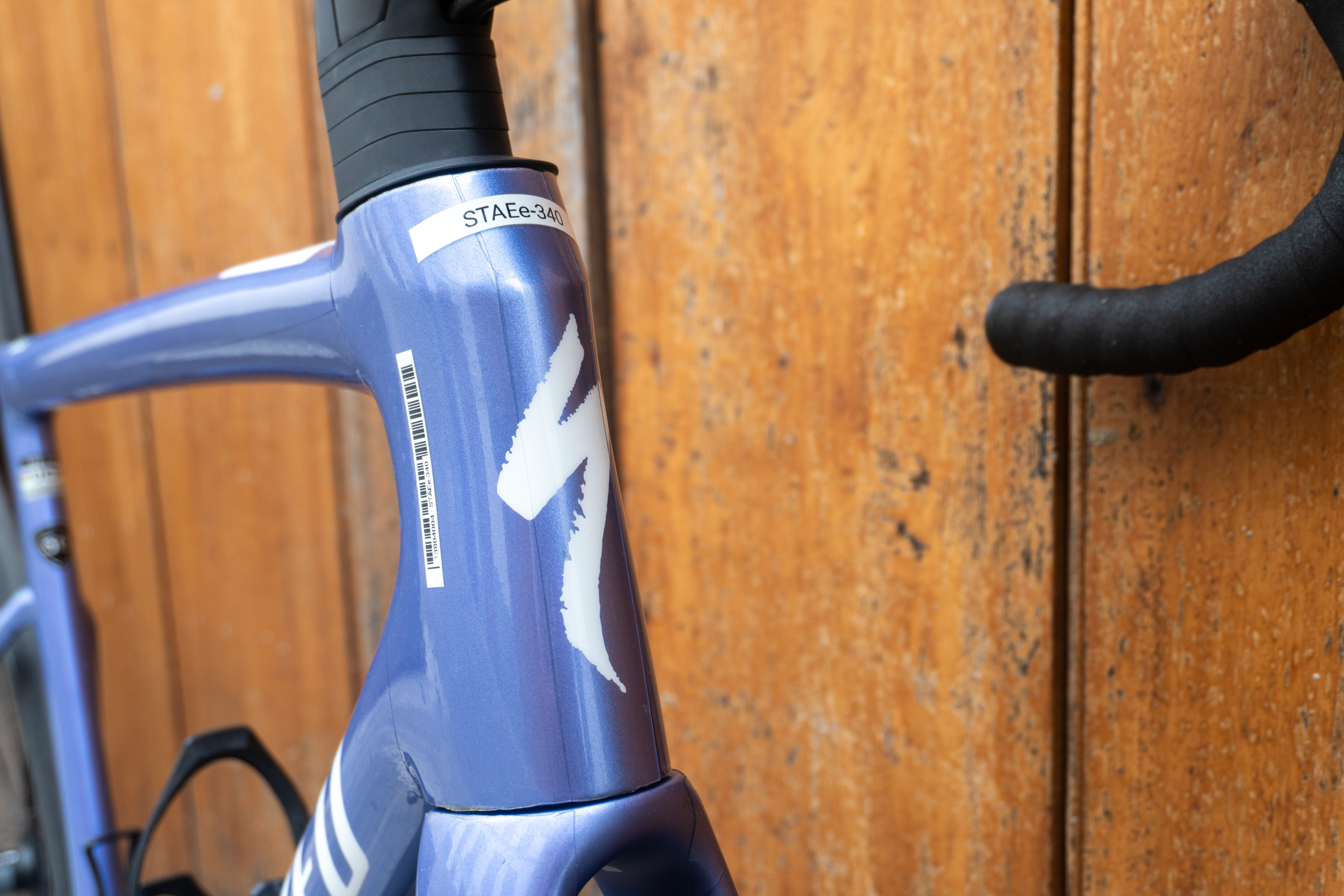
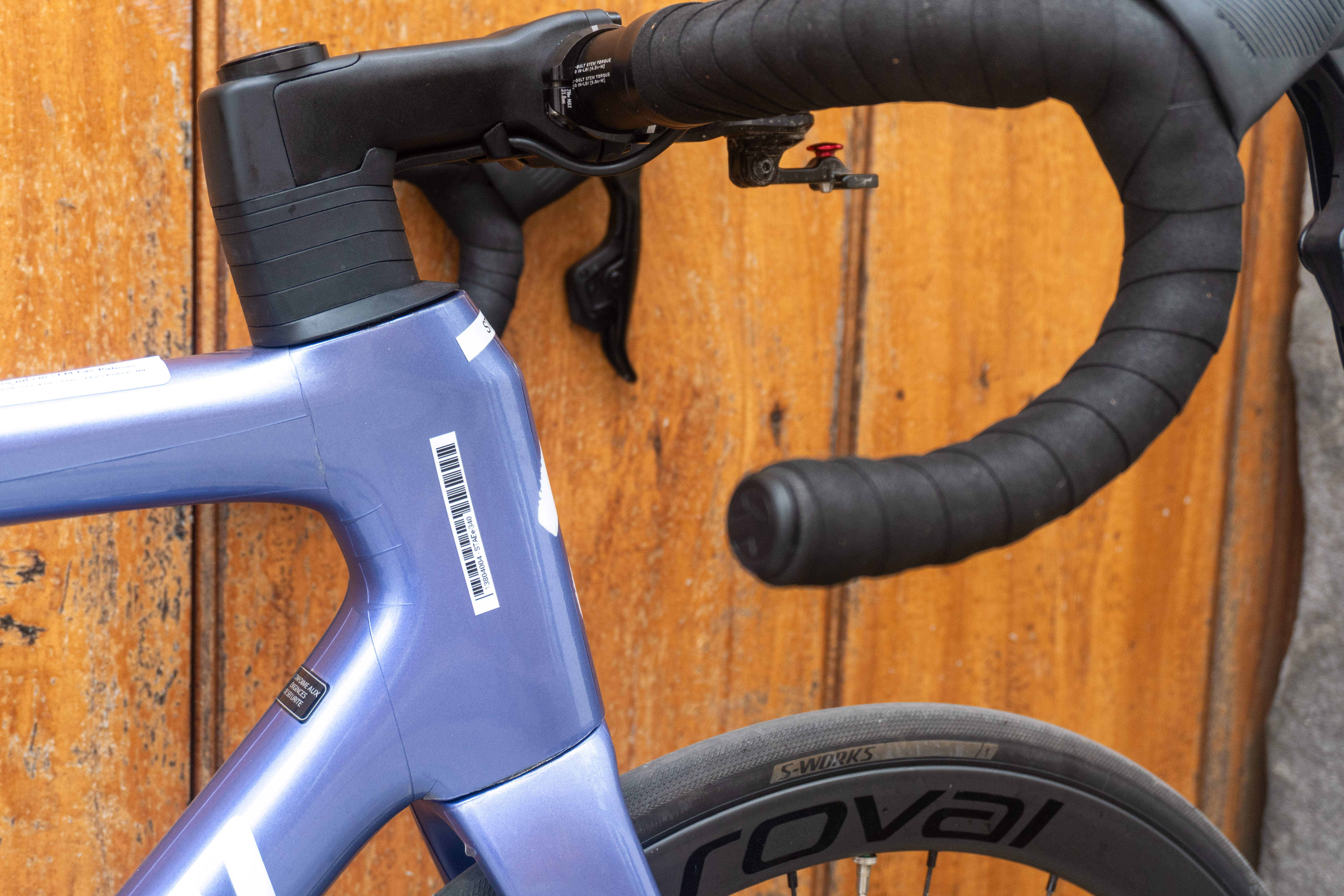
The head tube, dubbed the ‘Speed Sniffer’, is said to improve aerodynamics thanks to its pronounced leading edge that almost hangs over the fork. 

All in, I like the Tarmac SL8’s elegant frame shape, reminiscent of classic climbing bikes of yesteryear. The only element disrupting this is that head tube though – while I’d be inclined to take Specialized’s word that it improves aerodynamics, it’s not the most aesthetically pleasing, especially with the two-piece cockpit that’s on this Expert model.  

Oscar Huckle / The Cycling Meister

Tyre clearance is 32mm, which is on par with the latest Trek Madone but not quite as generous as the 34mm clearance found on the Cervélo S5. But 32mm is still plenty for a thoroughbred race bike. 

Specialized says it wanted to preserve the geometry and handling characteristics of the Tarmac SL7 for the new bike but with the stack increased by 10mm to account for the new Roval Rapide cockpit found on the top-end models. 

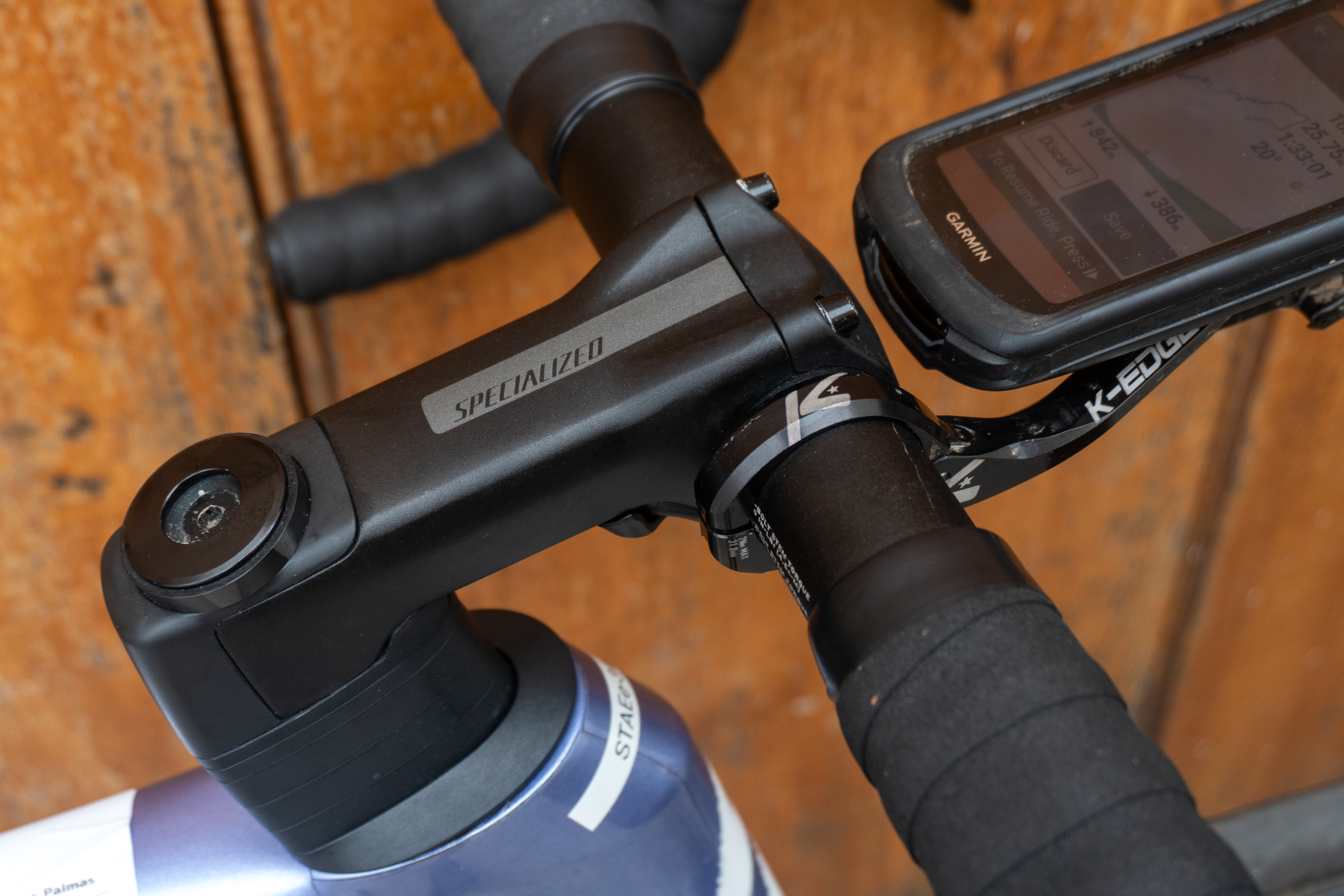
While that cockpit is said to save 4w, this Expert model eschews it with a separate bar and stem system. 

44cm49cm52cm54cm56cm58cm61cm
Reach366mm375mm380mm384mm395mm402mm408mm
Stack 501mm514mm527mm544mm565mm591mm612mm
Head tube angle70.5º71.75º72.5º73º73.5º73.5º74º
Head tube length99mm109mm120mm137mm157mm184mm204mm
Bottom bracket height266mm266mm266mm268mm268mm268mm268mm
Bottom bracket drop74mm74mm74mm72mm72mm72mm72mm
Top tube length, horizontal496mm509mm531mm541mm563mm577mm595mm
Seat tube angle 75.5º75.5º74º74º73.5º73.5º73º
Seat tube length433mm445mm456mm473mm494mm515mm545mm
Front centre572mm574mm577mm579mm592mm606mm613mm
Chainstay length410mm410mm410mm410mm410mm410mm410mm
Wheelbase970mm973mm975mm978mm991mm1,006mm1,013mm
Crank length165mm165mm170mm172.5mm172.5mm175mm175mm
Handlebar width360mm380mm400mm420mm420mm440mm440mm
Stem length70mm80mm90mm100mm100mm110mm110mm

Specialized Tarmac SL8 Expert build 

Oscar Huckle / The Cycling Meister

The Expert is the third-tier in the Tarmac SL8 range, below the range-topping S-Works and Pro models. Note there are two Expert options – this SRAM Rival eTap AXS build for £5,500 / $6,499.99 / €6,500 or a Shimano Ultegra Di2 build for £6,000 / $6,999.99 / €7,000. 

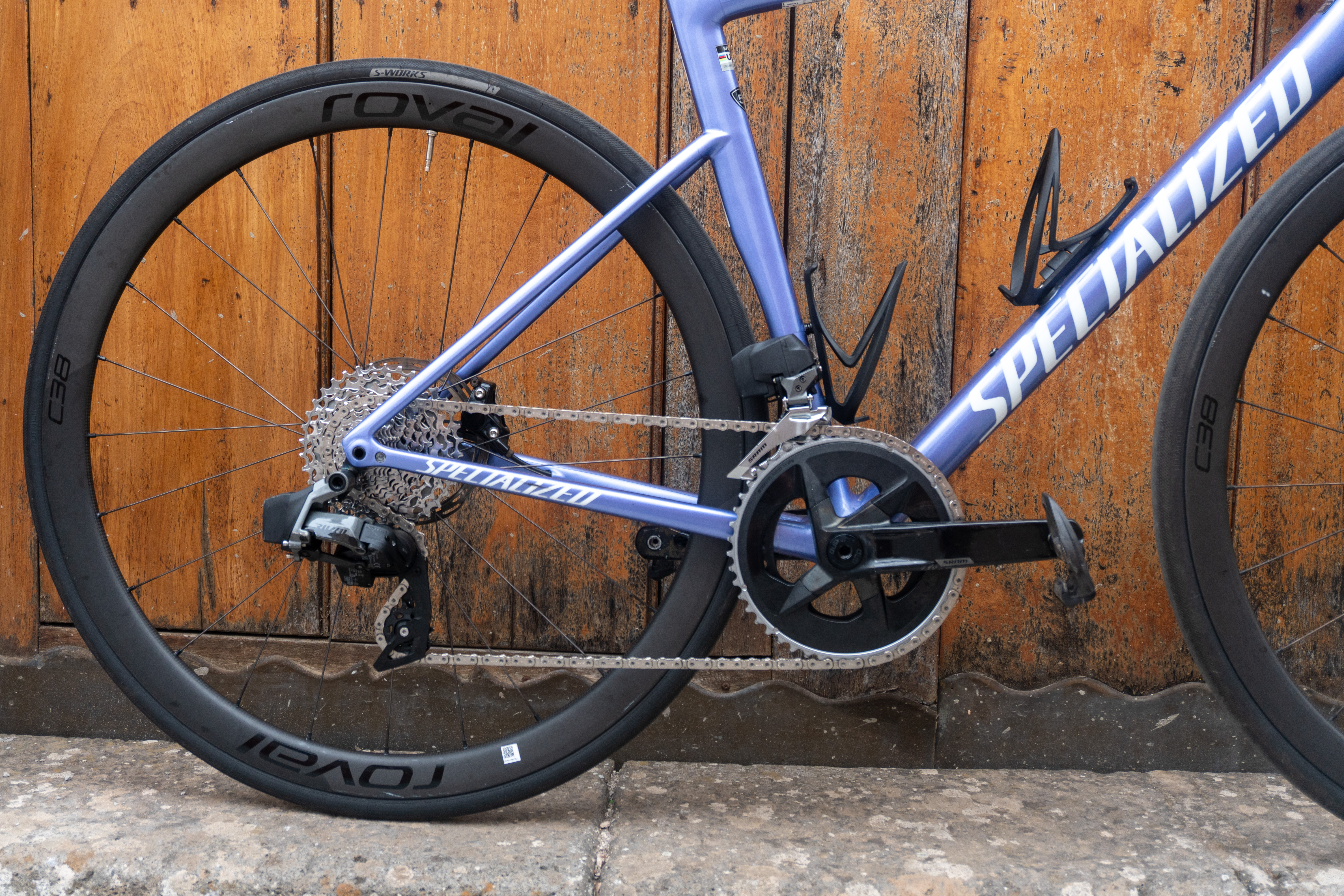
SRAM Rival eTap AXS is the third-tier electronic groupset in the brand’s range, sitting below Force and Red. Compared to Force, Rival components have a weight penalty (with the biggest differences to be found at the crankset) and the rear derailleur steps down to a spring clutch rather than the Orbit Fluid Damper. 

Specialized specs a power meter crankset for the price with 48/35t chainrings, paired with a 10-36t cassette – sensible gear ratios for climbing but also for when you’re putting the hammer down.

You also get a set of Roval C38 carbon wheels. At £1,150, these undercut the in-house brand’s other offerings without, according to Specialized, sacrificing component quality or aerodynamics. The 38mm rim depth is paired with a 21mm internal rim width – par for the course, these days, but road-focussed and they’re specced with DT Swiss 370 hubs. 

They’re shod with S-Works Turbo tyres in a 26mm width – very narrow considering the generous tyre clearance. 

Oscar Huckle / The Cycling Meister

Moving to the cockpit, an aluminium Specialized Expert Shallow Drop handlebar is paired with a Tarmac stem. Although the two-piece cockpit looks a bit out of place with the Speed Sniffer head tube, there’s no denying the benefits of adjustment offered and being able to run whatever handlebar you’d like. 

This build would typically be specced with a Specialized Power saddle (a favourite of my own) but my test bike came with a Fabric Line. 

Specialized Tarmac SL8 Expert first ride impressions 

Oscar Huckle riding Specialized Tarmac SL8 Expert
Oscar Huckle / The Cycling Meister

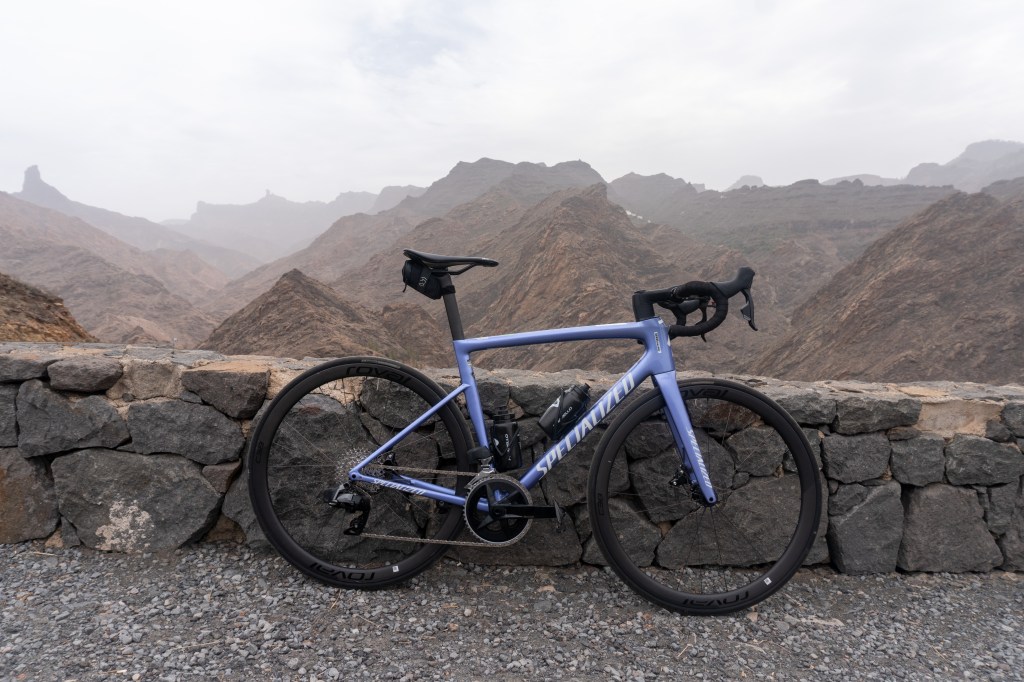
I rode the bike for two days in Gran Canaria encompassing just under 200km with a not-insubstantial 4,500m of climbing. 

Both of my rides featured significant mountain climbs, and on the second day I rode up the feared Valley of the Tears (often touted as one of Europe’s hardest climbs), all the way up to the summit of the Pico de las Nievas at 2,000m, Gran Canaria’s tallest volcano. 

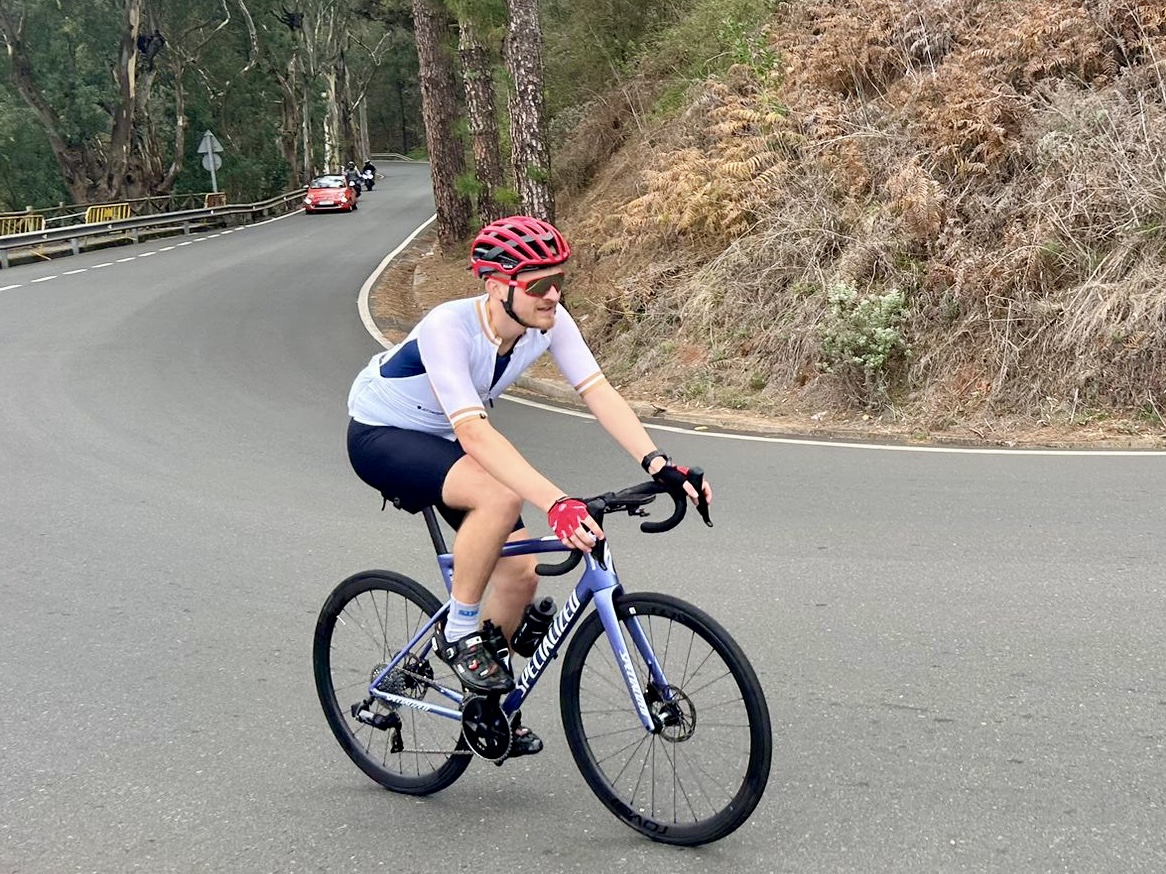
From the off, the Tarmac SL8 felt like it was cut from the same cloth as its predecessors with a rapid ride quality with dainty handling. I particularly appreciated the exciting handling on Gran Canaria’s many hairpins, where the bike had a palpable poise. 

Although this Expert build wears some heavy components (more on that later), the frameset’s low weight made itself instantly apparent, especially on the many prolonged climbs. The stiffness at the bottom bracket was also noticeable, giving the bike plenty of grunt when putting the power down – impressive given its rather minimalist appearance. 

Specialized Tarmac SL8 Expert
Oscar Huckle / The Cycling Meister

Tip the bike down the other side and the Tarmac SL8 has impeccable descending manners. The lively handling and aggressive position meant I was really able to lean in on corners and even at speeds up to 50mph / 80kmph, the Tarmac SL8 was unflinched. 

It took me a while to get used to the 26mm tyres – these felt decidedly narrow and the spec choice is at odds with the generous 32mm clearance. While the S-Works Turbo tyres were fast-rolling and grippy, I’d swap them for 30 or 32mm rubber from the off – Continental’s Grand Prix 5000 S TRs are my current pick of the bunch. 

But even with the narrow stock rubber, the Tarmac SL8 is more comfortable than I’d expect for a bike of this ilk, even on my longest nine hour ride with plenty of questionable road surfaces. 

Although the spec list doesn’t set the world alight, it’s all functional fare. I’m not the biggest fan of SRAM’s Rival eTap AXS groupset – I don’t particularly get on with the blocky lever ergonomics, the front derailleur shifting isn’t on a par with Shimano and the increased weight is noticeable over Force AXS.

But there’s no denying its appeal to those that want electronic shifting at a budget and the brakes are a high point.

It’s also a positive that Specialized specs a power meter crankset to slightly sweeten the deal. 

The Roval C38 wheels are a mixed bag – although the carbon rim isn’t as progressive as the higher models in the range in terms of external width (26.6mm compared to the 30mm and 30.7mm measurements of the Roval Rapide CL II and CLX II), the overall ride quality is very good. 

I also like that Specialized have specced brass nipples, which are more resistant to corrosion – the higher-end Rapide wheelsets instead use aluminium nipples. While aluminium nipples are lighter, I’d rather take the weight penalty and know they won’t corrode at the first sign of salty water. 

It’s a shame Specialized specs a bottom-rung DT Swiss 370 hub though, especially on a bike costing £5,500 / $6,499.99 / €6,500, but I suppose that’s the concession for the wheels to make their £999 / $1,099.99 / €1,200 price point.

While the 370 should prove a reliable option, I wish Specialized had specced a DT Swiss 350 hub instead and upped the price slightly. 

The 350 hub steps up to a 36t ratchet (over the 370 Ratchet LN’s 16t), resulting in more points of engagement. But in my view, given the 350’s prolificity, a big advantage will also be in procuring spares.

Specialized Tarmac SL8 Expert
Oscar Huckle / The Cycling Meister

The only other change I’d make to the bike would be the handlebar – I’d swap to a carbon option for more compliance. However, I’m glad Specialized specs a relatively cheap-and-cheerful stock handlebar because there’s an element of personal preference when it comes to upgrading. 

I’m not sure the 4w claimed aerodynamic saving is enough to convince me to step up to the Roval Rapide one-piece cockpit but it’s a positive that you can upgrade to it if you’d like to. 

It’s important to note if you upgrade to this cockpit, you’ll need an extra 10mm of steerer tube. 

In terms of value, Specialized is never going to be the most competitive being as mainstream as you get. Sticking with the big brands, you can get a similarly specced Trek Madone SL 6 AXS for £4,125 / $5,999.99 / €3,999 or a Cannondale SuperSix Evo 3 (albeit with Shimano 105 Di2) for £4,000 / $4,200 /  €3,999. 

Although both of these options also use a second-tier frame, it’s important to note the Tarmac SL8’s 780g claimed frame weight significantly undercuts both on frame weight (1,054g for the Madone SL and 930g for the SuperSix Evo in a size 56cm). 

In my view, that’s enough of a justification for the price increase. 

Specialized Tarmac SL8 Expert initial verdict

Oscar Huckle / The Cycling Meister

The updates over the Tarmac SL7 may seem incremental but my initial rides suggest they have dramatically improved the Tarmac platform. 

In fact, I think the Tarmac SL8 may well be the best race bike on the market at the moment – it just ticks all the boxes and has a fantastically balanced ride quality. 

Further testing will reveal if that proves the case.