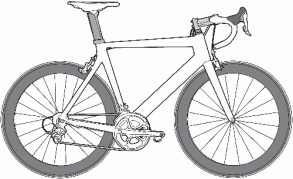
Review: Canyon Endurace CF SL 8.0 Disc

Uncategorized

Oscar Huckle / The Cycling Meister

Rating: 4 out of 5.

+ Uses the same frame technologies as the Endurace CF SLX 
+ Far from an endurance slouch
+ Well-specced for the asking price

– Stock wheels hold the bike’s true potential back
– Binary-feeling Shimano disc brakes

  • £2,699 / €2,799 / $3,699

Canyon’s Endurace is a staple of its genre. Launched back in 2016, this second-generation Endurace represented the German brand’s first disc-brake equipped endurance road bike

The model is still going strong if not a little long in the tooth, and Canyon announced an updated Endurace in 2022. It supersedes this generation which features clearance for up to 700x35mm tyres and mounting points on the top tube. However, the second-generation CF SL 8.0 is what I am reviewing. 

Rather than resorting to additional comfort measures such as Specialized’s FutureShock or Trek’s IsoSpeed, Canyon instead focus on introducing flex into the frame to deliver its all-day comfort. After all, the clue is in the Endurace’s name – rather than riding like a sofa, it needs to be able to be pushed too in a race scenario. 

This is the CF SL variant. Sitting above this frameset is the top-flight SLX, which receives Canyon’s top-end carbon layup and will therefore be lighter and stiffer. 

This CF SL 8.0 is equipped with a full Shimano Ultegra R8020 groupset and DT Swiss E 1800 wheels. 

Oscar Huckle / The Cycling Meister

The bike has an unassuming appearance, cutting a neat aesthetic and eschewing frame features such as dropped seatstays, that many manufacturers are hell-bent on including. The seat tube is an interesting tube shape, with a slightly aerodynamic profile where the rear tyre meets it.

There’s even some colour on show on this particular sample – not all Canyon’s have to be black on black!

Canyon Endurace CF SL 8.0 Disc geometry

Oscar Huckle / The Cycling Meister

Canyon offers a broad range of sizes for the Endurace CF SL, starting from 3XS to XL. The brand doesn’t size conventionally so it’s worth paying close attention to the geometry chart before purchase. 

I am 180cm and tested a medium – Canyon advises a 178 to 184cm height range for this size. 

The head tube angles range from 70 to 73.25 degrees across the range, but seat tube angles are fixed at 73.5 degrees. This size medium has a 73 degree head tube angle with a 382mm reach and 578mm stack. It also features 415mm length chainstays. 

This is on the racier end of the endurance bike spectrum. Compared to Trek’s latest Domane, that sees a 591mm stack and 377mm reach with 420mm chainstays. But the Endurace isn’t quite as race-oriented as Trek’s Emonda which features a 386mm reach, 541mm stack and 410mm chain stays. 

Canyon Endurace CF SL 8.0 Disc performance

Oscar Huckle / The Cycling Meister

The Endurace CF SL 8.0 was tested over four days and just over 200 miles in south east Sardinia, including two 75 mile rides.

I found the Endurace to ride on the firmer side for an endurance bike – as the name suggests, it has a racing edge to it and you can certainly feel the Ultimate’s pedigree with its lightweight feel.

When the gradient points up, the Endurace is a steady climber but it doesn’t egg you on (a wheel upgrade would give this build a more urgent climbing feel but more on that later). 

The Endurace is a steady and sure-footed descender, offering a planted but not overly exciting feel. It doesn’t encourage you to really rail it into corners or switchbacks like the Ultimate. 

The Endurace offers a quiet ride and I couldn’t detect any cables rattling. There’s a cable tie system in place in between the two down tube bottle cage bolts which cinch the cables and hoses together during the build to prevent any unwanted rattles. 

While it’s often an involved process to tie them all down (as you have to carefully hook the cable tie around the cables in a very small space), it’s an effective solution on this bike. 

If you’re ever changing your outers, you’d be wise to use an internal cable routing kit to guide the new outer through the cable tie to prevent having to install a new one. 

I couldn’t elicit any toe overlap on the size medium tested. 

Groupset performance

Oscar Huckle / The Cycling Meister

The Endurace CF SL 8.0 is equipped with a Shimano Ultegra R8020 groupset, which I found to be  disappointing. I have ridden the R8000 (mechanical with rim brake) and R8070 (hydraulic disc, electronic shifting) variants and while I’ve been impressed with the Di2 platform, the mechanical shifting and hydraulic brakes have some quirks. 

The R8020 levers felt bulbous in the hand compared to the svelte R8000 and R8070 variants. The shifting was spot-on and light in feel due to the carbon construction of Ultegra’s levers. That said, despite the chain being lubed with Smoove and being well set-up, the drivetrain was quite noisy on the Endurace. This could be a chain line issue.  

Canyon specs a 52/36 chainset and 11-32 cassette. Most endurance bikes rely on a compact 50/34 chainset but the 52t affords you a harder descending gear, which came in handy in the Sardinian mountains where I tested the bike. The 11-32 cassette offers a wide range and will suit most riders, although I find the jumps to be on the larger side, bearing in mind that R8020 is 11-speed. 

My personal preference would be for an 11-30, which offers a slightly tighter gear ratio and smaller shifts between gears, but that said, I certainly got to make friends with the 32t cog on some of the climbs. 

Oscar Huckle / The Cycling Meister

The braking felt binary and often induced rotor rub, which is a notable problem on this generation of Ultegra. Ultegra and its top-flight brother, Dura-Ace, use Freeza rotors, which Shimano says helps cool down the rotor quicker after prolonged braking. 

While this may be the case, the rotors look more of a fashion piece with their futuristic aesthetic and I believe they use a slightly softer alloy, which is why they are more prone to rub. 

I rode a Trek Emonda SL 5 earlier in the year which came furnished with a Shimano 105 R7020 groupset and although the brakes were binary, the RT70 rotor was pretty quiet, as it forgoes Freeza technology. 

Wheels and tyres 

Oscar Huckle / The Cycling Meister

The CF SL 8.0 runs on DT Swiss E1800 Spline wheels with a 23mm rim depth, 24mm external and 20mm internal rim width. The wheels spin on the brand’s 370 hubs, which use a 3-pawl system rather than the brand’s signature Ratchet EXP. 

The wheels run well and are a reliable pick, but they’re heavy and would make for an ideal set of winter wheels. Upgrading the wheels would be my first recommendation to reduce the rotating weight and that would really unlock the Endurace’s potential.  

Despite the weighty wheels, at least Canyon spec Continental Grand Prix GP5000’s out the box, which are my favourite road summer tyre. Extra kudos for speccing them in a 700x28mm width. Their grip is exemplary and they offer a fast and comfortable ride. 

This particular sample came with a Vittoria Zafiro fitted on the rear, which offers opposite qualities to the GP5000 and is a cheap and heavy option that lacks grip. I’d recommend sticking with the GP5000’s.

Finishing kit 

Canyon use DT Swiss’ ever-reliable RWS thru-axles with Canyon branding and they worked flawlessly. The levers have a removable handle, allowing you to either use the lever to remove and install the axle or you can remove the lever for a cleaner look and use a 6mm hex key.

The Canyon-branded Ergon VCLS seatpost is perhaps the greatest factor that delivers the Endurace’s comfort. You’ll want to take set-up into account with its flexing nature and you’ll want to consider the size you go for carefully so you can have enough exposed seatpost to really reap the benefit. 
Oscar Huckle / The Cycling Meister

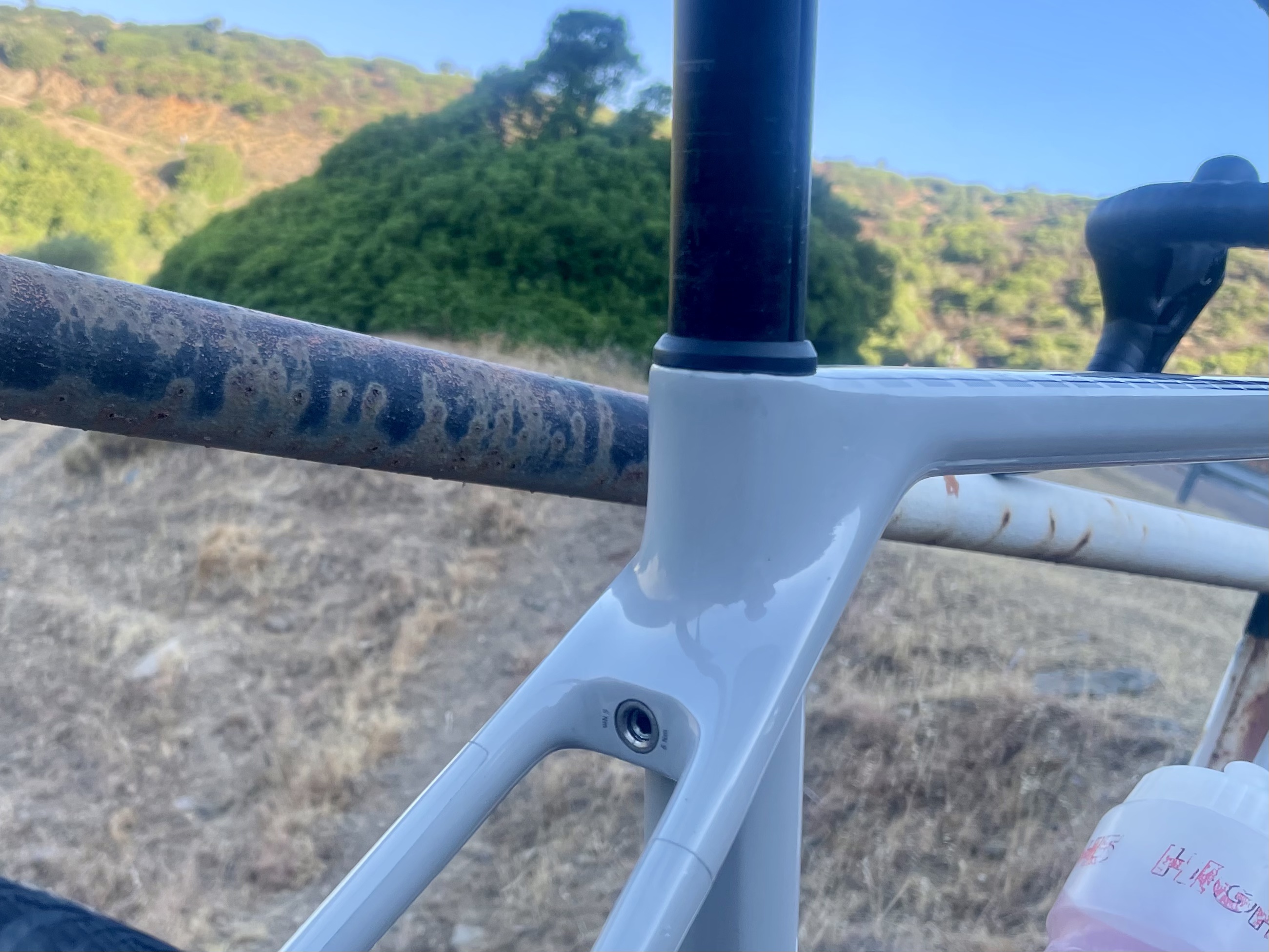
The seatpost clamp design is borrowed from the Ultimate – adjustments are made to a 4mm hex bolt that is positioned to the rear of the seatstay junction. Be sure to use a high-quality torque wrench and apply carbon fibre grip to the seatpost. 

Oscar Huckle / The Cycling Meister

The Fizik Argo saddle was horrific and would be the first item to be swapped out if this was my bike. This was my first time riding an Argo and the shape looks particularly agreeable to me, as it is Fizik’s take on a short-nose saddle and I really get on with the Specialized Power. But alas, this saddle was just not for me. 

The handlebar and stem were Canyon branded items, with the bars a 42cm width and the stem 100mm. I prefer a narrower 40cm bar as my arms feel a little splayed out on a 42cm, but this is personal preference and a 42cm is a safe option for a medium sized frame. 

The Endurace uses Shimano’s BB86 press-fit bottom bracket standard, which is one of my preferred systems and it was creak-free on the Endurace. 

Canyon Endurace CF SL 8.0 Disc bottom line
Oscar Huckle / The Cycling Meister

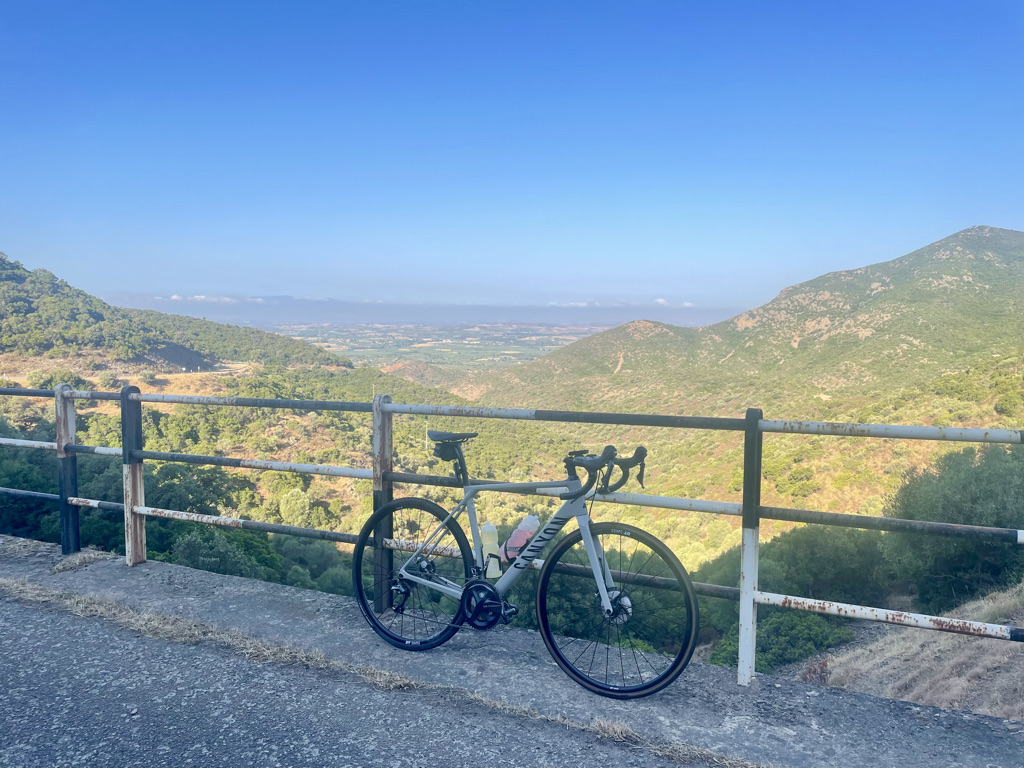
Canyon’s Endurace does what it says on the tin – it’s an endurance bike with a racier edge. For this reason, it’s not as comfortable as some of its competitors which offer armchair-like comfort. But it’s not aspiring to be at this level. This particular CF SL 8.0 build comes pretty sorted out of the box and with an upgrade in wheels, you would have yourself a pretty sweet ride. 

Review: Trek Émonda SL 5 Disc 2022

Uncategorized

Rating: 4 out of 5.

+ Uses the same frame technologies as the Émonda SLR 
+ Descending ability
+ Full Shimano 105 R7020 groupset

– Climbing performance inferior to previous Emonda’s
– Toe overlap 
– Heavy wheels and harsh aluminium seat mast ripe for upgrading

  • £2,700 / €2,999 / $3,249.99
Oscar Huckle / The Cycling Meister

Trek’s Émonda was initially launched as its weight-weenie climbing bike in 2014, destined for attacking the epic Alpine climbs of the Tour de France. The second-generation took the platform in an even lighter direction while increasing tyre clearances and adding a disc-brake option, the latter frameset claimed to weigh in at a scant 665g. 

This new third-generation series seeks to combine its lightweight agenda with an aerodynamic edge to allow it to be more of an all-round race bike. As a result, the round lightweight tubes are no more and the Émonda takes noticeable design cues from its aero brother, the Madone. 

The frame weight has increased as Trek claims the top-series SLR platform comes in at a sub-700g frame weight unpainted with the derailleur hanger attached in an unspecified size. Rim brakes are also no more with the Émonda and it is yet another platform that has gone disc-only. 

The graphic on the down tube is the only giveaway this isn’t an SLR (Oscar Huckle / The Cycling Meister)

Here on test is the Émonda SL 5, the SL denoting the second-tier frame comprised of Trek’s OCLV 500 series carbon, rather than the OCLV 800 series used on the SLR. The SL is claimed to weigh in at 1,142g, again unpainted in an unspecified size. 

There are further changes to the Émonda platform than a simple aerodynamic tweak. 

Tyre clearances are officially reduced to 28mm from the 32mm allowed on the second-generation. However, I think Trek has been on the cautious side here as there is still plenty of room for wider rubber.

The Émonda is one of the only performance road bikes out there at the moment not to jump on the dropped seatstay bandwagon. Trek’s seat mast design remains, which is fastened on top of an integrated no-cut post, for better or worse. This locks you in terms of options in that you can’t upgrade to a conventional carbon seatpost but at least there is some adjustment and you don’t have to cut it down to size, compared to Giant’s ISP design for example. 

I’m testing a size 56cm for my 180cm height. 

Integration 

The cables are routed underneath the stem before they are funneled through a proprietary stem spacer (Oscar Huckle / The Cycling Meister)

Like many modern performance road bikes, the Émonda integrates its cables. The SLR runs the cables on the underside of the handlebar before they are partially exposed as they are funnelled into an opening on a proprietary headset cover. Here, the cables run in front of the steerer tube and pass through the upper headset bearing before heading down the down tube to their respective locations. 

Trek uses a colour-matched ‘headset cover’ that completes the profile of the head tube. There is a plastic replaceable steering locking pin that is designed to prevent the bars from being oversteered and the handlebars hitting the top tube in the event of an impact. 

Trek offer some encouragement at the back of the cover (Oscar Huckle / The Cycling Meister)

You really want to avoid over-rotating the fork on this bike as Trek bizarrely don’t carry a full range of colour-matched headset covers (which tend to get damaged as part of the impact, from experience) and having them colour matched by a reputable paint shop is going to be significantly more expensive than the £50 the cover retails for.   

The crown of the fork also receives an aerodynamic update to sit flush with the underside of the head tube. 

The crown of the fork sits tightly with the head tube. You’ll want to avoid oversteering the bars to avoid any of the paint being taken off (Oscar Huckle / The Cycling Meister)

On the integration scale, the bike is on the easier end to work on in terms of routing cables as you don’t have to route them internally through the bar – instead, there are covers on the bars’ underside. 

That said, keep your headset bearings religiously greased as replacing them will result in undoing the brake hoses and performing a double-bleed. At the very worst, if you have not left some extra length on the hoses for the purposes of changing a headset change if you’re using a Shimano groupset, be prepared to replace the hoses.  

The SL, however, uses a conventional round Bontrager handlebar and stem but the integration arrangement with the proprietary spacers remains unchanged. It doesn’t look as neat as the SLR and the result is a serving of cable spaghetti at the front. 

The cables look a little unsightly when using a standard bar and stem (Oscar Huckle / The Cycling Meister)

Goodbye BB90, Hello T47 

Mechanics out there can rejoice as Trek has departed from its wanting proprietary BB90 bottom bracket standard to a threaded T47. 

In the plethora of press-fit standards that manufacturers have blessed the cycling industry with, BB90 was among one of my least favourite. The bearings pressed directly into the frame, which had a stepped profile to prevent you from using a different standard.  

Over time, the bearings could have a tendency to not fit as tightly and then, you’d have the dreaded creak. Trek brought out an oversized BB90 V2 bearing to counter this problem but it was only a stopgap until they started to fit loosely. Then, it’s either new frame time or have a reputable carbon frame repairer relay carbon in the bottom bracket shell to build it back up to accept a BB90 V1 bearing. 

I didn’t experience this issue on my Émonda in the 8,000km that it covered, although towards the end of my time with the bike, whenever I removed the chainset, the drive side bearing had a tendency to remove itself on the axle, signalling the potential start of a problem. That said, at that point, it was creak-free. 

The T47 is certainly a welcome update. 

Trek Émonda SL 5 Disc riding impressions

The Émonda was tested in hilly Northern Portugal (Oscar Huckle / The Cycling Meister)

I owned a first generation Émonda SL and adored its ride quality. With lighter (but financially sensible) upgrades to the wheels and finishing kit, I got the Shimano Ultegra 6800-equipped 56cm frame to 7.05kg including pedals. As one would expect, it climbed superlatively but what surprised me was how much of an all-rounder the bike was. 

Climbing bikes can have a tendency to underwhelm on the descents but this was not the case with the first-generation Émonda. It descended with plenty of confidence and precision and also offered a faster-than-expected ride on flatter terrain. 

Trek are certainly experimenting with a winning recipe here and the result is a surprisingly mixed bag. 

The handling on the Émonda SL is fast, responsive and on the twitchy side. It has a rather direct ride feel and it is far from a bump-taming ride. I didn’t mind the increased connection with the road as it gives the ride a more exciting feel and you have to put the work in. 

The bike transferred more feedback at the rear compared to the front and I think one of the first things to upgrade would be the seat mast topper, which is aluminium on the SL5. Higher models use one of a carbon variety and that’ll greatly increase compliance as it will soak up more of the vibrations. 

The aluminium seat mast isn’t as cosseting as a carbon offering (Oscar Huckle / The Cycling Meister)

On the climbs, the Émonda just doesn’t climb as well as its predecessors. The outgoing generations pranced up climbs with excitement and encouraged you to push harder. It’s just not the case here. Part of this quality is likely to do with heavy Bontrager TLR wheels that are specced and another upgrade here would be prudent to lighten rolling weight, which would make a substantial difference. 

Descending down the other side, at first I found the bike nervy. However, after the second ride I grew accustomed to its downhill manners and quite liked the quicker handling, which allows you to dive and pick your way through corners. 

Another thing I didn’t like about the bike was that it was possible for me to elicit toe overlap. This wasn’t the case on my previous Émonda that I owned which was also a 56cm size with the same 172.5mm crank length. 

There’s no mistaking it’s a Trek! (Oscar Huckle / The Cycling Meister)

Aesthetically, I was unsure of the two-tone Blue Smoke / Metallic blue as the metallic is abruptly cut towards the top of the down tube and mid-length along the top tube. Both colours separately are stunning and I’d love to see a full frame with these options offered as single colours. However, the paint scheme grew on me over my time with the bike. 

The ‘Trek’ logo on the down tube is rather obnoxious in that it is so large and the end of the ‘K’ extends to the side of the head tube. There’s certainly no mistaking what brand of bike you are riding. 

Groupset performance

The 105 groupset is solid and dependable (Oscar Huckle / The Cycling Meister)

The Émonda SL5 is shod with a full Shimano 105 R7020 groupset. This was the first time I had ridden 105 in this generation and I was generally very impressed with it. 105 uses many of the same technologies as bigger brothers Ultegra and Dura-Ace but at an increased weight due to the use of more cost-effective materials. 

The shifts are nice and crisp, feeling a touch heavier than Ultegra or Dura-Ace in speed and as the lever body is aluminium, compared to the carbon levers on its more expensive siblings. The front derailleur is more finicky to set up with its Toggle-cam design but front shifts felt very light and fast. I’ve found the R9100 / R8000 series derailleurs to not be particularly durable over time as the cage seems to be more susceptible to developing play and I wonder if the 105 variant is more durable due to its metal construction.  

I’ve long been a critic of Shimano road disc brakes as I find them quite binary and the pad clearance is too tight, often resulting in rubbing of the disc rotor against the pads. Then, there is the lever bleed screw made of chocolate and the fragile ceramic pistons in the calliper. Both SRAM and Campagnolo brakes are far better modulated and the latter is less likely to experience pad rub as the backing plate of the pads is magnetic. 

No Freeza technology found here, which arguably is a good thing when it comes to disc rub (Oscar Huckle / The Cycling Meister)

However, I believe 105 offers a distinct advantage in braking over Ultegra and Dura-Ace in that the RT70 rotors are not equipped with the Freeza technology. Freeza technology is supposed to help the rotor cool down quicker and whilst it arguably does and looks far more of a fashion piece than 105’s RT70 rotor, I believe the RT70 to be a stronger rotor. The Ultegra and Dura-Ace rotor are quite easy to bend and I think exacerbate the issue of disc rub. 

The chainset uses a Hollowtech 2 design but unlike it’s more expensive siblings, the crank arms are solid-forged rather than a two pieces bonded design (Oscar Huckle / The Cycling Meister)

The bike was equipped with a 50/34 chainset and an 11-30 cassette, which is spot-on for the audience the Émonda is targeted at. The rear derailleur specced is a medium cage so you could change the cassette to an 11-32 and 11-34, if you so wished.  

Wheels and finishing kit 

The wheels, tyres and finishing kit are all supplied by Trek’s in-house brand, Bontrager. As mentioned, the TLR wheels are heavy but with a high 24 spoke count front and rear. The wheels would be ripe for one of the first upgrades you make to the bike but you might as well keep them as a Winter or training set. 

The Bontrager R1 Hard-Case Lite wire bead tyres rolled better than expected compared to other tyres from the brand I’ve ridden in the past. They’re more of a Summer tyre and I’d suggest once they wear out, upgrade for some faster-rolling rubber such as the Continental Grand Prix GP5000. 

The drop of the Bontrager handlebar is quite shallow (Oscar Huckle / The Cycling Meister)

The handlebars and stem are bog-standard aluminium affairs, with the stem compatible with Bontrager’s BlendR mount for lights, a computer or a GoPro. I’d prefer a 40cm bar compared to the 42cm specced as I find my arms splay out on the wider variety and I’d prefer a slighter deeper drop than the shallow one found here. The bars are adorned with Bontrager’s SuperTack Perf bar tape which is comfortable enough, if unremarkable. 

The saddle specified is Bontrager’s P3 Verse Comp. I didn’t get on with it using Assos’ Equipe RSR S9 Targa shorts on the first day of riding but got on better with it on days two and three using different shorts. But saddles are always a personal item, so it’s worth trying to see if you get on with it first before switching. 

Trek Émonda SL 5 Disc bottom line

While the Émonda improves the platform in some ways, it digresses in others (Oscar Huckle / The Cycling Meister)

Trek’s Émonda SL5 marks a solid entry point to the range and offers a quality frame with a race-oriented fit. It’s on the firmer side and its quick handling will particularly appeal to those who appreciate these qualities and it would make a good proposition for the aspiring racer. While the frame has undergone more of an aerodynamic makeover, I wish Trek had stuck to its initial guns and kept the frame as its lightweight, climbing-optimised bike. It simply doesn’t climb or descend in the composed fashion its predecessors did and it’s also got its quirks with the semi-integrated front end. 

Review: BMC Teammachine SLR01 Disc (Third Generation)

Uncategorized
Oscar Huckle / The Cycling Meister

Rating: 4.5 out of 5.

Now in its tenth year of existence, BMC’s Teammachine SLR01 has become a staple frame in professional racing, making quite the statement. It was pedalled to victory by Cadel Evans at the Tour de France in 2010 and Greg van Avermaet at the Olympic Road Race. 

The Teammachine sits as the race (or as BMC dub it, ‘altitude’) bike in the Swiss brands road range. The Roadmachine is their ‘one bike collection’ but in reality sits more at the endurance side and the Timemachine is poised as their aero weapon. The Teammachine is lightweight, race-focussed and suitably stiff, but also pretty comfortable for a race bike with its intelligent design. 

Although a fourth generation model was announced earlier this Summer, this review is of the third generation and there really isn’t a great deal to set the two apart. The new frame is more aerodynamic, has an integrated bottle cage system and an updated front end with a one-piece bar / stem system. 

BMC have always been a brand to be heavily focussed on their computer designed frames. BMC use what’s called ACE Technology, essentially a program where designers can model their bike on various factors and tune it to suit within certain parameters. Arguably, many of the current crop of heavily integrated bikes out there were inspired by this model as many seem to emulate the Teammachine’s design. 

BMC pioneered the dropped seatstay, which is almost ubiquitous on most of the brands offerings at the moment. This gives their frames a certain futuristic, boxy but clean aesthetic. The third generation Teammachine, like the first-generation Roadmachine had also done, omits the small bridge between where the top tube and seat tube intersect, on the one hand making for a cleaner look but also loses a little of BMC’s identity.

Integration is the main area where this third-generation SLR01 differs from its predecessors. Central to this is the ICS stem system. This system hides both the hydraulic hoses and Di2 wires through the underside of the stem and into the head tube where they run alongside a proprietary steerer tube and then journey down the down tube to their respective derailleurs or callipers. If you are using a mechanical groupset on this frame, you will have two cables exposed which enter a port in the down tube. They look rather unsightly on this frame as they sprout out and don’t take the cleanest path in terms of routing so if you are buying this frame, I would really look at having Di2 or eTap AXS on it. 

The ICS stem looks futuristic and clean-looking. It’s great that you can use a normal bar so you are not tied into a certain bar and isn’t as much of a royal pain as fully integrated systems are. 

Split spacers are employed so you can make adjustments to the stack height without having to take it all apart but if you want to change the headset, that will be a double brake bleed as both hoses run through the bearings. It’s not ideal and adds a lengthy amount of time onto what is a very simple job, so make sure you keep the bearings greased. 

Disappointingly, the top headset bearing is of a proprietary size. BMC say that it is a 1 1/8 but it mates perfectly with the ICS cover, preventing you from using anything else. I upgraded to a Chris King Dropset and the dimensions were perfect but the bearing will not sit in the cover. After contacting their support, they confirmed the bearing has to work with BMC’s cover. Other after-market options also won’t work. BMC also charge an exorbitant amount for a spare headset, which isn’t the best quality, so you will want to be religious in keeping this area maintained. Clearly, they bought a load during manufacture. Watch out for this nasty surprise! 

Mechanically, you will want to take care with the cabling on this bike. The Di2 wires / hoses have a tendency to rattle in the down tube so you will want to take the time to protect them during the initial build. The cables are secured with a pinch bolt on the underside of the ICS stem, just as they exit into the handlebar. You might want to get a friend for help here so they can pull the cables tight while you secure the cover that holds the cables. If they are not tight, they will also rattle! 

This frame has a BB86 bottom bracket which for a press-fit, is a pretty reliable standard and has been problem-free for me. I am just about to change the original after 10,000km – BMC spec a plastic Shimano BB86. A threaded bottom bracket would be better and is more foolproof but it’s good enough and is certainly one of the more preferable press-fit standards out there. 

On this Ultegra Di2 build, all of the wiring is well-integrated into the frame. The junction box is integrated into the top of the down tube which looks neat and means that you don’t have to have it unsightly poking from the bottom of the stem or at the bar end plug. Of course, if you’re running SRAM eTap, you would have no wires whatsoever. 

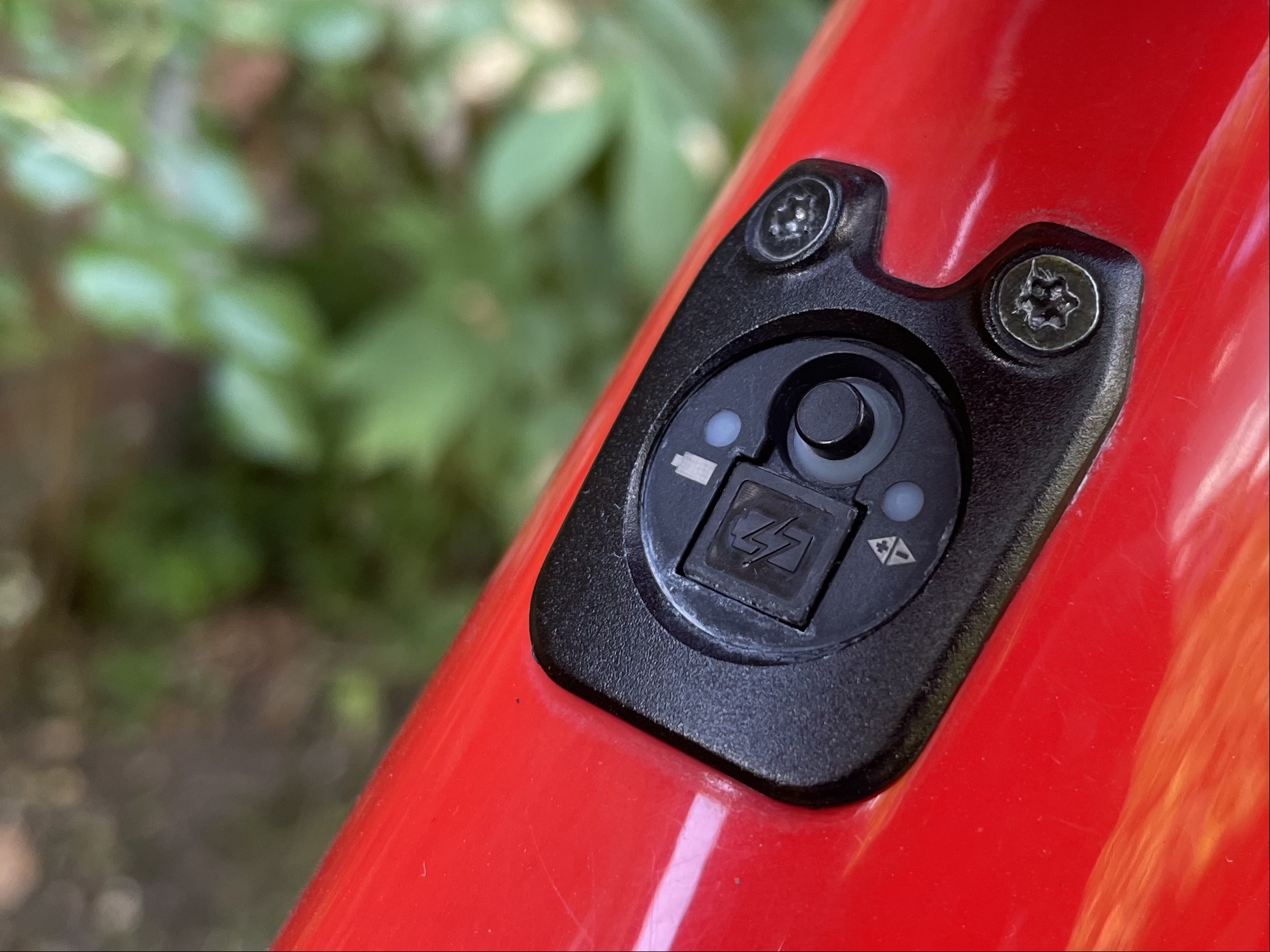
BMC utilise a D-shaped seatpost here for the seating which is both for aerodynamic and compliance reasons. The bolt to adjust the saddle height is neatly integrated into the bottom of the top tube and you can access it with most tools on the market with relative ease, unlike some other frame designs which are left wanting in this department. 

It is a different matter if you want to adjust the saddle fore-and-aft, as one of the bolts is not easy to access and it is a finicky and time consuming job as you need to align the bolt in between two O-rings. 

BMC use a direct-mount derailleur hanger which looks neat for the rear derailleur, if you’re running this standard. BMC save weight on the thru-axles that are ‘ultralight’ and ‘hollow’ which are a nice touch and have been problem-free. 

Another of the downsides of this frame is the front brake. BMC mount the calliper fixing bolt from the front of the fork so the calliper fits flush to the frame on the rear, saving the need for an adaptor. Aesthetically, this looks fantastic. However, mechanically, this is a low. It is very, very hard to align the rotor with the calliper. This isn’t just on my model – I have worked on other SLR01’s and they are all a nightmare. Pair this design with Shimano’s lacklustre road brakes and it is very hard to get rid of any pad rub. I’ve found that when you’re trying to put the power down or after a descent, the pads have a very annoying tendency to rub on the rotor for about 30 seconds and you get an annoying ‘ting’ sound. You’ll get this on other frames but this is noticeable on the front. I’ve seen other consumers get frustrated with this system and when I questioned BMC on their design, they insisted any pad rub was down to the brake calliper. One warrantied calliper later, this has helped somewhat but you can still get some rub. Tellingly, on the fourth-generation model, BMC have gone back to a conventional mounting for the front brake. I wonder why they did that… 

Spare parts for this frame can be obtained from the UK distributor, ZyroFisher. Many UK bike shops have an account with Zyro, so although a lot of parts have to be ordered from BMC direct, they are backed by a solid distributor. 

All in all, this is a very interesting and futuristic frame that three years since release in 2021, still looks state-of-the-art, and these are all small quirks, but quirks nonetheless, to live with. 

The Build 

This was a BMC Teammachine SLR01 Disc Three 2019 model but I have made some changes to the original spec. This has a Shimano Ultegra Di2 R8070 groupset. The groupset has generally been very good and I have been very impressed with the gears. I’ve been less impressed with the brakes though. I love how Shimano have integrated the hydraulics into the shifter and keep it the same size as their mechanical offerings but the braking is a bit on-off for my liking and lacks power. You don’t need to have powerful brakes as you don’t want to lock up the wheels but I would prefer more power here. SRAM’s road brakes are much better in terms of modulation and feel. 

The only deviation to the groupset is the chain and disc rotors. The chain is a KMC X11 SL. I find these are much quieter, much more durable and a lot lighter compared to the Shimano equivalent. the rotors are the Dura-Ace rotors which I upgraded purely for vanity’s sake – the black cooling fins match the aesthetic much better than the Ultegra ones, although they just as easily rub and ting on the calliper. 

The DT Swiss PRC1475 carbon wheels are an OEM offering but are largely based around the PRC 1400’s. They’ve been trouble-free and very good. They are shod with Continental GP5000 tyres which offer fantastic grip, speed and comfort and are a heck of an improvement over the Vittoria Corsa BMC specs the bike with. I found the Vittoria tyres to be lacking in grip and comfort, with a preposterously high minimum pressure for their size. 

The saddle is a San Marco Regale which is a very comfortable shape and its aesthetics match the bike very well. It is very light and has carbon rails. If it had a slightly bit more padding, it would be perfect. The bike came with a Fi’zi:k Antares, which I am not friends with from previous experience, so this was switched out instantly. 

The handlebar is a Zipp carbon which is a nice shape and has a short 70mm reach to allow me to run a longer stem, which I prefer as it improves the handling. The carbon bar dampens vibrations much better than aluminium although this Zipp one is a little on the stiffer side compared to other offerings out there. The BMC own-brand bar that comes on the bike felt like a cop-out considering the bike was close to £7,000, a very unremarkable aluminium offering and the shape didn’t really work well for me. 

Silca Nastro Fiore bar tape finishes the cockpit and it’s perfect in its grip, feel and durability, if on the expensive side. 

Overall, this is a pretty heady but realistic spec. You could easily get the bike lighter by running a more prestigious groupset and changing the wheels if you wanted to, so there is plenty of scope to get the most out of this frame.

Oscar Huckle / The Cycling Meister

How does it ride? 

Well, we have to talk about the ride, don’t we? This BMC Teammachine SLR01 Disc is a dream to ride. It is a very quick bike for its genre and really comes alive at higher speeds. The Specialized Tarmac is possibly a slightly more eager bike in terms of its handling compared to the Teammachine. The Teammachine is more comfortable than one might expect for a race bike, which often tend to be on the firmer side. Considering the integration of the front end, the steering on the bike feels telepathically smooth and reassuring. This bike has been predominantly ridden in the Chilterns and the Surrey Hills, where the road surfaces are pretty poor, and the bike hasn’t beaten me up. It has been taken on trips to the Cotswolds and Devon and has performed admirably there too. I can imagine this frame is a dream to ride in the Alps, which is what the brand have intended for it and it would likely be the perfect bike for it, as it climbs and descends with equal footing. 
The bike isn’t the lightest out there in feel compared to the Trek Emonda for example but it has a reassuring quality to its weight and is the best balance for the types of riding it caters for. In fact, the frame alone is lighter than the newer generation, perhaps signalling that the 800g mark is about as good as carbon frames are going to get without sacrificing anything. 

One aspect I wish this frame was better in is its tyre clearance. This frame can take up to a 700x28mm, which it just about does. The newer version can take up to a 30mm but I would like to see the clearances upped a little more for versatility and to allow you to run a wider range of rim and tyre combinations. A 28 tyre on a wider rim than the DT Swiss that I am running would be very tight and you need to make sure there is a sufficient gap between the tyre and frame to stop it abrading and damaging the carbon. 

Overall, the BMC Teammachine SLR01 Disc is pretty much as close to bike heaven you could desire and there is little to criticise. It will be interesting where the fifth generation of this frame changes, given how the fourth generation is an evolution rather than a revolution of this third-gen frame. It has been a joy to live with for 3 years and 10,000km and it hasn’t lost its sheen.

Oscar Huckle / The Cycling Meister

First Look: Niner RLT 9 RDO with Campagnolo Ekar

Uncategorized
Oscar Huckle / The Cycling Meister

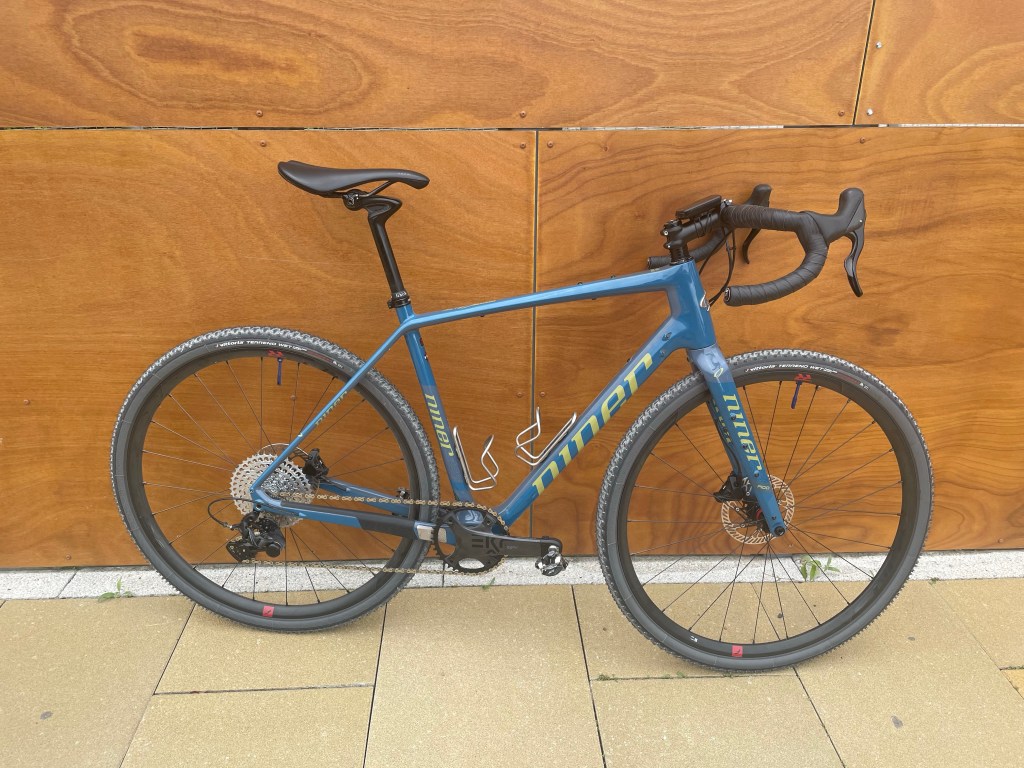
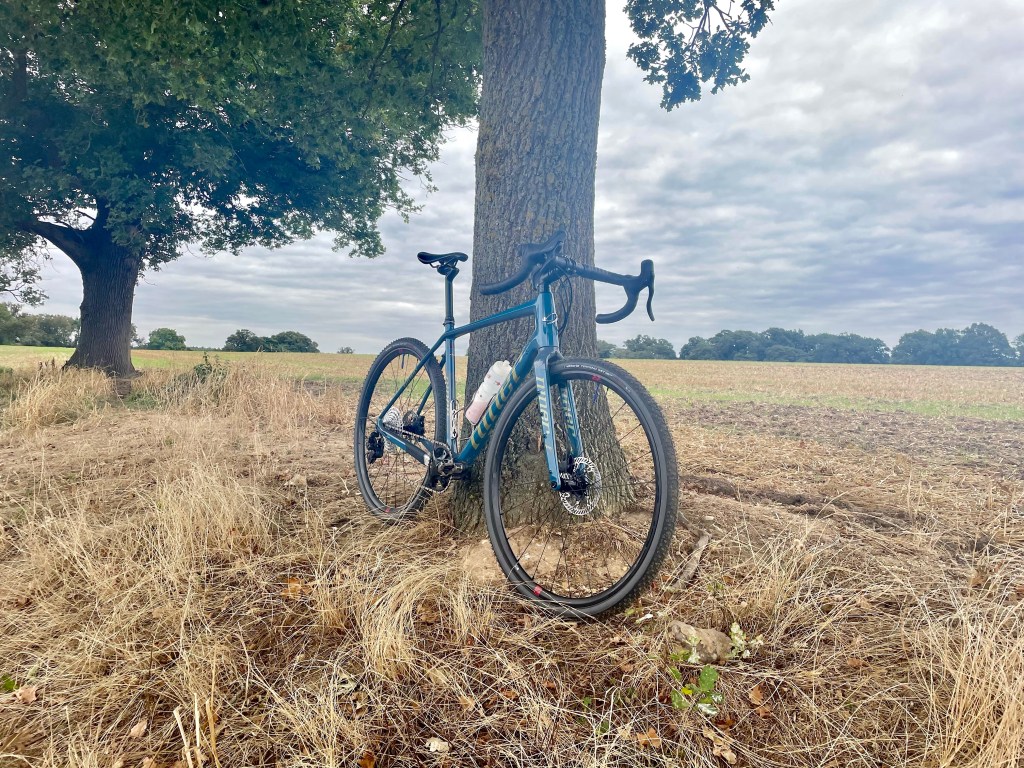
It has taken a while with my desired specifications and the parts shortages, but the Niner RLT 9 RDO is finally built up.

Having originally introduced the RLT (Road Less Travelled) in 2013 at the very beginning of the emergence of the adventure and gravel bike genre, this latest iteration of the RLT from the Coloradan brand is bang up-to-date with its features and standards that it offers.  

Predominantly famous for their mountain bikes, Niner hasn’t had a particularly large presence in the UK but since the brand has experienced a rejuvenation after briefly going bust, it has landed a UK distributor in the form of Zyro-Fisher and they are more easily available.

Oscar Huckle / The Cycling Meister

The RLT 9 RDO is the carbon gravel frame from the brand and this is a frameset that focuses on versatility but is equally comfortable on long gravel epics and races. This generation of the RLT is offered in three materials – aluminium, steel and carbon. I have opted for the halo carbon frame offering. The aluminium would be a sound budget option and the steel frame is an interesting proposition and a material that many brands have shied away from. Carbon frames are significantly lighter than metal and generally more comfortable, as they have better vibration-damping properties, which is why it was my pick. It also doesn’t fatigue as long as you don’t impact it and most types of damage can be repaired on a carbon frame if you damage it structurally. I’m 5’11 and fit comfortably on a 56cm frame.

It is chock-full of mounting points for bottle cages, racks and bags, Niner quoting 26 mounts in total. Niner have created specific bags that fit into the front triangle and on the top tube. I’ve purchased the bags and they fit logically and look clean on the frame. Extra points to the brand for omitting an under-the-down-tube mount as these always get clogged with mud.

The frame can take up to a mammoth 700c x 50mm tyre or a 650b x 2in tyre. The RLT 9 RDO makes a compelling case as a one-bike-for-everything if you were to have a couple of wheelsets for different purposes.   

As is standard for most frames, the RLT 9 RDO routes its cables internally. What is impressive and your mechanic will thank you for it is that the internal routing is fully guided. You simply feed a cable through its designated hole and it will pop out of a hatch underneath the BB where you then route the final section. There is a little bit of ‘fishing’ required with the hydraulic hose from the hatch to its exit point, but nothing a magnet and internal cable routing kit couldn’t solve. I’m running the frame with a 1x groupset but the frame allows you to use a 2x system, should you wish, and there is also routing for a dropper seatpost and a Dynamo light. The frame uses full housing for the gears (more on that later) so once you’ve routed the cables in the initial build, it will be easy to change inner cables every so often to refresh the system as you won’t need to ‘fish’ any cables in the frame. 

The frame uses a standard 1 1/8 to 1.5 headset which is compatible with lots of different options and a PF30 bottom bracket. The PF30 BB is primarily used as it is compatible with Niner’s BioCentric system, should you wish to run the bike as a singlespeed, but I wouldn’t imagine many riders taking up this option. PF30 isn’t my favourite standard and I’d have preferred a threaded but it’s certainly far from the worst of the pressfit standards.

Oscar Huckle / The Cycling Meister

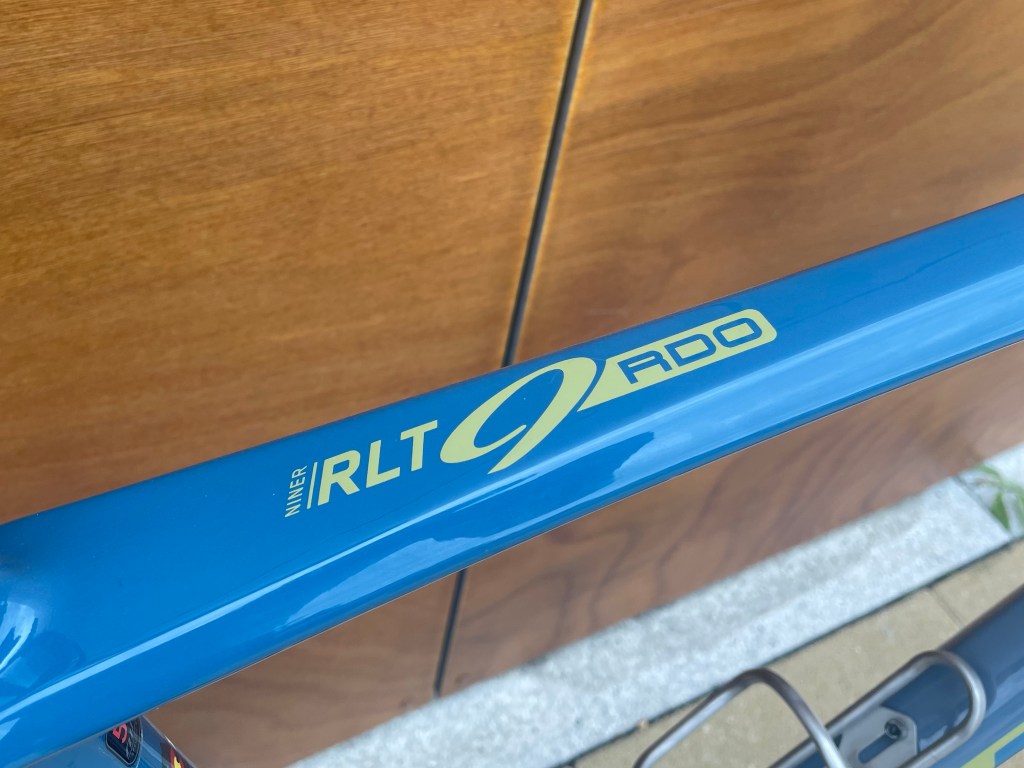
The colourways that Niner offer for this frame are seriously cool. There are two options for the carbon frame – ‘baja blue / sand’ which is this particular colourway and ‘olive green / orange’ which also looks rad, although until I see the frame in person, I’m not sure if the orange graphics clash with the green / black of the rest of the frame. There are nods to adventure on the paintwork with topographical lines on parts of the top tube, seat tube and fork. It’s also a cool touch how Niner include a graphic on the underside of the down tube, which inform you of the important specs of the frame if you are not mechanically knowledgeable.

The Build

Oscar Huckle / The Cycling Meister

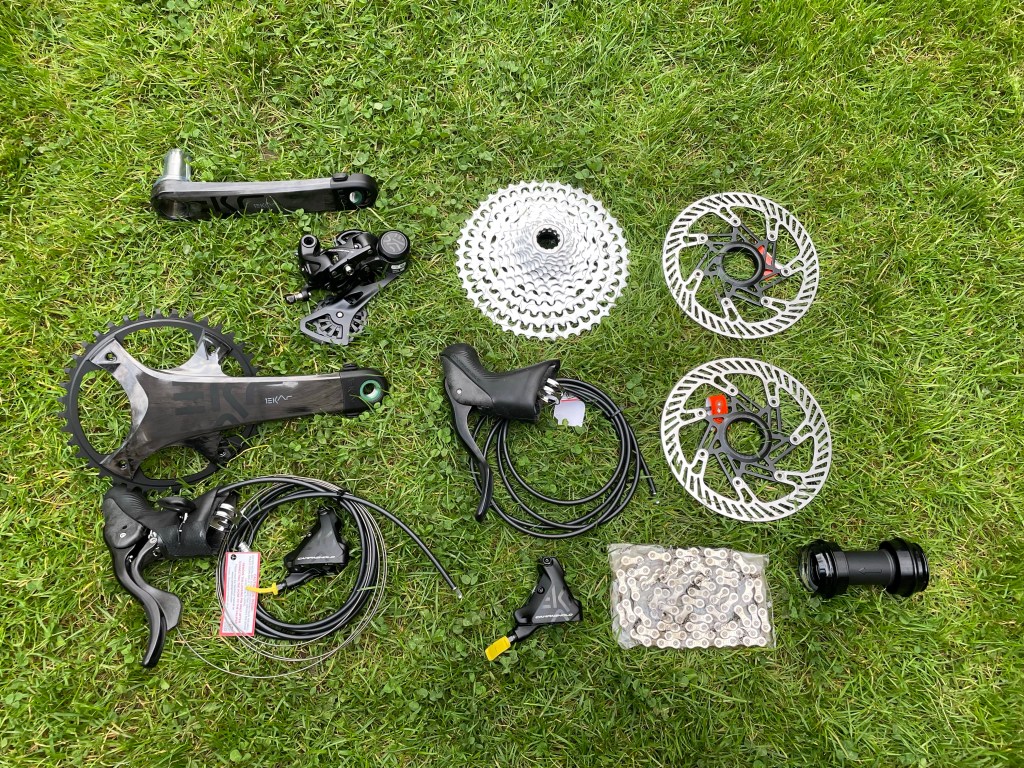
Rather than buy a bike off-the-shelf from Niner, I chose to buy a frameset as I wanted to spec the the frame with a Campagnolo Ekar groupset. The builds that Niner offer are with a plethora of options from Shimano and SRAM. I have previously used a SRAM Rival 1 groupset on a previous bike which was very good but it didn’t quite have the range I’m after and remains 11-speed. Now that 12 and 13-speed options exist, this makes sense if you are running 1x. I didn’t fancy ponying up for SRAM eTap AXS as it has its quirks – it is very expensive, which I don’t see the need for on a gravel bike that is going to be caked with mud off-road. I’m rather uncomfortable with the rear mech costing almost £600 as it’s a part that can very easily get knocked! There are also the usual irritating SRAM quirks such as the DUB cranks and bottom bracket system, the XD / XDr driver body system and whilst I love the lever shape of the mechanical hoods, the eTap AXS hoods feel rather bulky and bulbous to me. Shimano also has its pluses and minuses. I believe Shimano GRX is a half-baked system in that it is only 11-speed and doesn’t go far enough in furthering itself from the road groupsets. I also, controversially, don’t rate Shimano’s current generation hydraulic disc brakes.

Oscar Huckle / The Cycling Meister

The Campagnolo Ekar groupset is a real rival to Shimano and SRAM in that it is 13-speed which is excellent as you get a wide range of gears and less prominent jumps between them as there is another gear to share the load. I really like the idea that the first cluster of gears have 1 tooth jumps, so you can really fine tune your gear when you’re on the flat or descending, whereas with my previous SRAM 1x, there were some parts of the cassette ratio where you were looking for a gear in between the teeth that were offered.

Oscar Huckle / The Cycling Meister

The cassette is offered in 9-36, 9-42 or 10-44. I’ve opted for the 10-44 option as I will be using this bike for bikepacking, so favour the easier gear and I’m unsure on Campagnolo’s use of a 9t cog in terms of wear. The cassette itself looks aesthetically pleasing and Campagnolo have introduced a new N3W freehub, which is a shortened version of its existing freehub that is backwards-compatible with 9,10,11 and 12 speed systems. This is a real breath of fresh air, as many brands are guilty of introducing new standards for the sake of it, forcing consumers to upgrade. At this point in time, there are not many wheelsets on the market with an N3W option but there will be more in time.

Oscar Huckle / The Cycling Meister

The chainset is a thing of beauty with its carbon allure and attention to detail with its removable rubber crank boots, to stop the ends of the crank arms from scuffing. I’ve gone for a 40t variant, but Campagnolo offer the chainset in 38, 40, 42 or 44 narrow-wide tooth options. The crank axle still connect via a Hirth joint with the bottom bracket bearings pressed onto the axle itself rather than the frame. This is known as the Ultra-Torque system, which Campagnolo have used for many years. Ekar, however, is slightly different in that it uses a ‘ProTech’ bottom bracket, where the bearings and cups have an additional seal to withstand the abuse of gravel riding.
Oscar Huckle / The Cycling Meister

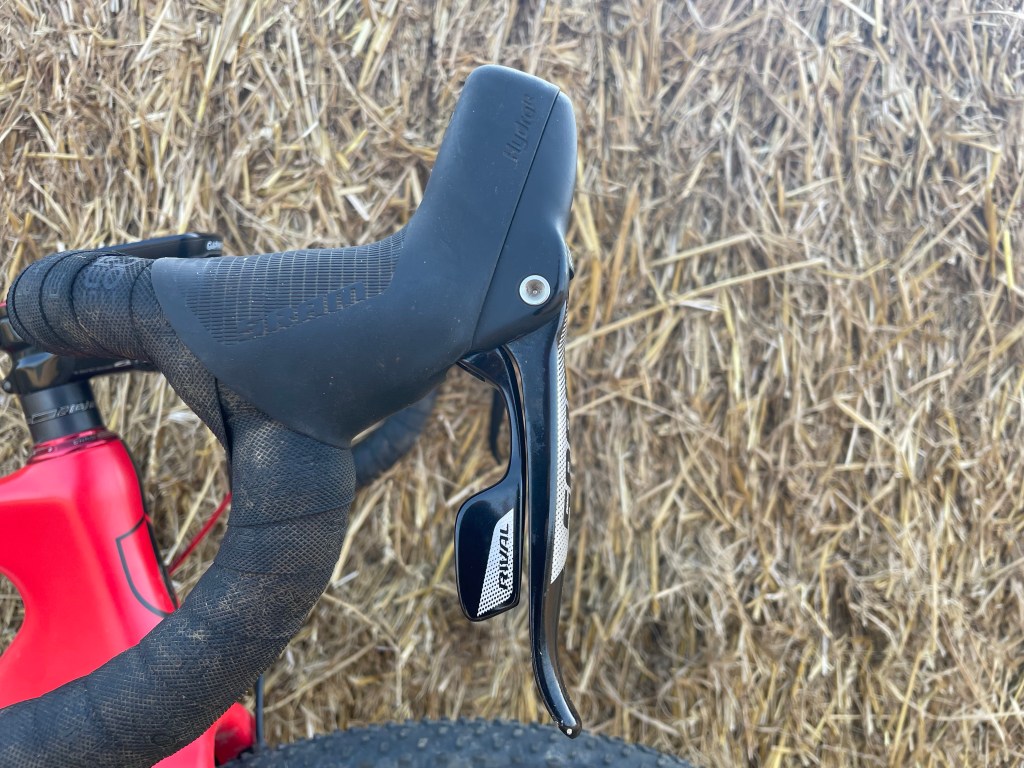
The shifters will be familiar to anyone familiar with Campagnolo’s other offerings and the shape of the lever is particularly sculpted. The levers are aluminium rather than carbon but have some slight texturing to the bottom of the lever to help with grip. The noticeable change with these shifters is the new ‘Lever 3’ design of the shift paddle, which has grown in size and offer you two locations to downshift from, as you can now access it from the drops of the handlebars. I won’t be surprised if this new design migrates to Campagnolo’s road groupsets.

Oscar Huckle / The Cycling Meister

Ekar’s brakes remain the same as previous Campagnolo’s offerings, only they are re-branded as Ekar, the rotors are steel, there is an improved pad compound, and the system no longer uses Magura’s Royal Blood as brake fluid (although you can still use this) and use a new red mineral oil from the brand. The performance of the brakes is the best out of the Big Three. They offer confidence-inspiring modulation and don’t rub as easily as Shimano or SRAM’s offerings (the former being the biggest culprit, where if you do so much as look at the brake, it will start to rub!) as the pads use a magnetic piston to retract, which is a genius solution. 

My first impressions are that Campagnolo have pulled a blinder with their first foray into gravel. The quality of the Ekar parts looks very impressive and set-up was fairly straightforward. Things to watch out for if you’re building an Ekar-equipped bike include the B-gap adjustment of the rear mech, which is particularly sensitive as it is on 12-speed systems, so you’ll want to take care here to ensure good quality shifting. I found the brakes quite difficult to bleed compared to Shimano and SRAM, despite following Campagnolo’s tutorials. After a couple of sub-par bleeds, a mechanic that has plenty of experience with Campagnolo recommended bleeding it in the vein of a SRAM system (pushing / pulling between the two syringes) and this helped no-end in achieving a confidence-inspiring result. 

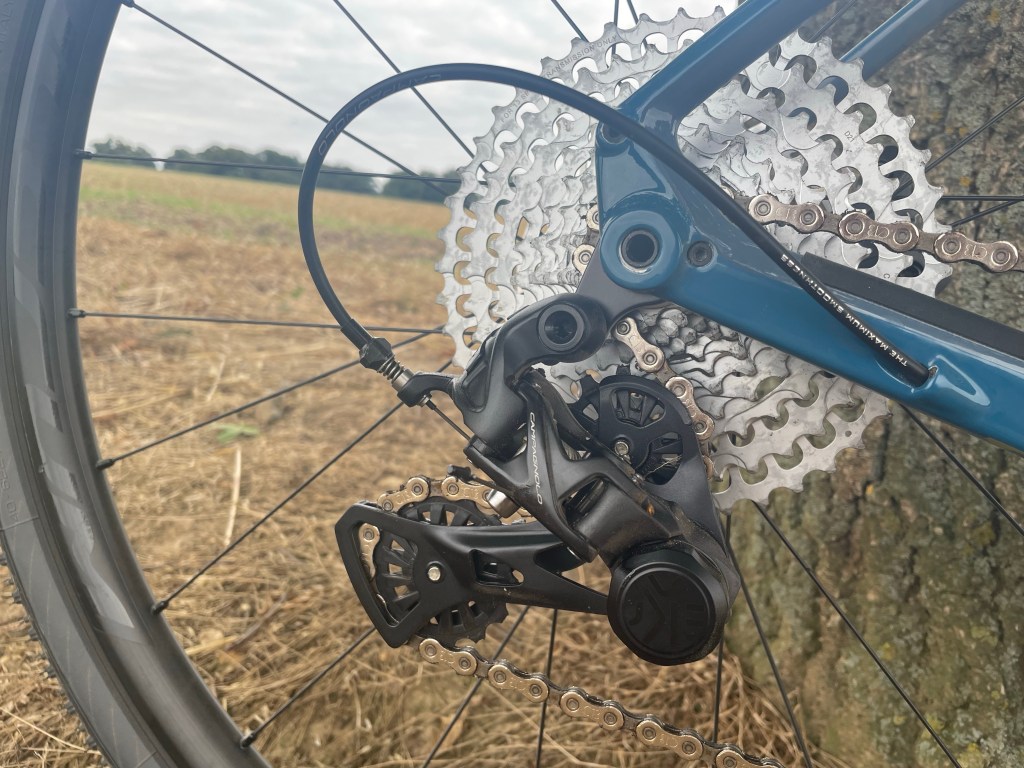
A final obstacle with Ekar is that Campagnolo simply don’t believe in full housing for the gears if your frame implores this technique and you want to use the included ‘Maximum Smoothness’ cables. I’d recommend using the Maximum Smoothness cables as there is less friction in the system and a 13-speed system is always going to be more sensitive to perfect set-up compared to an 11 or 12-speed system. You can’t buy a length of full outer housing online so you will either need to visit a Campagnolo dealer and ask nicely for them to cut you off the required length from a reel or buy a 25 metre reel. This is a mad but very Italian move from the groupset manufacturer. 

I can’t wait to test this groupset in real world conditions and I’ll report on my findings in due course.

Oscar Huckle / The Cycling Meister

The wheels are currently Fulcrum Rapid Red 5’s which are a bombproof but unremarkable aluminium wheelset with a (wide for an Italian brand) 23mm internal rim diameter. I had ordered some Campagnolo Shamal’s but they are yet to arrive so bought the Fulcrum’s at the last minute to get the bike built up for now. When the Shamal’s eventually arrive, they will become the Summer wheels and the Fulcrum’s can be used for the Winter slop.

Onto the finishing kit, the handlebars are Easton EC70 AX’s which have a 16 degree flare to them, which isn’t too dramatic compared to other options, and are carbon fibre so should be really comfortable as they’ll take away some of the sting from surface vibrations. The stem is a generic aluminium one for now from my parts bin – I’ll upgrade it to something nicer once I’ve got the position dialled.

The bar tape is the new Silca Nastro Cuscino which is super thick and seems like it will be supremely comfortable and hard-wearing but my god, it was one of the hardest bar tapes I’ve ever had to wrap. Silca don’t give you enough in the pack and it is very difficult to negotiate the tape around the shifters. On the one hand, you have to figure-of-eight it but because it’s quite chunky, it doesn’t look right so be prepared to spend a while if you want to have a good job.

Oscar Huckle / The Cycling Meister

I’ve also used Silca for the bottle cages with their titanium Sicuros which are pure bike porn and offer a super-solid grip of the bottle from a couple of tests. These look set to be a lifetime item.

The seatpost is a Specialized COBL GOBL-R which is carbon fibre and has a cobra-like kink at the top where it uses a ‘Zertz vibration damper’ at the head of the post, to boost compliance. I’ve carried this post over from a previous bike and have always got on with it and the saddle that is fitted to it is a Fabric Scoop.

So as you can see, this is one very luxurious steed and I’ll be sure to report back on my thoughts on the bike once I’ve got some miles on it and can comment on the durability. I’ve completed one brief hour-long ride on it so far and my initial impressions are very positive but it is far too early to be definitive. I’m aiming to get a couple more shorter rides on it and next week, I will likely be throwing it straight in the deep end as I’m bikepacking the King Alfred’s Way, a 350km circular off-road route.

Oscar Huckle / The Cycling Meister

Seven SRAM Successes (And Seven Aspects They Can Improve On)

Uncategorized

SRAM are the newest kids on the block out of the ‘Big Three’ groupset manufacturers (joining Shimano and Campagnolo), but they have left a sizeable impression on the market and have been instrumental in pushing the other brands with their rival technologies. SRAM generally start at a higher price point than Shimano, who is by far the dominant groupset manufacturer, and offer groupsets from the mid-range to the pinnacle of the sport. Here are seven areas where the American manufacturer succeed and seven aspects that they can improve on.

SUCCESS: Positive Shifting

Although some regard SRAM’s shifting as clunky, I love the fact that the shift is very positive. You know when you’ve changed gear as there is a satisfying ‘ker-clunk’ both when you action the shifter and when the rear mech derails the chain from the gear that it’s on and moves it to its selected gear. SRAM have also brought this over to their wireless groupsets, which makes it seem less alien and more akin to a mechanical system, even though it is far from it. Shimano’s shifting is more accurate and much faster, but markedly more vague.

FAIL: DUB Chainsets (and GXP)

A major turn-off when considering a SRAM groupset, why oh why do the crank bolts on SRAM’s chainsets require a Herculean effort to undo?! SRAM prescribe a very high torque of 48-54NM (most other chainsets of this design that feature one 8 or 10mm hex bolt tend to be around the 40NM mark) and trying to undo the bolt often resorts to exasperation if you’re trying to break the bolt by hand, an assistant (or two) to either help break the bolt or hold the bike, breaker bars of large proportions, swearing, impact guns, heat, freezing and more swearing. This was a big problem on their older GXP / BB30 chainsets but is even more prevalent on their DUB chainsets, a standard that was meant to simplify everything!

My most successful method is to try and undo the crank bolt before you start working or stripping the bike so that you don’t have to try and undo the bolt once you’ve removed the wheels and / or the rest of drivetrain. I like to use a toe strap to hold the non-driveside crank arm to the chainstay to stop it from moving and then use a ‘big boy’ breaker bar.

Once you’ve finally broken the bolt free, you hear a sound reminiscent of a gunshot, often infused with the smell of smoke. If the bolt has been previous overtightened, it makes life even harder and I have seen some chainsets in the workshop of the company that I work at being left on as to remove it would require destructive methods.

This really shouldn’t be a thing and I would highly recommend making sure you maintain the chainset regularly to avoid it seizing any worse. SRAM have also brought out a little-marketed steel crank bolt that weighs twice as much as the aluminium bolt that is used when you buy a chainset off-the-peg, which I have bought and recommend every owner buying, as it makes life much easier down the line for whoever is working on the bike.

SUCCESS: Wireless Technology

SRAM are perhaps most famous for pioneering wireless groupsets with their original eTap groupset and have now developed with their eTap AXS ecosystem. There are no wires whatsoever from the shifters to the mech, the shifters communicate with the mechs via AIREA (essentially SRAM’s version of Bluetooth) and both mechs have removable batteries on them. It’s a refreshingly simplistic and innovative system and it’s always satisfying when you are working on a bike that doesn’t require the hassle of internal cable routing as you can literally just bolt on the four (or three if you are running 1x) components of the system once they are paired. If you’re working on one of the latest integrated bikes where cables or wires run through the bar, stem and then down the side of a proprietary profiled steerer tube before heading through the frame, it makes the job even easier as you just have the hydraulic hoses to route.

At the time of writing, both Campagnolo and Shimano’s electronic groupsets are wired and in the case of Shimano, their upcoming, redeveloped Dura-Ace groupset doesn’t seem to be completely wireless from some publications’ sneak peeks.

FAIL: Front Shifting

SRAM’s front shifting has never been on par with Shimano or Campagnolo and the Yaw front mechs are particularly finicky to set up. SRAM’s Yaw technology denotes that the mech will work with the chain in every single gear combination and won’t rub as the mech pivots slightly to compensate for the alignment with the chain, rather than with Shimano and Campagnolo where you have to ‘trim’ the mech. A nice idea but a real headache to set up perfectly as it requires the mech to be at an optimum height and angle and there is no leeway for error. Even when it’s set up perfectly, the shifting still isn’t on the level of the brand’s rivals.

SUCCESS: 1x Drivetrains

Perhaps as a result of their inability to manufacture a proper front mech, SRAM have pioneered the 1x system. A 1x removes the front derailleur and the chainset has a single chainring, whilst the cassette has a wider range cassette to compensate for the lost gear ratios. You save a little bit of weight as you omit the front mech, cable and housing for it and the front shifter, although the rear mech and cassette’s are heavier so the weight saving is marginal. Chain retention is much better as the rear mech has a clutch in it to stop the chain from slapping on the chainstay and the chainring has a narrow-wide tooth set up, again to better hold the chain and stop it from dropping. The result is a reliable and eerily quiet system which just plain works and SRAM’s Eagle mountain bike groupsets have further developed the scope of the technology with their now whopping 10-52t cassettes that are 12-speed. 1x isn’t the solution for every style of riding but I certainly think it is the case for off-road where the front mech is a mud magnet and both Shimano and Campagnolo followed suit reticently after SRAM’s market success.

FAIL: Road Shifter Cable Insertion

A problem now solved with the fact that their road groupsets are now almost exclusively wireless, it is often pot luck when you are trying to install a new gear cable in the shifter that you will get it through on your first couple of tries. Unlike Shimano where the cable logically emerges from the side of the shifter when you route it and you can then guide it into the outer housing, SRAM thought it was a good idea for the cable to route through the underside of the shifter where it then takes a tight 180 degree turn around a spool before emerging from the side of the shifter. A plain stupid idea and I’m glad it’s now mostly not a thing.

SUCCESS: Powerful Brakes with Excellent Modulation

A controversial point as many take offence to SRAM’s brakes in that they use DOT fluid, which is corrosive, and from the legacy of Avid brakes, particularly the Elixir’s, which I will agree were awful. But SRAM have reinvented their history with their past couple of generations of brake. I find SRAM brakes to have a confidence-inspiring level of power and they have excellent modulation. I’ll concede that perhaps DOT fluid is not the nicest of fluids to be dealing with but as long as you follow SRAM’s bleeding method, you will have a successful bleed far more than you would with Shimano. Shimano’s brakes suffer from a myriad of problems in their construction and the braking is more binary with more of an ‘on / off’ feel. SRAM’s contact adjustment of their higher level of brakes is a system that works really well and unlike Shimano where you have to cut the hose whenever you undo it (and then often have to replace it when you cut it too short if you are working on an integrated bike), this isn’t really a problem with SRAM.

FAIL: Quality Below Rival / GX Eagle

There has always been a marked difference in quality and reliability of SRAM’s components between groupsets, whereas Shimano’s groupsets often use the same technologies, just with heavier materials. On the road side, there is a marked difference between Apex (their entry offering), Rival and Force. Force feels far more smoother in its use of carbon construction and quality of the pivots / bearings.

There is a greater difference between SX and NX Eagle (SRAM’s entry mountain bike Eagle groupsets) and GX. Both SX and NX are very plasticky and the shifting is quite crude and I’ve seen many of the rear mech’s suffer ghost shifting. Shimano have the upper hand on the entry to mid level of mountain bike groupsets and their Deore groupset blows SX and NX out of the water. There is also a great difference between GX and XO (the first of SRAM’s two top offerings, with XX1 being the lightest weight, money-no-option groupset). The shift feels so much better on XO as the shifter uses a bearing and the chain is far smoother and longer-lasting.

A clear separation of quality between groupsets isn’t a bad thing and it’s the reason why users would spend more or less on one and SRAM perhaps take this a little too literally.

SUCCESS: Innovative Nature

SRAM have always been the best out of the ‘Big Three’ in announcing innovative products and trying to change conventions. Whilst in the case of DUB or Yaw front mechs, this isn’t for the best, in the case of their wireless groupsets or their unconventional chainring sizes on their road groupsets, they have completely reimagined the widely accepted gear ratio options. I’d rather see a brand take an ambitious risk and fail than adopt an ‘if it ain’t broke, don’t fix it’ mindset and you have to admire them for trying to shake things up.

FAIL: XD and XDR Standard

I appreciate that SRAM had to introduce a new freehub standard to work with the 10t cog on their cassettes but the XD / XDR standard isn’t quite there. The threads that the cassette fits onto are very fine and if you don’t religiously remove and maintain your cassette / freehub regularly, I have seen examples of cassettes fusing onto the freehub and having to be cut off. This shouldn’t be a thing and I hope SRAM can improve the system.

SUCCESS: Universal Mech Hanger

Although not all that prevalent at the time of writing, SRAM’s universal mech hanger is another example of the brand’s positive innovation and trying to redefine the generic constructs of cycling technology. Every frame uses its own proprietary mech hanger, which results in a careful Internet search of what hanger will work with your frame and then corroborating your findings by matching the profile of the hanger up with the profile on the screen. SRAM have introduced one universal standard and both Trek and Santa Cruz (as well as some other brands) have started to adopt this standard on their frames. I hope more brands get on board as this will resolve a problem that shouldn’t really exist.

FAIL: Bottom Brackets

The quality of SRAM’s bottom brackets is pretty shocking. Both Shimano and Campagnolo’s offerings are bombproof but SRAM’s are plasticky and don’t last very long. They just plain suck. SRAM have tried to simplify bottom bracket standards with their DUB system and the threaded variations seem better, but they are not up to standard compared with the competition. The press-fit DUB bottom brackets aren’t great and often require an ungodly amount of whomping to remove them from the BB shell.

SUCCESS: Availability

Although perhaps an unfair topic due to shortages in the coronavirus pandemic, I really admire that SRAM have always announced a product and it is in stock almost instantaneously, rather than announcing something where you then have to wait a while before you can actually buy it. Both Shimano and Campagnolo need to take a leaf out of SRAM’s book on this front.

FAIL: Road Lever Shape  

SRAM’s hydraulic road lever shape on their current generation of shifters isn’t a patch on Campagnolo’s, which is by far the best or Shimano’s, which is impressively small in profile but not quite as comfortable as the Italian brand. SRAM’s shifters are more bulbous and knob-shaped, which isn’t particularly ergonomic. Their previous hydraulic road or CX1 shifers were much better because even though they were taller, they were less bulbous in their circumference and far more ergonomic in the hand.


What are your thoughts on SRAM and where they succeed and fail? Let me know your opinions in the comments. If you enjoyed this article, you can read my article on Shimano’s successes and aspects they can improve on here.

Seven Shimano Successes (And Seven Aspects They Can Improve On)

Uncategorized

Shimano are by far the dominant groupset manufacturer out of the ‘Big Three’ (Shimano, Campagnolo and SRAM) and their products occupy the widest range of the market, with options catering from the low end to the very pinnacle. Both SRAM and Campagnolo’s lowest offerings start at a higher price point and comparable with Shimano’s mid-range options. Here are seven items where the Japanese manufacturer succeed and seven aspects that the brand are lacking in. 

SUCCESS: The Hollowtech Standard

The Hollowtech standard is Shimano’s patented standard where the cranks attach to the frame via two 5mm pinch bolts and a proprietary Hollowtech cap fitting. Shimano have been very stubborn in keeping this standard and haven’t really experimented with using carbon cranks, but the standard is probably the best one of attaching cranks to a bicycle frame. Most other manufacturers cranks attach via single larger bolt which requires a lot more effort to remove as it has a higher torque. With Hollowtech, the age old ‘if it ain’t broke, don’t fix it’ saying comes to mind and no other manufacturer’s system is as straightforward to work on as this. 

FAIL: Free Stroke Adjustment 

Shimano’s mountain bike brake levers have a free stroke adjustment which adjusts the contact point of when the pads touch the disc rotor. A nice idea but the problem is it doesn’t do anything… or if it does, the difference is imperceptible. Shimano have been stubborn in keeping on to this technology for years and they should just get rid of it if they can’t do it right. Compared to SRAM’s brake contact adjust that actually works, this is something that Shimano need to improve. 

SUCCESS: Front Shifting

Yes, the cycling industry keeps setting itself on 1x, but Shimano make a strong argument for 2x with the quality of their front shifting, that far outweigh its rivals. Shifts are light and snappy and their front mechs are far less temporal than SRAM’s Yaw design, which relies on perfect set-up for it to work properly. 

FAIL: Road Rear Derailleur Barrel Adjusters

This shouldn’t be a thing. Shimano barrel adjusters have been serviceable but specifically on Ultegra R8000 and Dura-Ace R9100, they have changed to a new design of barrel adjuster. The problem is it isn’t very good! The cheap plastic feel of the adjusters doesn’t feel nice and it is easy for them to round out. The amount of times I’ve resorted to adjusting the gears by manually pulling on the cables. This shouldn’t be a thing. 

SUCCESS: Di2 Ecosystem

Di2 is not flawless (the eTube app is rather reminiscent of a Windows XP program) and SRAM AXS boasts some advantages in that it is wireless, but Shimano’s system is far more refined and slick in its operation. The latest generation of Di2 is a very hard system for them to improve on and it is virtually impossible to fool the system. 

FAIL: Dura-Ace Cables

There’s no doubt that these top-of-the-line offerings sure feel nice when they’re installed and offer superb shifting and braking feel. Shifting and braking is silky smooth. The ugly side to these cables rears its head when you are trying to remove them to change for new cables. As you remove the inner cable, it likes to leave snakeskin so be prepared for having to pick this out and have fun if you’re going to reuse the outers! 

SUCCESS: Di2 Hydraulic Lever Hood Shape

It’s impressive how on Shimano’s current Di2 hydraulic offerings, that they have been able to get the size of the hood to be the same as their mechanical offerings. Both SRAM and Campagnolo’s hood shape for hydraulic shifts feel much larger in the hand and whilst this is good for some qualities, having a nice small sleek hood is excellent. 

FAIL: Chains

Shimano chains are noisy and just don’t last very long. Their stubbornness to use a quick link and rely on a joining pin is annoying and whilst they have brought out a quick-link on the latest group sets, it’s still not worth it. Switch to a KMC for a longer lasting and quieter experience. 

SUCCESS: Pedals

Shimano’s pedals are bombproof. I have serviced my pedals once in about 7 years and they still feel like new. If you do need to service them, servicing is straightforward and intuitive. Their SPD system is also great and no other off-road cleated system comes close. Other than for bike fit purposes, why would you choose to run anything else? 

FAIL: Road Disc Brakes 

A whole topic in itself. Shimano’s road disc brakes are just not very good. Where does one even start with their flaws? How about the on-off feel of the brakes and lack of precise modulation? Or the ceramic calliper pistons that are very easy to damage? Or the bleed screw made of chocolate that is easy to round out? Or how about if you take one look at the brake and it will choose to squeak and squeal and make all kinds of noises. I really hope Shimano focus on their disc brakes in their next updates of groupsets as this is the biggest thing holding the brand back. 

SUCCESS: Rim Brakes

Conversely, Shimano’s rim brakes are superb stoppers. The feel and modulation is phenomenal and they are easy to set up. If only they could apply this methodology to their disc brake offerings! 

FAIL: I-Spec

There’s nothing wrong with the standard per-say but it is fiddly when you have one hand with the Allen key trying to undo the clamp and another hand trying to push the release pin. I-Spec also does not play nicely with SRAM. 

SUCCESS: Adjustable Clutch

Shimano are the only manufacturer to offer an on-off switch on their clutch rear derailleurs. This is a good thing, particularly for gravel riding and makes wheel removal nice and straightforward as it’s far easier to flick a switch than to turn off the cage lock on SRAM. 

FAIL: Availability 

A bit of an unfair one in the current pandemic situation but let’s face it, even in conventional times, Shimano have always been poor on availability. They will release a product and it just won’t be available for months. Think about XTR for example where they announced it and then had to omit a certain technology before it could be released. SRAM are much better here in that when they release a product, it is pretty much immediately in stock. 


What are your thoughts on Shimano and where they succeed and fall short? Let me know your opinions in the comments. If you enjoyed this article, you can read my article on SRAM’s successes and aspects they can improve on here.

Review: Does the Sidi Shot hit the bullseye?

Uncategorized

Note: This review was submitted as part of a test article.

Rating: 4.5 out of 5.

Italian manufacturer Sidi’s range-topping road shoes, the Shot, was first spotted by eagle-eyed fans being worn by Chris Froome during the opening stages of the 2016 Tour-de-France. He would go on to ride them to victory that year and then again in 2017. The Shot superseded the brand’s previous range-topper, the Wire. The main difference between the two is a redesigned closure system (more on that later), otherwise there is very little to distinguish the two coveted kicks. The Wire remains in the line-up at £20 cheaper than the new offering. 

Weight is down slightly and for my pair of size 45’s, these came in at 711g on my digital scales of truth (Sidi quote 580g for a size 42, so this is probably about right). They’re certainly not the lightest out there. Specialized S-Works 7’s come in at a claimed 450g for a size 42 and Giro report a 440g weight for their Imperial shoe in the same size. But Sidi have never been one for chasing those that are weight conscious. At a somewhat eye-watering £359 RRP, something has to be special with these shoes, right?  


The ‘Microfibre Techpro’ upper material has a premium look and feel.

The key selling point of Sidi, compared to other brands, is that many of the small parts on the shoe are replaceable. This simply isn’t the case with most other shoe brands. Although the asking price for this is high compared to top-end offerings from brand such as Giro and Fi’zi:k, it’s in line with the Specialized S-Works 7 for example. With the (potential) extra investment, longevity is a key advantage for Sidi and with the right care and occasional replacement of parts, these could be fit for purpose for a very long time.   

The upper of the shoe is composed of Sidi’s ‘Microfibre Techpro’ material, which they claim is ‘not only durable, stable and light’ but ‘also repels water and has been treated to prevent the growth of bacteria and mould so your shoes remain odour-free’. This is coupled with their Vent carbon sole. The Vent carbon sole is optimised for a balance of optimal power transfer and comfort. I found these shoes are stiff but not overly so. Heck, if it’s stiff enough for Chris Froome, it’s stiff enough for us mere mortal riders! Sidi claim they use a ‘specific carbon weave’ to improve comfort. However, they haven’t elaborated on the weave or how it makes the sole more comfortable. 

Whilst I’ve been lucky not to be rained on with these shoes yet (I don’t actively seek to go out when it’s wet!), out on the road, I can certainly attest to their stable and durable feeling. As for the weight, when you’re riding, you don’t feel it and they certainly feel lighter than what they are. There are other places to minimise weight – shoes are a contact point after all and comfort should be the deciding factor. 

I also found their ventilation to be impressive. There is a small tab that with a small flathead screwdriver, you can open or close the vent depending on the weather conditions you’re riding in. This makes a big difference and riding in the couple of weeks heatwave in July here in the UK, I never had hot feet and could feel a cool breeze permeate its way through the shoes. Both the Shot and the Wire come in an ‘Air’ version if your riding will be in hotter conditions. This would be ideal if you are constantly riding in higher temperatures but I would otherwise stick to this standard version. No complaints here though. 

Fit is something that really impresses with these shoes. As with their previous Wire and other range-topping shoes, the Shot comes with an adjustable heel retention device. One can adjust this to stop your foot from slipping, helping to achieve the optimum fit. I’ve really got on with the ‘locked-in’ feel of some top-end shoes recently. I love the Specialized S-Works 6 for example, which although you have to fight a little to get your foot in, when it’s in, it’s superlative. On the Shot, having this adjustability a great idea as it can cater to a number of different shaped feet. However, I did find with the Shot that I can’t quite get it to close tight enough and there is a bit of lift.  


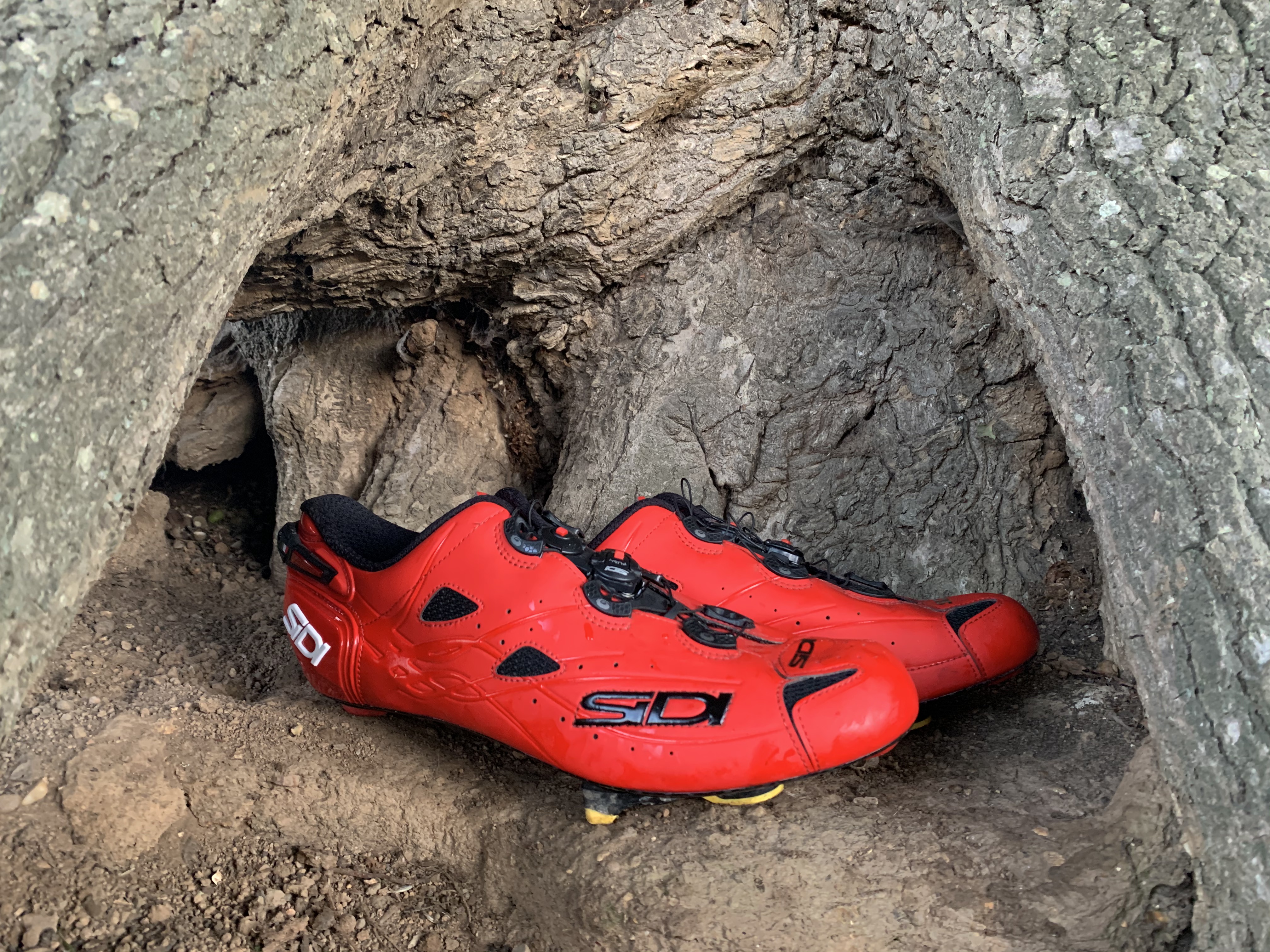
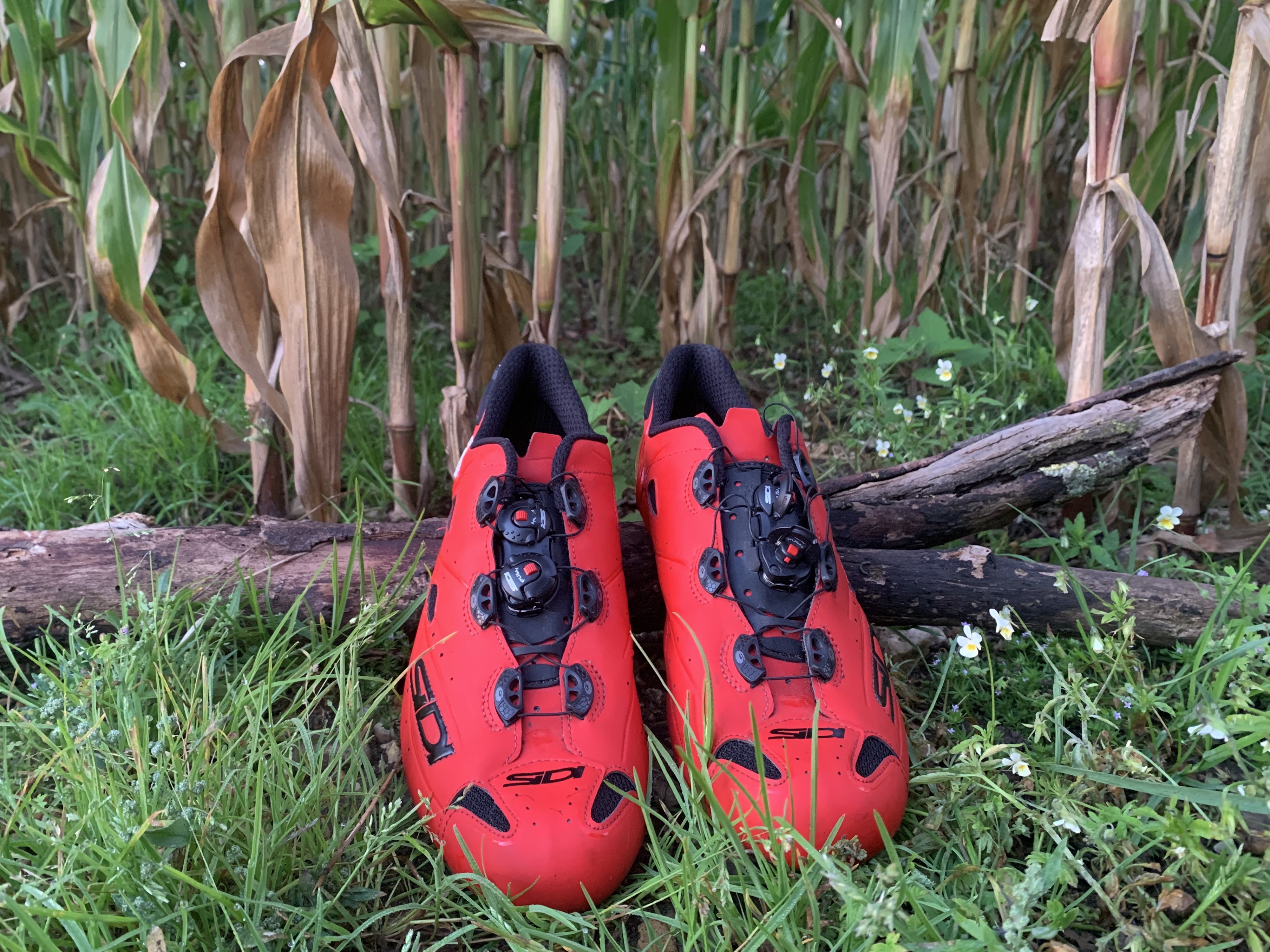
The gloss red rigid heel cup beautifully contrasts the matt red upper. The Italian flag by the reflective strips is a subtle nod to Sidi’s heritage.

Other features of this shoe include a ‘replaceable anti-slip polyurethane heel pad’. It’s meant to aid with walking but who really walks in road shoes for long periods? I can’t say I noticed the benefits. That said, the fact it is replaceable can only be a good thing. There are still far too many shoes out there where once you wear down the heel pad, it’s game over. Sidi also include reflective strips on either side of the back of the shoe to help with visibility when riding in lower light conditions. This security feature is a nice touch as anything that makes a cyclist a little more visible at night must be a plus.   


Two ‘Tecno 3 Dials’ on a single base work in tandem to fasten your foot in and out of the shoe. But is the positioning ideal? 

Sidi use their proprietary dial system to lock your feet in. The Shot has a ‘Double Tecno-3 Push’ closure system. It is basically as described. It consists of two Tecno 3 dials on one base that act as a pair to fasten the shoes on. The idea of this double system is to create the perfect tension to achieve supreme comfort. To fasten the dials, you simply press the ‘Push’ button on both dials which opens the dials up for you to adjust. You then interchange tightening up the dials to your liking. If you need to loosen them a little, there are two release clips on either end of the double dial where you can make minute adjustments. To get your foot out of the shoe, just hold the two releases down and lift your foot out of the shoe. 

I’ve always got on with Sidi’s Tecno system on previous models of theirs and it’s a suitable alternative to other systems like the eponymous BOA which is found on the majority of high-end shoes. I’ve had BOA wires kink on me before or outright fail, but luckily they are backed by BOA’s very useful and super-efficient lifetime warranty. I’ve not had this problem with Sidi before so haven’t tested their warranty program and hopefully I won’t need to! Ultimately, it’s swings and roundabouts. They both perform the same function using a slightly different method. 

I do have a problem with the location for these dials on the Shot’s though. They are right in the middle of the tongue. I feel like you can’t really get them that tight enough and I think a side-loading mechanism like on the Wire would be a lot better. The Wire could be a better pick if you agree with the positioning of the dual dials as it has one dial in the middle and a ratchet covering the span of the shoe. You are definitely best comprehensively trying both pairs of shoes before you buy! 

Finally, aesthetics of a shoe are important and this ‘Matt Red’ option looks, quite simply, amazing. As is course with Sidi, there are a plethora of colour options you can select from which perfectly match your frame and the rest of your kit. No excuses here. 

Ultimately, the Sidi Shot represents more an evolution rather than revolution in the brand’s current line-up of shoes. The price may be high (premium shoe prices seem to be ever-increasing at the moment) but the craftsmanship here is top-notch with their robust, ski-shoe like quality and their varied fit should suit a lot of riders, with the numerous adjustments one can make. I’m looking forward to getting many more miles on these Shot’s and I’m confident that these will be up to the task for a very long time.  

Ten Products I Loved In 2018

Uncategorized

2018 was an interesting year in the cycling industry, with many interesting new products and developments. These included an influx of aero bikes from many different bike brands, the continued rise of disc brakes and more road bikes geared to venture slightly more off-road to name but a few trends.

Here I will detail ten products that I loved last year, products that are well designed and that I will use for years to come. In no particular order, here are my picks for the products that I loved most in 2018.

11060366-1874654347078348

Image from Castelli’s website.

Castelli Inferno Bib Shorts

I’ve always got on well with Castelli bib shorts as the padding in them is generally excellent and they are well made but last year year, I bought an Inferno for hot weather and it really comes into its own in hotter conditions and has become a favourite. The best compliment I can give these shorts is the cliched argument that you forget you are wearing them. They fit perfectly and after many uses, have proven to be impressively durable given the lightweight materials used.

1447291-n2

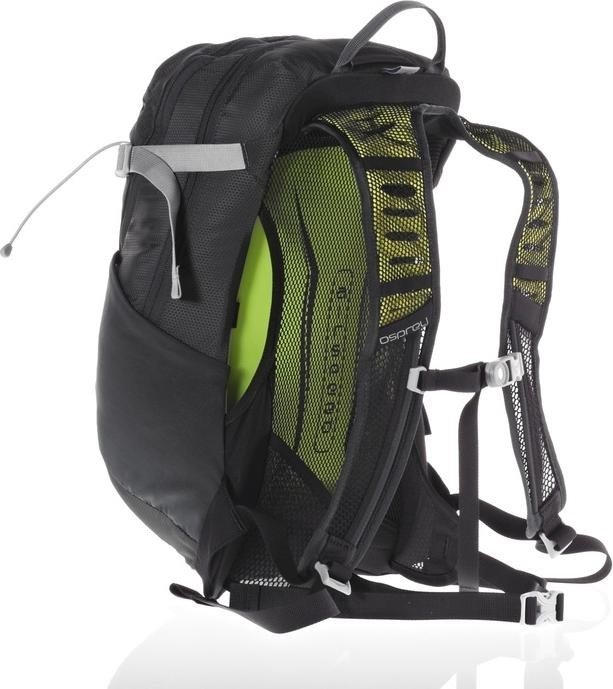
Image from Osprey’s website

Osprey Syncro 15

This bag is excellent both for commuting and for riding. With well-placed pockets and clever integration of storage, it feels excellent when commuting. I used the bag on a 70 mile ride down to the coast this year and whilst I could still tell I was wearing a bag, it’s better than a lot of other options out there that would be far more cumbersome.

BMC Teammachine SLR01 Disc

I upgraded to (one of) my dream bikes last year and I am very impressed with this bike. Aesthetically, this is one of the cleanest looking bikes on the market and the red paint job is just stunning. BMC have cleverly focussed on integration and there is barely a cable in sight. Whilst this is a hard bike to work on mechanically, at least BMC have designed the bike to be fairly logical to work on. The Teammachine SLR01 is a perfect blend of lightweight, stiff and aerodynamic and has proven to be an excellent all-rounder.

maxresdefault

Image from BikeRadar’s first-look at the Shimano Ultegra R8000 series groupset

Shimano Ultegra Di2 R8070

This one is a bit of a cheat seeing as it’s part of my BMC but I have been equally impressed with this groupset. Although more an evolution than revolution of the outgoing 6870 series, Shimano have integrated the hydraulic reservoir into the shifter impeccably and the shifter feels like a normal road cable-actuated shifter. It works very well and gear changes are more noticeable than on previous models, which was a common complaint for feeling a little vague.

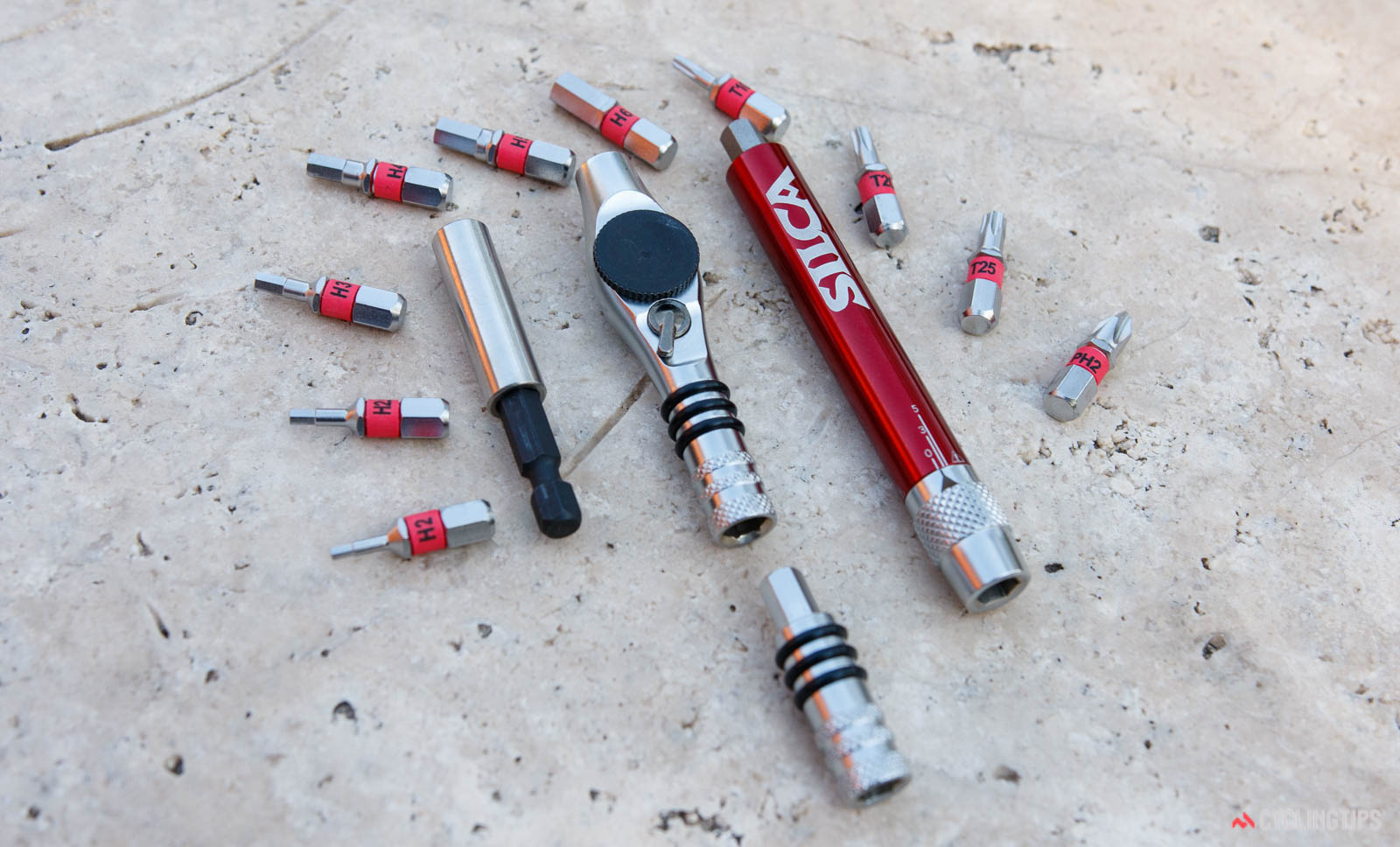
Silca-T-ratchet-ti-torque-tool-kit-review-1-2

Image by Dave Rome, CyclingTips. Original article – https://cyclingtips.com/2018/03/silca-t-ratchet-ti-torque-tool-kit-review/

Silca Ti-Torque and T-Ratchet

The first (of many) Silca products that I bought last year when I discovered this brand. Silca are a brand whose ethos I strongly get behind who take a pride in engineering exceptional quality tools with no corners cut. This T-Ratchet set with the Ti-Torque beam is a masterclass as it combines pretty much every single bit you’d need on a beautifully crafted ratchet and has a torque bit to boot which displays live torque as you are tightening bolts. I use this day in day out where I work at a bike shop, it gets taken with me on every ride for any eventualities and it’s perfect on holidays when I hire bikes and don’t need to worry about working on carbon components. A masterpiece.

kalf-flux-short-sleeve-jersey-red-EV288919-0000-3

Image from Kalf’s website

Kalf Flux Jersey

Kalf, exclusive to Evans Cycles, are a clothing brand that launched in 2017 and for the reasonable prices for their kit (generally everything is less than £100), it’s all really well-thought out items that rival other clothing brands that target the same demographic. This Flux jersey is their more race-focussed product (Club products are a more relaxed fit) and it is brilliant – great on hotter days due to lots of ventilation and the fit is spot-on.

TireLever4

Image from Pedro’s website

Pedro’s Tyre Levers

The only set of tyre levers you should own. Perhaps a rather boring item to pick, these are perfectly designed and get most tyres off with ease or with relative ease if a difficult tyre. No tyre lever I have used compares to this. The shape is just perfect for real world conditions. And what’s more, they have a lifetime warranty to boot with no quibbles if you break them.

91pFFvbGi4L._SL1500_

Image from Clif’s website

Clif Energy Bar

The only food I look forward to eating when on the bike, these always hit the spot. They’re an impressively big portion so you could have one bar in two goes when on the bike and they taste very nice. The best compliment that I can give is I would be happy to eat these off the bike! The ‘Crunchy Peanut Butter’ is my pick of the bunch with the ‘Cool Mint Chocolate’ hotly contesting second place.

30757_kmc_x11_sl_11_speed_chain_silver

Image from KMC’s website

KMC X11 SL Chain

I was fed up of having to replace Shimano chains after not a lot of mileage so I thought I’d give this uber-lightweight chain a go. This chain is sensational and you can really feel the difference when you ride. I’ve also found it a lot quieter to ride than Shimano and shifts remain silky smooth. The only chain to have!

castelli-arenberg-mitt-red-white-EV228282-3090-3

Image from Castelli’s website

Castelli Arenberg Gloves

Whilst now updated in 2019 (and now not quite as good), the previous version of the Arenberg gloves were excellent. The padding is in the right place, they fit very well and these are very comfortable to use on the bike, combined with quality bar tape.


What kit have you enjoyed using on the bike? Let me know your picks in the comments. 

Five Most Exciting Road Bikes For 2018

Uncategorized

The 2018 model year bikes are now pretty much firmly released, so what better time to have a look and see what are the most exciting ones. Here, I will list my personal opinions of which bikes are the ones to have a look out for. This list will include a range of road bikes and some more off-road offerings.

Here we go:

Trek Emonda SLR Disc

This is a particularly significant bike as Trek have just proved that having disc brakes on a bike isn’t necessarily a weight disadvantage. The disc frame weighs a scant 665g, just 25g heavier than the rim brake SLR and 25g lighter than the first generation rim brake model. How Trek have done this is nothing short of amazing and it will be very easy to get one of these frames built up under 7kg. My only gripe with it is that Trek have decided to route the hose for the front disc brake externally down the fork with a zip tie – on a premium bike, despite the mechanical hassle, internal would look so much better.

Specialized Tarmac SL6 

The newest iteration of the Specialized Tarmac doesn’t really boast any big claims in the weight or aerodynamics department, but it does promise to do everything well. I’ve previously ridden the SL5 and own an Allez DSW SL which is based off the SL5 geometry so if they’re anything to go by, then the SL6 must be a winner. Even more exciting to look forward to is the imminent release of the new disc model – it’s been on the UCI approved list and there is talk of it being released during the Tour Down Under.

BMC Teammachine SLR01

I love the previous iteration of the Teammachine SLR01 and the new one looks even better. It borrows a lot from the Roadmachine, a bike billed as the ‘One-Bike Collection’ that released last year, such as the integrated cockpit and lack of exposed cables. I tested the Roadmachine and whilst it’s an ambitious bike, I don’t think it quite manages to accomplish what it set out – I have my problems with it. That said, I think my problems with it would work in the Teammachine’s favour. My only gripe with the new SLR01 is it is obscenely expensive.

2018-norco-search-xr-adventure-gravel-road-bike-10

Image from Bike-Packing.com

Norco Search XR

Moving away slightly off-road, the new Norco Search XR is a radical departure from the previous model. An adventure road bike, the Search XR is capable of taking both 700c and 650b wheels, is suitable for bikepacking with a plethora of mounting points for bags and racks and as well as carbon models, also comes in a luxurious steel edition too. My only issue with it is the size of the Norco logo on the downtube, which just looks a little out of place.

2018-s-works-crux-frameset_11106

Image from Specialized website

Specialized CruX

Now onto full-on mud, Specialized make a second appearance in this list with their revamp of the CruX. The CruX has gone on a significant weight diet for 2018 and is now a dedicated cyclocross machine instead of the all-rounder the previous CruX was – the Diverge now fills in the gap. For me, this is easily the best looking bike of 2018 and the S-Works frameset with the hydrophobic paint job is a work of art.


What would your picks be? Let me know in the comments.